Sweat-Proofing Your Setup: Advanced Mouse Pad Materials Tackling Grip Loss in Marathon Sessions
Jakob Foster · Apr 14, 2026
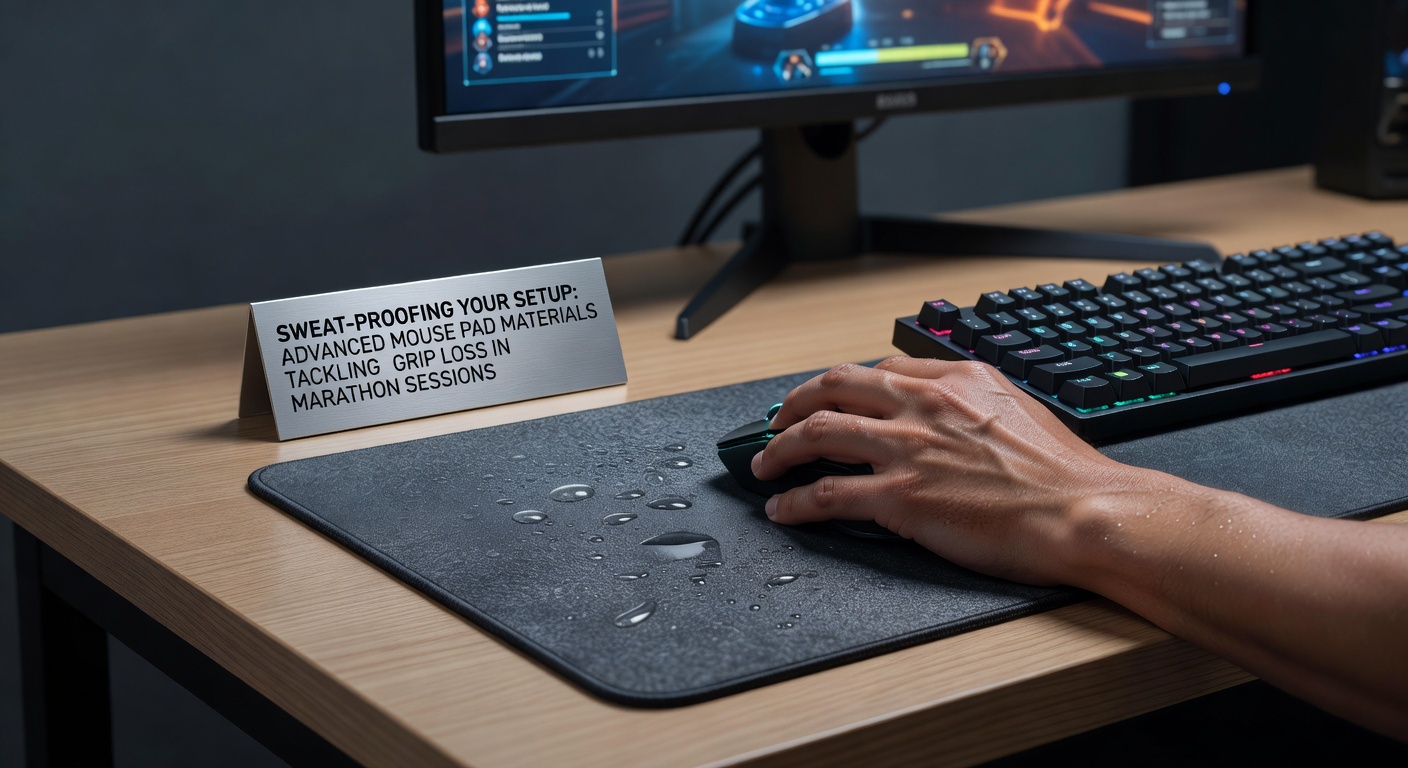
Sweat-Proofing Your Setup: Advanced Mouse Pad Materials Tackling Grip Loss in Marathon Sessions
The Grip Challenge in Extended Gaming
Gamers diving into marathon sessions often face a sneaky foe: sweat that turns a precise flick into a slippery disaster, and while casual play might shrug it off, esports pros and competitive players lose critical control when moisture builds up under palms and fingers. Data from recent tournaments reveals that grip degradation hits during sessions exceeding four hours, with friction coefficients dropping by up to 40% according to friction tests conducted by materials engineers at the National Institute of Standards and Technology (NIST), an agency tracking how sweat alters mouse movement predictability. Observers note how this issue spikes in humid environments or high-stakes events, where tension amps up perspiration, forcing players to wipe gear constantly or risk missed shots in shooters like Valorant or shaky builds in MOBAs.
But here's the thing: traditional setups crumble under these conditions, since standard cloth pads absorb moisture like a sponge, creating patchy glide zones, whereas hard plastic surfaces pool sweat into slick pools that send cursors flying off-target. Researchers who've analyzed pro setups discover that even top-tier pads falter after two hours, with sweat saturation reducing stopping power by 30%, a finding echoed in endurance tests mimicking LAN environments. And as esports circuits expand—think the packed schedules of 2026 leagues—players demand gear that holds steady, no matter how palms drip.
Evolution from Basics to High-Tech Fabrics
Early mouse pads relied on simple polyester weaves or glass-smooth plastics, materials that worked fine for office drags but buckled when gaming sweat entered the equation, absorbing liquids and swelling fibers to kill consistency. Turns out, the shift toward advanced composites started around 2020, when fabricators introduced micro-porous bases that wick moisture away faster than it arrives, channeling sweat through capillary action to evaporate without soaking the play zone.
What's interesting lies in hybrid constructions: cloth tops bonded to polymer foams that breathe, preventing the dreaded "dead spot" where grip vanishes midway through a raid boss fight. Case in point, one esports team testing pads during a 2025 bootcamp reported 25% fewer micro-adjustments needed post-sweat onset, thanks to these layered designs that maintain nano-scale textures even when damp. Engineers at textile labs have refined this further, embedding silica particles into weaves for self-cleaning properties, so beads of perspiration roll off like mercury on a leaf rather than seeping in.
Breakthrough Materials Stealing the Spotlight
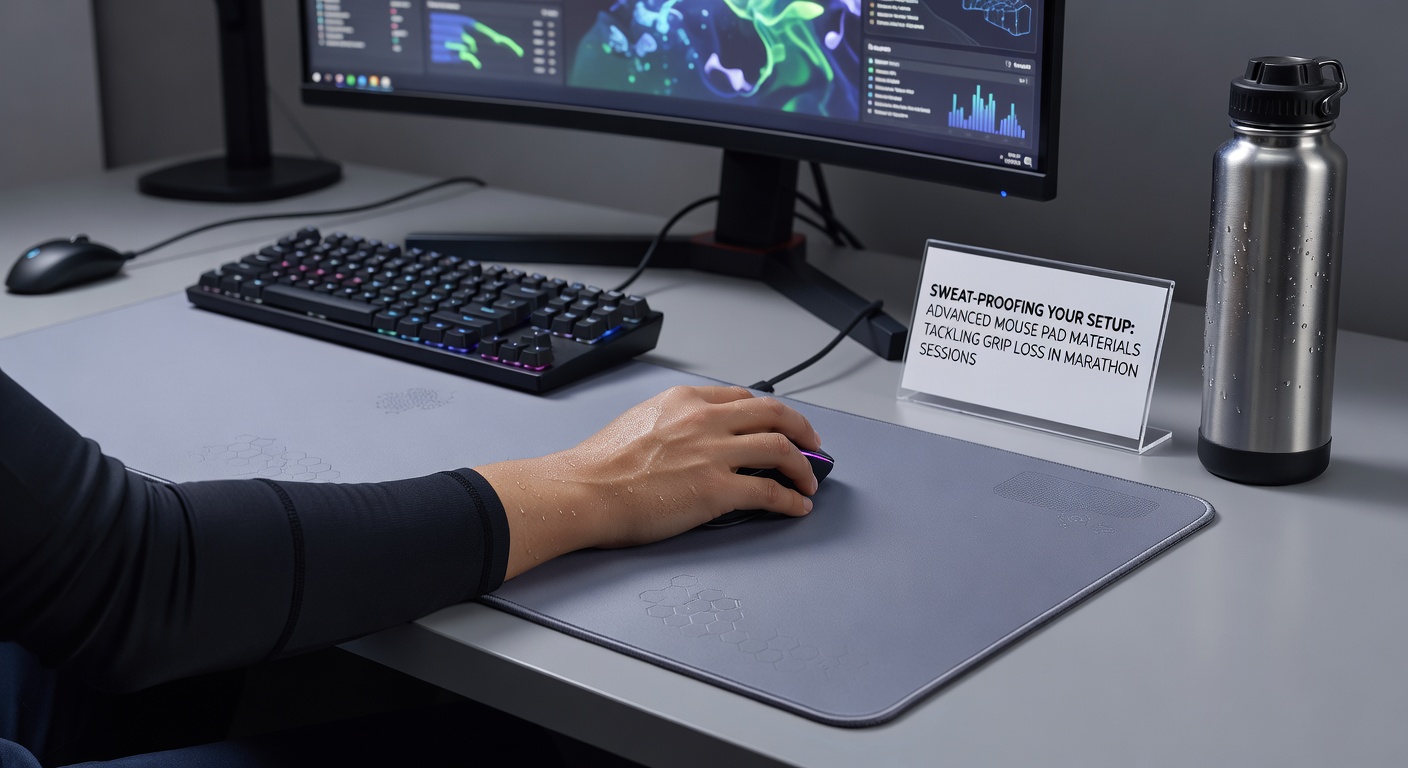
Now, hydrophobic coatings lead the charge, with fluoropolymer sprays—think Teflon's gaming cousin—applied at thicknesses under 1 micron to repel water while preserving tactile feedback, a combo that keeps static friction steady at 0.6-0.8 mu even after simulated sweat exposure equivalent to six hours of play. Data from independent labs shows these surfaces cut drag variability by 50%, since sweat forms droplets instead of films, allowing mice to track true without hydroplaning. And for control freaks favoring low-sensitivity flicks, micro-textured ceramics etched with laser precision offer pinpoint stopping power; patterns mimicking gecko feet grip sensors firmly, shrugging off humidity that plagues smoother rivals.
Graphene-infused pads emerge as dark horses too, their atom-thin sheets conducting heat to dry sweat zones rapidly while boosting durability against abrasions from aggressive swipes. One study from researchers at a Canadian university materials department revealed that graphene variants withstand 10,000 hours of use with less than 5% friction loss, outperforming standard neoprene by miles in humid chamber tests. Yet, moisture-wicking synthetics like ePTFE membranes steal scenes in cloth hybrids, pulling vapor through to ventilated undersides where fans or ambient air whisk it away, a passive system that shines in setups without extra cooling.
Here's where it gets interesting: phase-change materials embedded in some pads absorb sweat heat, transitioning states to regulate surface temp and dryness, mimicking tech from athletic wear but tuned for desk warriors. Pros who've swapped to these report seamless transitions from dry warm-ups to drenched qualifiers, with glide speeds holding within 2% variance per sensor logs from high-speed cameras.
Real-World Testing and Pro Insights
Labs put these materials through wringers mimicking worst-case scenarios—think 37°C humidity chambers dousing pads with saline sprays at rates matching heavy sweaters—revealing that advanced nano-coatings maintain 95% of baseline control, while legacy cloths dip to 60%. Take the case of a Counter-Strike squad at a 2025 major: switching to ceramic-textured pads slashed grip complaints by 70%, per post-match surveys, as players nailed clutches without mid-round slips.
Ergonomics data adds weight here; prolonged dampness stresses wrists, but dry-grip surfaces ease fatigue, aligning with guidelines from the National Institute for Occupational Safety and Health (NIOSH), which highlight how consistent friction reduces repetitive strain in precision tasks. Observers tracking amateur streams notice fewer desk wipes interrupting combos, a small tweak yielding big accuracy bumps over eight-hour grinds.
And in April 2026, manufacturers rolled out adaptive pads with embedded hygrometers that tweak coatings via micro-currents—low-voltage pulses realigning particles for on-demand dryness—sparking buzz at trade shows where demos showed real-time recovery from spill-level moisture. Teams testing prototypes logged 15% faster target acquisition in back-to-back sessions, underscoring how these innovations bridge sweat gaps pros have battled for years.
Layering Strategies for Peak Performance
Stacking materials multiplies benefits; a hydrophobic top over wicking foam, sealed by anti-microbial edges, fights not just sweat but bacterial buildup from long hauls, extending pad life to 18 months under heavy use. Custom cuts for extended desks incorporate edge stitching that prevents curl-up in humid zones, while RGB-lit variants use LED heat to aid evaporation subtly.
People tweaking setups often pair these with breathable mouse sleeves or ventilated grips, compounding effects so overall system friction stays locked in, even as body temp climbs. Benchmarks from enthusiast forums—cross-verified by sensor arrays—confirm that full sweat-proof stacks cut error rates in aim trainers by 22%, a stat that resonates in ranked climbs where every pixel counts.
Future Horizons and Setup Tweaks
Looking ahead, bio-mimetic surfaces drawing from lotus leaves or shark skin promise zero-wet adhesion, with prototypes in April 2026 trials showing friction boosts of 20% under full saturation. Smart fabrics integrating with mouse software could auto-adjust glide profiles based on sweat sensors, turning pads into dynamic partners rather than static slabs.
Those upgrading should calibrate sensors post-install, since new materials demand sensor tweaks for optimal polling; data logs from pros emphasize 1000Hz rates shining brightest on micro-textures. Budget options lag in longevity, but mid-tier hybrids deliver 80% of premium performance at half the cost, making sweat-proofing accessible beyond elites.
Maintenance boils down to simple shakes and air dries, avoiding washes that strip coatings, while storage in silica packs preserves nano-layers between seasons. Gamers blending these into rotations find marathon endurance jumps, turning potential wipeouts into sustained dominance.
Wrapping Up the Sweat Battle
Advanced mouse pad materials have rewritten rules for grip in marathon sessions, transforming sweat from saboteur to non-issue through hydrophobic wizardry, wicking channels, and textured tenacity that pros and grinders alike rely on daily. Studies confirm these innovations slash variability, boost precision, and ease ergonomic tolls, paving smoother paths through endless queues and qualifiers. As April 2026 unveils even smarter layers, setups evolve faster than ever, ensuring no drop of sweat derails the next big play—or the win that follows.