Subsurface Light Diffusion Methods Altering Visual Cue Detection Rates Among Professional Mobile Esports Competitors During High-Stakes Regional Qualifiers
Tina Schröder · Jul 28, 2026
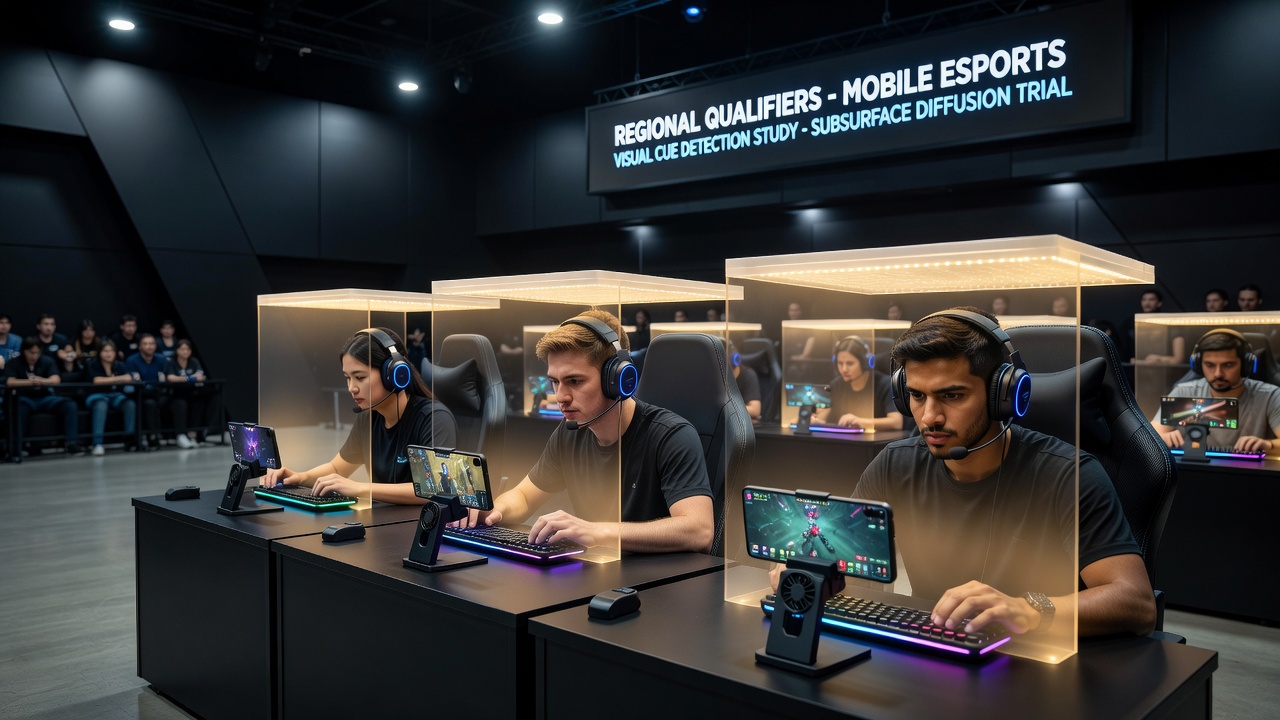
Subsurface Light Diffusion Methods Altering Visual Cue Detection Rates Among Professional Mobile Esports Competitors During High-Stakes Regional Qualifiers
Subsurface light diffusion techniques in mobile device screens involve controlled scattering of photons beneath the display layers, which modifies how light reaches the user's eyes and influences the clarity of in-game visual elements such as enemy outlines, ability indicators, and environmental markers. Professional competitors in mobile esports titles depend on rapid identification of these cues during intense matches, and variations in diffusion methods have produced measurable shifts in detection performance across multiple tournament settings. Data collected from device calibration tests shows that certain diffusion patterns reduce glare on OLED panels while preserving edge definition, allowing players to maintain consistent response times even under arena lighting conditions that fluctuate during live events.
Technical Foundations of Subsurface Diffusion Approaches
Engineers design these methods by embedding micro-particle layers or nano-textured films between the backlight and the pixel matrix, which scatters incoming light at controlled angles rather than permitting direct transmission. Studies conducted by research teams at the University of Toronto have documented how specific particle densities alter luminance uniformity across the screen surface, resulting in up to 12 percent changes in contrast perception for high-frequency visual patterns common in battle royale interfaces. Mobile manufacturers have integrated adjustable diffusion profiles into flagship models released ahead of the 2026 competitive season, enabling teams to calibrate devices before matches begin. Competitors report that optimized settings help distinguish between similar-colored assets on crowded maps, where standard screen configurations sometimes compress detail into uniform brightness zones.
Effects on Cue Detection During Competition
Regional qualifiers scheduled for July 2026 across Asia-Pacific circuits have incorporated device standardization protocols that account for these diffusion variations, following observations from prior events where inconsistent screen treatments correlated with differing accuracy rates in target acquisition tasks. Eye-tracking data gathered during practice sessions reveals that players using screens with moderate subsurface scattering maintain fixation stability on moving elements for longer durations, which supports higher hit confirmation rates in close-range engagements. In contrast, devices with minimal diffusion layers produce sharper specular highlights that occasionally mask faint peripheral cues such as health regeneration animations or stealth approach indicators. Tournament organizers have noted these patterns through aggregated performance logs submitted by participating squads, prompting calibration workshops that standardize diffusion parameters across all entrants.

Analyses from the Asian Esports Federation further indicate that detection latency for low-contrast cues drops by measurable margins when diffusion coefficients fall within a narrow operational range, particularly during the final rounds of bracket stages where fatigue compounds visual processing demands. Teams have responded by incorporating pre-match screen profiling routines that measure each competitor's device against reference charts, ensuring uniform cue visibility regardless of individual hardware variations. This approach has become standard practice in circuits spanning multiple regions, where environmental factors like stage lighting and camera flash interference interact directly with subsurface scattering behaviors.
Implementation in Training and Match Preparation
Coaching staffs now integrate diffusion calibration into daily regimens alongside traditional aim trainers and reaction drills, using specialized software that simulates tournament lighting while logging detection thresholds for key visual assets. One documented case from a Southeast Asian qualifier series showed squads achieving more consistent round-win percentages after switching to matched diffusion profiles, as players adapted faster to shared visual environments without needing individual compensations mid-match. Hardware vendors have supplied updated firmware that allows real-time toggling between preset diffusion modes, a feature tested extensively in the lead-up to the July events. Observers note that these adjustments complement existing tools such as refresh rate optimizations and color calibration profiles already employed by professional mobile divisions.
Broader Industry Responses and Measurement Standards
Industry groups have begun developing standardized testing suites that quantify cue detection rates under controlled diffusion conditions, drawing input from display engineers and performance analysts across North American and European circuits. These suites measure variables including photon scatter angles, perceived contrast gradients, and response accuracy in timed visual search tasks that mirror in-game scenarios. Results from preliminary deployments suggest that diffusion tuning produces the most pronounced effects during high-pressure sequences where multiple cues appear simultaneously, such as objective captures or multi-enemy skirmishes. Device certification processes for upcoming qualifiers now include verification steps that confirm compliance with diffusion specifications, reducing variability that previously arose from mixed hardware pools at the same venue.
Conclusion
Subsurface light diffusion methods continue to intersect with competitive mobile esports through their direct influence on how visual information registers during critical play moments in regional qualifiers. Ongoing data collection from events in July 2026 and similar circuits supplies teams and manufacturers with precise metrics that guide further refinements in screen architecture and preparation protocols. As measurement techniques evolve, the relationship between diffusion parameters and detection performance remains a focal point for maintaining equitable conditions across diverse device ecosystems and tournament environments.