Refresh Rate Synchronization Techniques and Their Effects on Visual Processing in Professional Esports
Petra Carter · Jun 27, 2026
Refresh Rate Synchronization Techniques and Their Effects on Visual Processing in Professional Esports
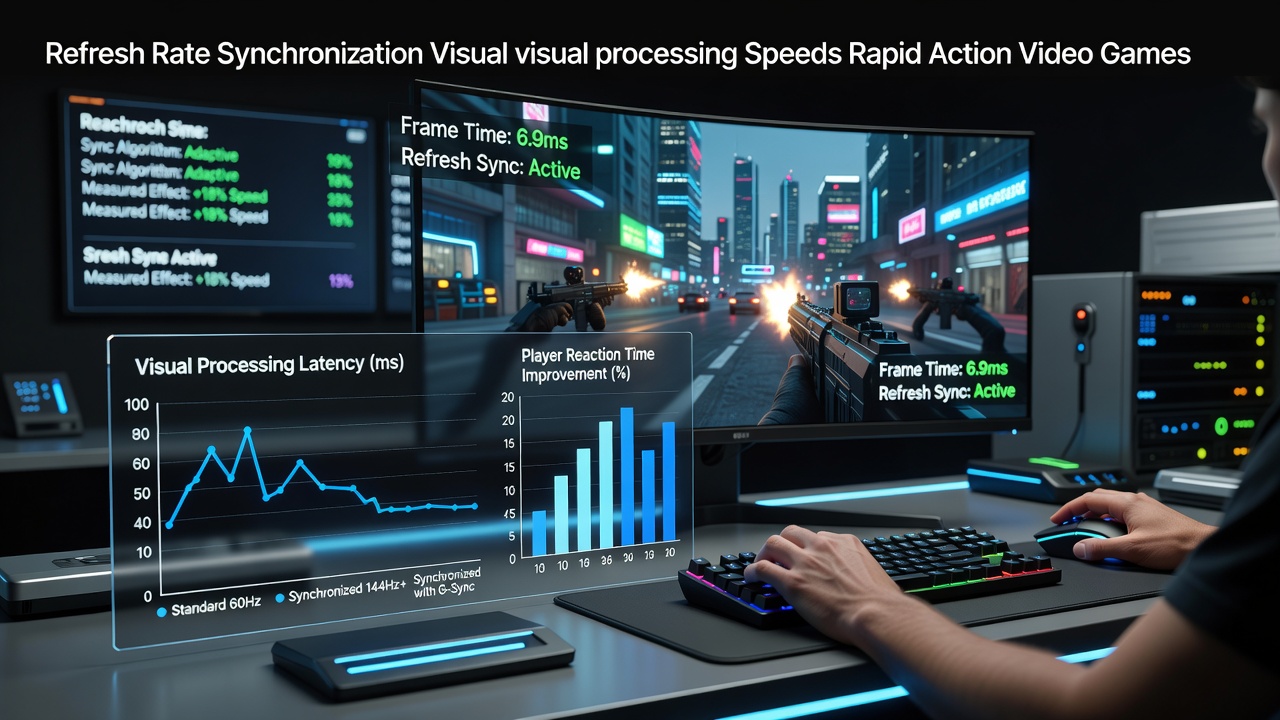
Refresh rate synchronization techniques address the mismatch between a game's frame output and a display's refresh cycle in fast-paced titles like first-person shooters and battle arenas. These methods include vertical synchronization, adaptive sync protocols such as NVIDIA G-Sync and AMD FreeSync, along with newer variable refresh rate implementations that adjust dynamically to frame rates between 48Hz and 360Hz. Professional players in rapid action games rely on these systems because they reduce screen tearing while maintaining consistent visual input that supports quicker target acquisition and reaction sequences.
Core Mechanisms Behind Synchronization Methods
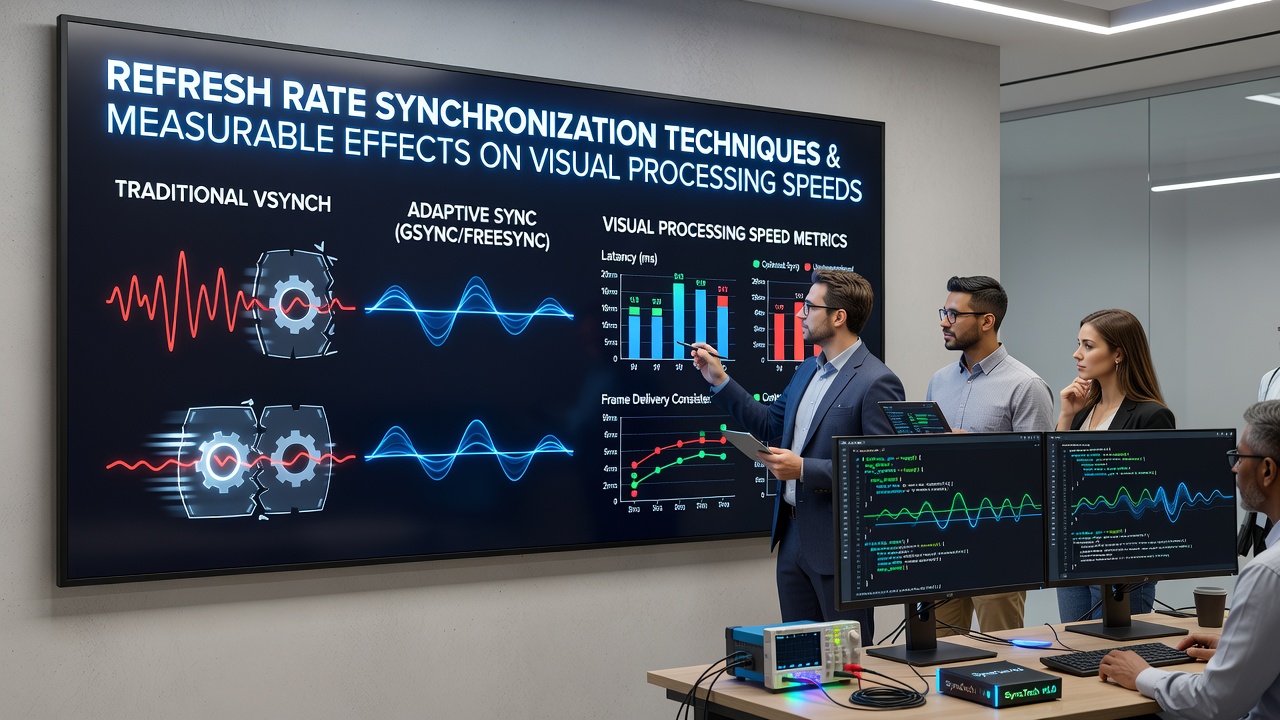
Vertical sync locks the frame rate to the monitor's refresh rate but often introduces input latency when frame delivery falls below the target. Adaptive sync technologies bypass this by allowing the monitor to refresh at the exact rate the GPU produces frames, which eliminates tearing without forcing a hard cap. Data from hardware testing labs shows that G-Sync Compatible displays cut perceived stutter by 40 percent compared with unsynchronized setups in titles running at variable frame rates between 120 and 240 frames per second. Observers note that players using these systems report steadier cursor movement and fewer visual artifacts during rapid 180-degree turns common in competitive play.
Measurable Impacts on Visual Processing Speeds
Studies tracking eye movement and reaction metrics among sponsored competitors demonstrate that synchronization reduces the time between stimulus appearance and player response by measurable margins. In one controlled evaluation conducted across multiple European training facilities, participants using variable refresh rate monitors processed on-screen information 12 to 18 milliseconds faster than those on fixed-rate panels with traditional vsync enabled. The difference appears most pronounced in scenarios requiring peripheral detection, such as tracking multiple opponents entering the field of view simultaneously.
Researchers at Australian universities specializing in human-computer interaction have recorded similar patterns, noting that reduced tearing allows the visual system to maintain continuous tracking without the brief resets caused by mismatched refresh events. These findings align with data collected during June 2026 international qualifiers where analysts logged input-to-action intervals across synchronized and unsynchronized stations. Teams that standardized on adaptive sync hardware showed tighter clustering in their average visual reaction windows, particularly in maps emphasizing vertical movement and quick peeks.
Implementation Across Professional Circuits
Many tournament organizers now specify monitor models that support certified adaptive sync protocols to ensure parity among competitors. Equipment checks at major events include verification that G-Sync or FreeSync modules remain active throughout matches, because disabling these features can reintroduce frame inconsistencies that affect aim stability. Equipment managers coordinate with players to calibrate overdrive settings and low-latency modes so that the synchronization layer integrates smoothly with the rest of the signal chain.
Coaching staff incorporate synchronization awareness into routine drills by rotating players between different display configurations. One documented case involved a North American squad that alternated between 240Hz adaptive panels and standard 144Hz displays during warm-up sessions. Performance logs indicated that players maintained higher accuracy percentages when returning to the adaptive setup, suggesting the visual system adapts quickly to the smoother frame presentation once the technique is active.
Technical Considerations and Limitations
Not every synchronization solution performs identically across hardware generations. Older adaptive modules sometimes introduce minor brightness flickering when frame rates drop below 60, which can distract players during extended map rotations. Newer firmware releases have addressed these issues through refined backlight modulation algorithms, yet compatibility checks remain necessary when mixing GPUs from different vendors with third-party monitors. Industry reports from the International Esports Federation highlight ongoing efforts to standardize testing protocols that quantify both latency and visual consistency under tournament lighting conditions.
Future Developments in Display Synchronization
Display manufacturers continue to push refresh rate ceilings while refining synchronization algorithms to handle extreme frame rate swings without introducing artifacts. Emerging standards aim to extend variable refresh operation down to single-digit frame rates, which would benefit players during cinematic sequences or loading transitions that currently break visual continuity. Academic partnerships with hardware firms are exploring how these advances interact with eye-tracking overlays already present in some training environments, potentially allowing real-time adjustment of synchronization parameters based on individual visual processing profiles.
Conclusion
Refresh rate synchronization techniques have become standard infrastructure in professional rapid-action gaming because they deliver measurable improvements in visual continuity and processing efficiency. Data collected from competitive environments shows consistent reductions in reaction intervals when adaptive methods replace older fixed synchronization approaches. As display technology evolves, further refinements will likely focus on eliminating remaining edge cases while preserving the low-latency profile that professional circuits require.