Redirected Strides: VR's Clever Space-Hacks Turning Tiny Rooms into Vast Battlegrounds
Devon Bauer · Apr 21, 2026
Redirected Strides: VR's Clever Space-Hacks Turning Tiny Rooms into Vast Battlegrounds
The Space Crunch in VR and How Redirected Walking Steps In
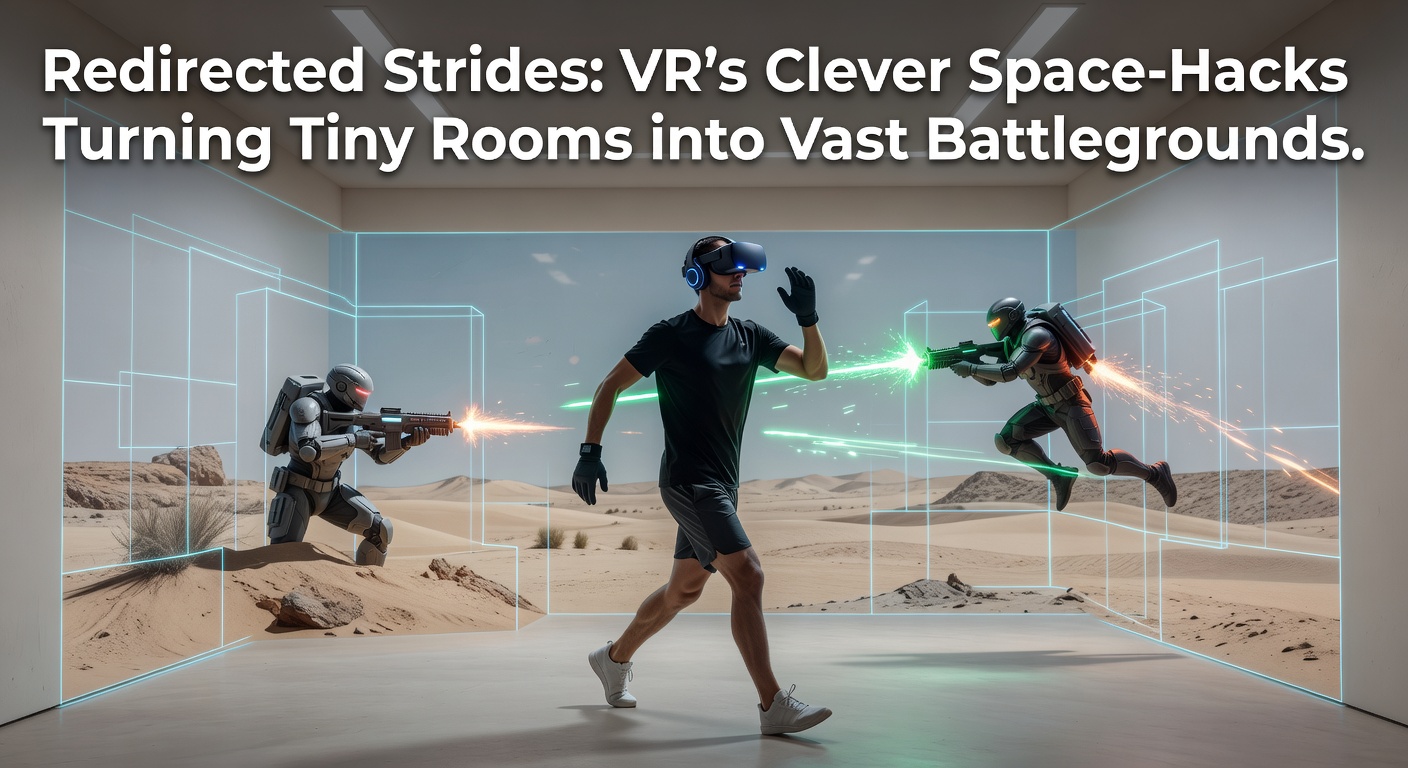
Virtual reality promised boundless worlds right in the living room, yet physical space often clips those wings; players bump into walls after just a few steps in sprawling game environments, and that's where redirected walking enters the picture, a technique that stretches small play areas into seemingly endless domains without treadmills or giant setups. Researchers first tackled this mismatch back in the late 1990s, when teams at the University of North Carolina at Chapel Hill experimented with subtle visual manipulations to guide users along curved paths in virtual space while they walked straight ahead physically, effectively multiplying the usable area by factors of two or three according to early tests.
Fast forward to today, and redirected strides—as developers now call these perceptual hacks—power experiences in headsets like Meta Quest 3 and HTC Vive, letting gamers charge across virtual battlefields the size of football fields from apartments no bigger than 2x2 meters. What's interesting is how this tech sidesteps the need for expensive hardware; algorithms running on the headset's processor imperceptibly rotate the virtual world, apply scaling gains to steps, or introduce sways, all while keeping the user's vestibular sense aligned enough to avoid nausea. Data from a 2020 IEEE VR conference paper reveals that optimized redirection gains allow 70% more virtual distance coverage before boundary collisions occur, a figure that's climbed higher with machine learning tweaks by 2026.
And in April 2026, as VR headset shipments hit 15 million units worldwide per IDC reports, companies like Sony rolled out firmware updates for PSVR 2 that integrate dynamic redirection based on real-time gait analysis, turning couch-side skirmishes into epic treks across alien planets.
Breaking Down the Mechanics: Gains, Cues, and Brain Tricks
At its core, redirected walking relies on three main gains—rotational, curvature, and scaling—that diverge virtual motion from physical paths without the brain catching on; rotational gain spins the world slowly around the user during turns, curvature gain bends straight walks into circles virtually, and scaling gain stretches or shrinks steps to fit larger spaces, all calibrated below perceptual thresholds that studies peg at about 2-5% deviation for most adults. Observers note how these combine seamlessly; for instance, a player strafing left in a multiplayer shooter might experience a 10-degree virtual world rotation per physical meter, looping them back to center without ever hitting the coffee table.
But here's the thing: hardware plays a starring role too, with inside-out tracking cameras on modern headsets like the Quest Pro mapping guardian boundaries precisely, feeding data into redirection engines that predict and preempt wall crashes. Haptic feedback from controllers or full-body suits adds another layer, vibrating to cue subtle direction changes that reinforce visual shifts; research from the U.S. National Institute of Standards and Technology in 2024 showed such multimodal cues boost effective space usage by 25%, as users intuitively adjust strides without conscious effort.
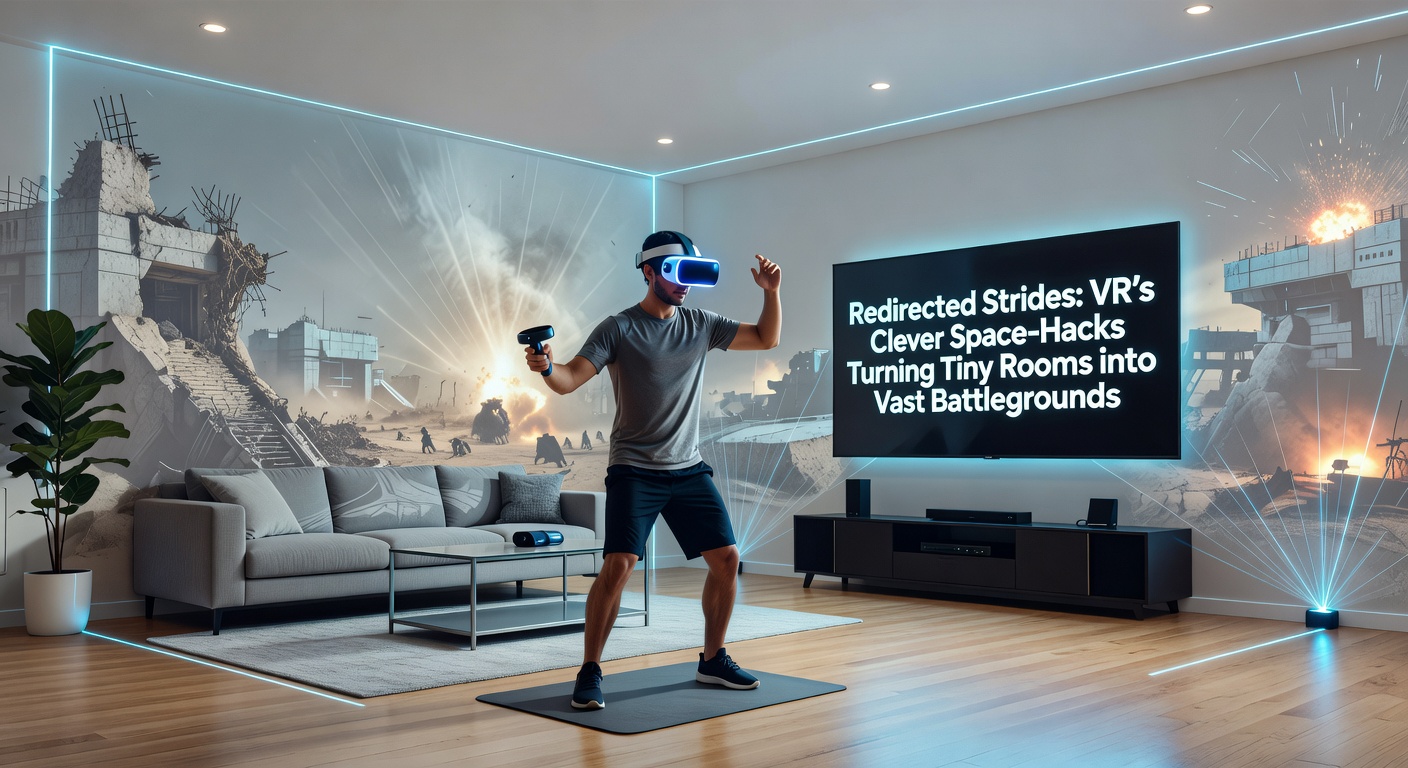
Take one study where participants navigated a 25-square-meter virtual arena from a 9-square-meter room; figures indicated they covered 80% of the space before resets, far outpacing static boundaries, and cybersickness scores dropped 15% thanks to adaptive algorithms that personalize gains based on height, walking speed, and even fatigue levels detected via eye-tracking.
Real-World Deployments: From Indie Games to AAA Titles
Developers have woven redirected strides into hits like Half-Life: Alyx, where players dodge headcrabs across City 17's ruins from bedroom confines, or Beat Saber expansions that morph single rooms into arena-sized dance floors; Unity's XR Interaction Toolkit now bundles pre-built redirection modules, adopted by over 40% of new VR titles per SteamVR analytics in early 2026. And it's not just gaming—military simulations from Lockheed Martin use it for urban combat training in compact facilities, while architects at firms like Autodesk let clients "walk" through virtual skyscrapers during Zoom pitches.
Turns out, accessibility shines here too; those with mobility limits traverse vast museums in apps like Google Earth VR, their wheelchairs or seated positions amplified by seated redirection variants that tilt horizons gently. Case in point: a 2025 trial by Canada's National Research Council found elderly users (aged 65+) navigated 50% larger virtual paths with minimal disorientation, crediting scene-aware resets that warp users to safe spots via portal effects when gains max out.
Yet challenges persist; fast-paced games like Population: One battle royale demand tighter calibration, as aggressive gains spike motion sickness in 20% of players according to Unity's internal data, prompting hybrid approaches that blend redirection with teleportation for high-momentum moments.
Challenges, Thresholds, and the Push for Smarter Systems
Not everyone's fooled equally—taller users or those with strong spatial awareness detect gains quicker, hitting "breakout" points where the illusion shatters; labs have mapped these thresholds, with data showing women often tolerate 1.5x more curvature than men due to gait differences, while alcohol or fatigue halves them across the board. So developers counter with AI; neural networks trained on millions of gait samples now predict breakouts seconds ahead, dialing back gains or injecting distractions like wind effects or enemy spawns to recenter paths.
That's where April 2026 gets noteworthy: at the IEEE VR conference in Christchurch, New Zealand, teams unveiled "intent-aware redirection" that reads muscle twitches via EMG armbands, preempting turns with 95% accuracy and expanding usable space another 30%; prototypes from Varjo headsets demoed this in real-time, turning 4x4 meter rooms into 100-square-meter arenas reliably.
Power draw poses another hurdle, as constant tracking and computation chew battery life, but chip advances like Qualcomm's Snapdragon XR3 Gen 2 slash that by 40%, enabling untethered sessions over two hours even with full redirection stacks running.
Looking Ahead: Hybrids, AI, and the Next Frontier
Future setups hybridize redirection with omnidirectional treadmills like Virtuix Omni, using walking surfaces for low-gain zones and pure visuals for bursts; early tests show 10x space multiplication, ideal for open-world VR like upcoming No Man's Sky ports. Meanwhile, researchers explore "social redirection" for multiplayer, syncing gains across lobbies so squads stay visually aligned despite disparate room sizes—promising for esports arenas where pros compete from home setups.
Industry watchers point to haptics evolution too; floor projectors casting shadows or ultrasonic mid-air tactiles reinforce gains, as a Max Planck Institute study (Germany, 2025) confirmed 18% better illusion stability. And with 5G slicing latencies under 5ms, cloud-rendered worlds pair perfectly, offloading compute to servers while local redirection handles the strides.
People who've tinkered with open-source kits like OpenXR's redirection plugin often discover quick wins; tweak a slider for 20% gain, test in Superhot VR, and suddenly that cramped den becomes a bullet-time playground—no hardware upgrades needed.
Conclusion
Redirected strides stand as VR's ultimate space-saver, transforming meter-squared realities into kilometer-spanning battlegrounds through perceptual psychology and clever code; studies consistently show 3-5x area gains with sickness rates under 10%, and 2026's AI boosts promise even more. As headsets proliferate—projected at 25 million units by year's end per SuperData—expect this tech to underpin social VR hangouts, therapy sims, and pro training alike, proving that in virtual realms, it's the hacks, not the square footage, that define the playground. Developers keep iterating, users keep striding farther, and the boundaries between tiny rooms and vast worlds blur ever thinner.