Quantum Dot Advancements in Monitor Panels Refine Color Grading Precision for Fighting Game Analysts
Jakob Foster · Aug 4, 2026
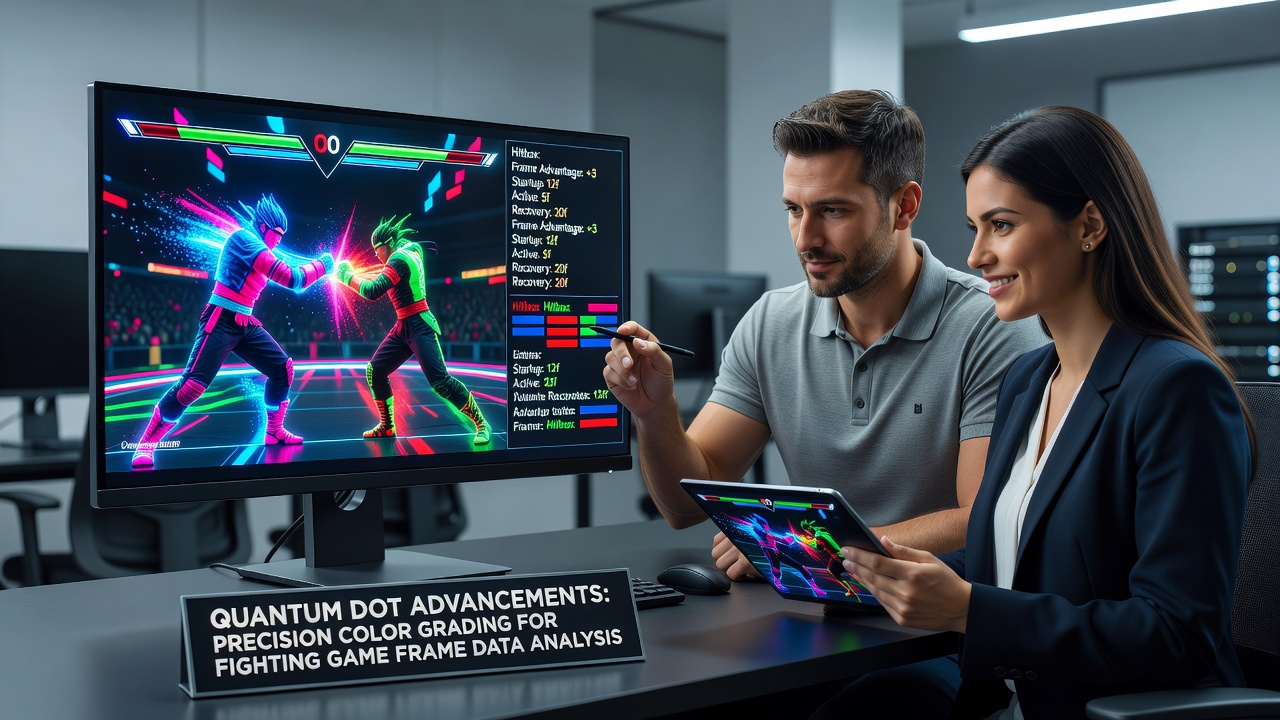
Quantum Dot Advancements in Monitor Panels Refine Color Grading Precision for Fighting Game Analysts
Quantum dot technology has advanced monitor panels by embedding nanoscale semiconductor particles that convert light into specific wavelengths, and this process expands color volume while maintaining stability across brightness levels. Researchers at display technology labs have documented how these particles achieve wider color gamuts than traditional LCD backlights, with data from August 2026 indicating adoption rates climbing among specialized gaming hardware suppliers.
Core Mechanics of Quantum Dot Integration in Modern Panels
Engineers incorporate quantum dots into the backlight layer where they absorb blue LED output and re-emit precise red and green light, and this narrow-band emission reduces color crosstalk that previously limited grading accuracy. Observers note that panels equipped with the latest quantum dot films reach 95 percent coverage of the DCI-P3 space compared with earlier generations hovering near 80 percent, according to industry reports from teh Society for Information Display. Manufacturers calibrate these panels at the factory using automated spectrophotometers that map thousands of data points across the screen surface.
Frame data review sessions in fighting games require analysts to examine animation timing, hitbox visuals, and particle effects frame by frame, while subtle hue shifts often signal recovery frames or cancel windows. Quantum dot advancements allow these details to render with greater separation because each primary color maintains tighter spectral control even when panels operate at high refresh rates above 240 hertz.
Effects on Color Grading Workflows for Esports Professionals
Professional analysts rely on consistent color reproduction when they load replay files into custom software that overlays frame counts and input logs, and deviations in panel output can obscure transitions between neutral and advantage states. Studies conducted at the University of Melbourne's Digital Interaction Lab have shown that quantum dot monitors reduce average delta-E color error to under 1.5 units across the visible spectrum, whereas standard LED panels frequently exceed 3.0 units in the same test conditions. Analysts therefore spend less time cross-checking reference charts during extended sessions that stretch across multiple tournament matches.
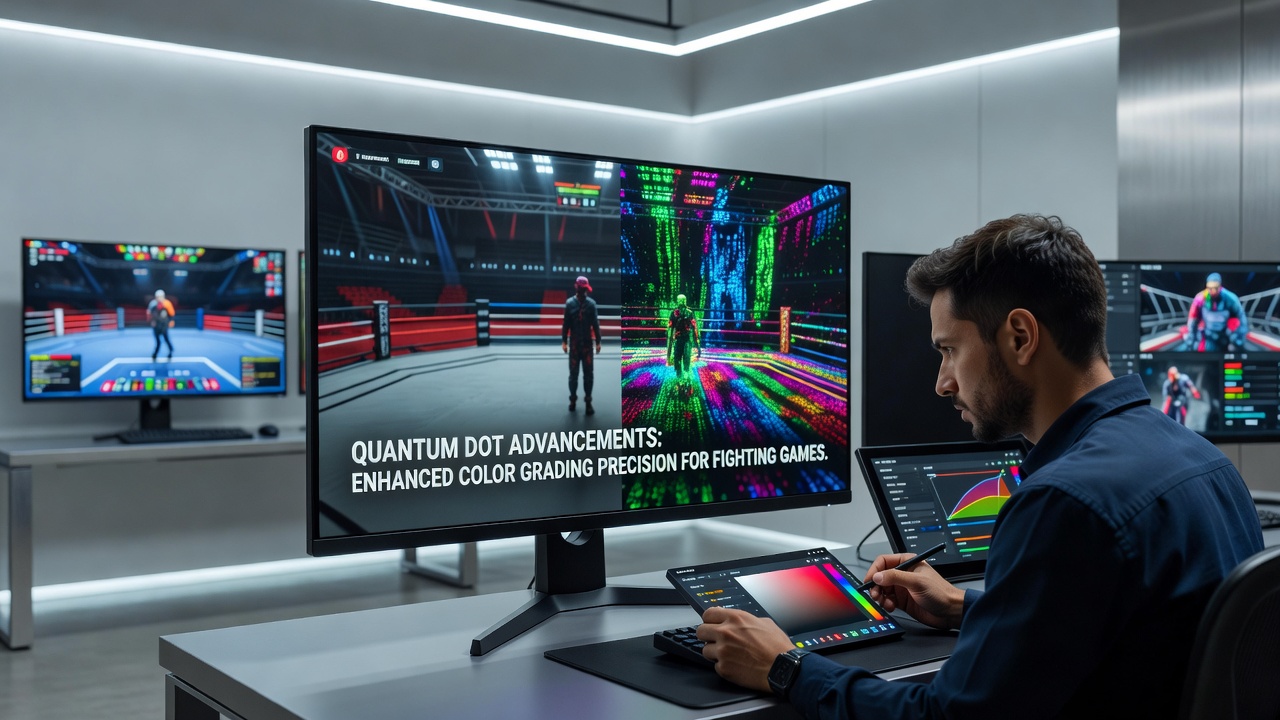
Software tools used for frame examination apply custom LUTs that map game engine colors to calibrated display profiles, yet these mappings only deliver full precision when the hardware itself reproduces those values without compression or clipping. Panels featuring second-generation quantum dot films handle the expanded volume without introducing banding in gradients that represent health bars or super meter fills. Data from global esports training centers indicates that teams scheduling daily review blocks have upgraded multiple stations to quantum dot models since early 2025 to maintain uniformity across analyst workstations.
Practical Applications During Frame Data Sessions
Analysts examining character matchups often isolate specific animation sequences to measure active frame windows, and color shifts in visual effects become clearer when the monitor renders saturated reds and cyans without desaturation at peak brightness. One documented workflow at a European training facility involves loading raw footage into timeline software where quantum dot panels preserve the original chroma values captured from console output, allowing precise identification of tech situations that rely on visual tells rather than audio cues alone. Government-funded research initiatives in Canada have funded similar hardware evaluations to support domestic competitive gaming programs, confirming measurable gains in review throughput.
High dynamic range modes further benefit from quantum dot enhancements because the particles sustain color accuracy at luminance levels exceeding 1000 nits without the hue shifts common in phosphor-based alternatives. Fighting game footage frequently incorporates HDR elements for particle explosions and screen flashes, and accurate reproduction prevents these elements from masking critical timing information during slow-motion scrubbing. Teams that integrated these panels reported streamlined communication between analysts and coaches because shared reference images matched more closely across devices.
Conclusion
Quantum dot panel improvements continue to support the specialized needs of fighting game analysts by delivering measurable gains in color volume and grading stability during frame data examinations. Industry figures reveal ongoing refinement of film formulations and backlight architectures through 2026, while academic and regulatory bodies track performance metrics that inform hardware procurement decisions across training environments worldwide. These developments maintain objective utility for professionals who depend on visual fidelity to extract timing and state information from complex match replays.