Procedural Generation Techniques and Narrative Branching in Persistent Online Worlds
Sofia Schmid · Aug 6, 2026
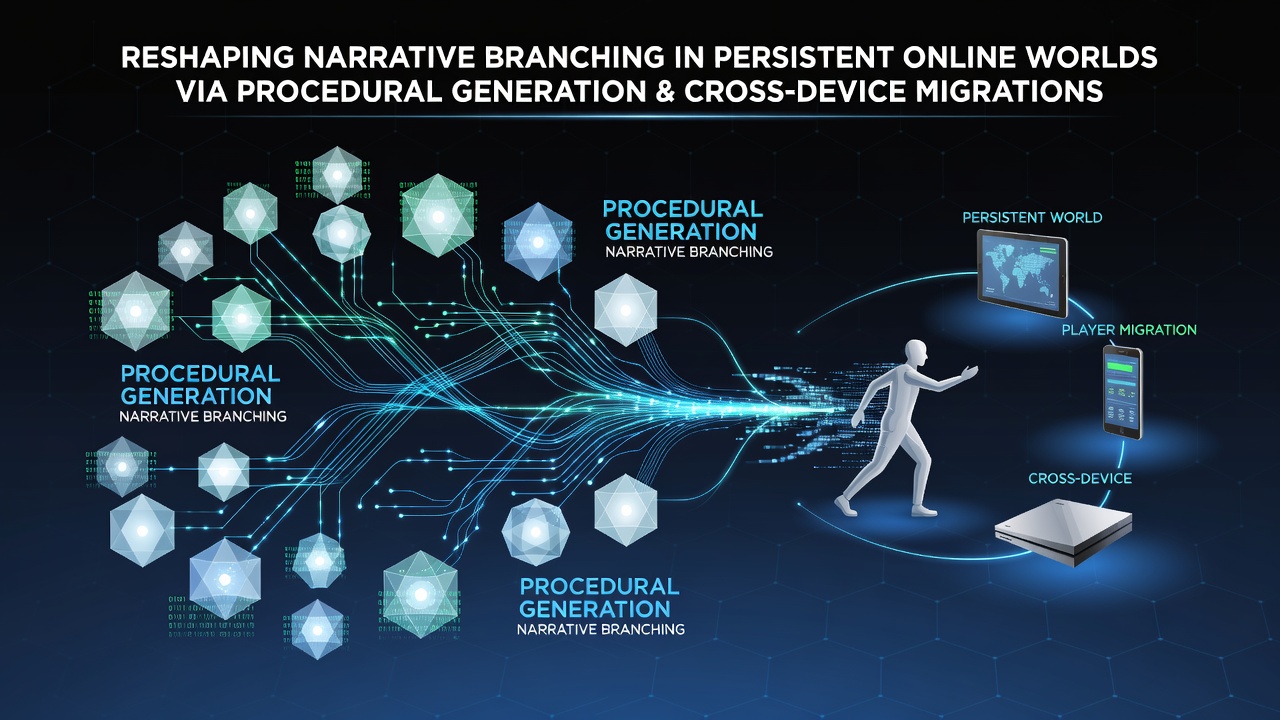
Procedural Generation Techniques and Narrative Branching in Persistent Online Worlds
Procedural generation uses algorithms to create game content dynamically, and this approach has altered how narrative branching operates inside persistent online worlds that allow players to migrate between devices. Developers apply these methods to generate story variations based on player actions, world states, and device-specific constraints while maintaining continuity across sessions. Data from industry reports indicate that such systems reduce manual content creation time by up to 40 percent in large-scale multiplayer environments.
Core Mechanisms of Procedural Narrative Branching
Algorithms evaluate player choices, environmental variables, and historical world data to produce new story segments on demand. In persistent worlds, these branches integrate with shared databases that track events across all participants, which ensures that one player's migration from console to mobile does not reset narrative progress. Researchers at institutions including the University of Tokyo have documented how seed-based generation maintains consistency even when network latency differs between hardware platforms.
Branching structures expand through recursive functions that reference prior outcomes, allowing narratives to evolve without pre-authored paths for every scenario. Cross-device support requires additional layers that normalize input formats and save states, so a decision made on a tablet influences subsequent events viewed on a desktop client. Figures from the Entertainment Software Association reveal that titles incorporating these techniques saw average session lengths increase by 25 percent between 2024 and 2026.
Handling Persistence Across Migrations
Persistent worlds store narrative states in cloud-synced repositories that procedural systems query during each login. When players switch devices, the generation engine reconstructs relevant branches using compressed history logs rather than full replays. This process prevents contradictions that could arise from differing hardware capabilities or connection qualities. Observers note that synchronization protocols developed by European technology consortia have become standard in titles supporting seamless transfers.
Technical Adaptations for Device Variability
Generation pipelines adjust detail levels according to device specifications while preserving core narrative logic. Mobile clients might receive simplified environmental descriptions, yet the underlying choice outcomes remain identical to those rendered on high-end PCs. In August 2026 several major platforms updated their migration frameworks to include real-time procedural adjustments that account for battery status and screen size, further stabilizing story continuity during transitions.
Studies conducted by academic groups at Australian universities demonstrate that these adaptations maintain player retention rates when migration frequency rises above three switches per week. The systems also incorporate fallback routines that generate alternative branches if a device cannot process complex visual or audio elements tied to specific plot points.
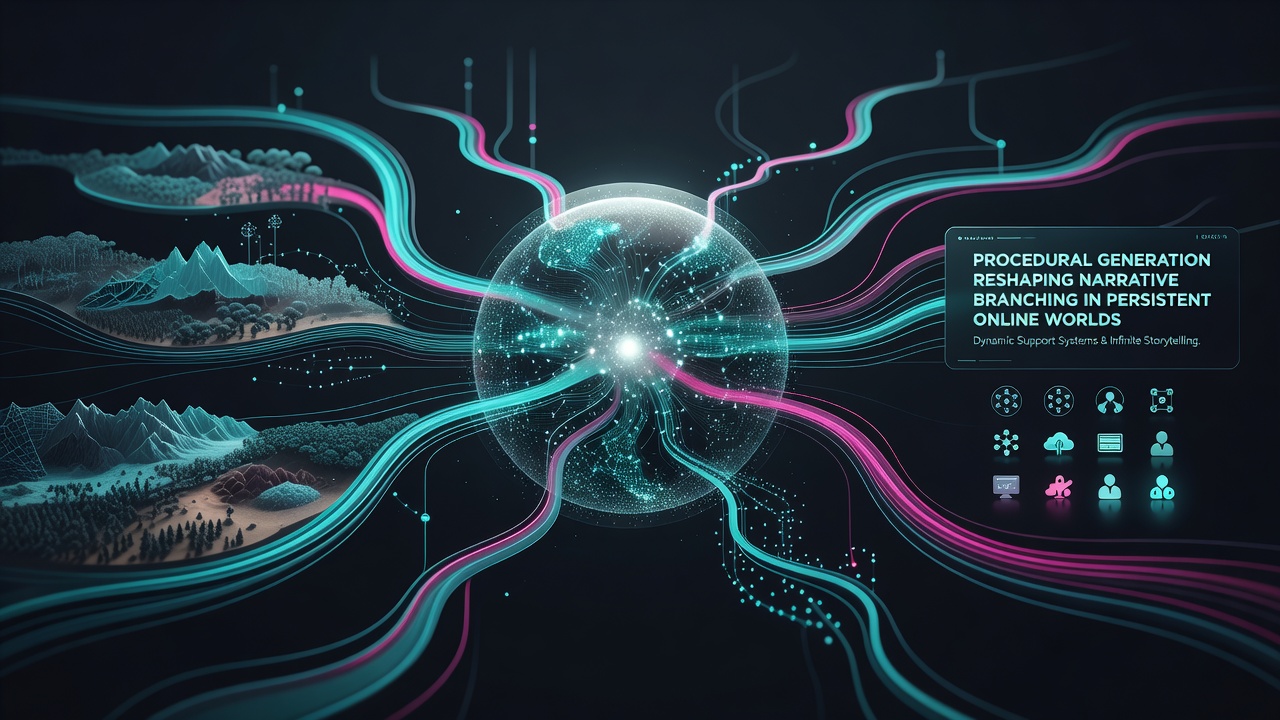
Examples from Current Implementations
Multiple ongoing projects illustrate these techniques in practice. One large-scale title uses noise functions combined with player behavior metrics to spawn region-specific story arcs that persist regardless of access method. Another integrates machine learning models trained on aggregated migration data to predict and pre-generate likely branches before a player reconnects on a different device. Reports compiled by the Interactive Software Federation of Europe highlight measurable reductions in narrative fragmentation across such deployments.
Those who have examined server logs from these environments report fewer instances of story desync compared with earlier static branching models. Procedural layers also enable dynamic responses to collective player actions, such as community-wide events that alter available paths for all participants irrespective of their current hardware.
Conclusion
Procedural generation continues to expand the scope of narrative branching within persistent online worlds that accommodate cross-device migrations. The combination of algorithmic content creation, synchronized databases, and device-aware adjustments produces flexible story systems that scale with player movement. Ongoing refinements documented through 2026 indicate sustained development in this area across global development teams.