Piezoelectric Sensor Implementations Transforming Pressure Sensitivity in Flight Simulation Peripherals
Jakob Foster · Aug 18, 2026
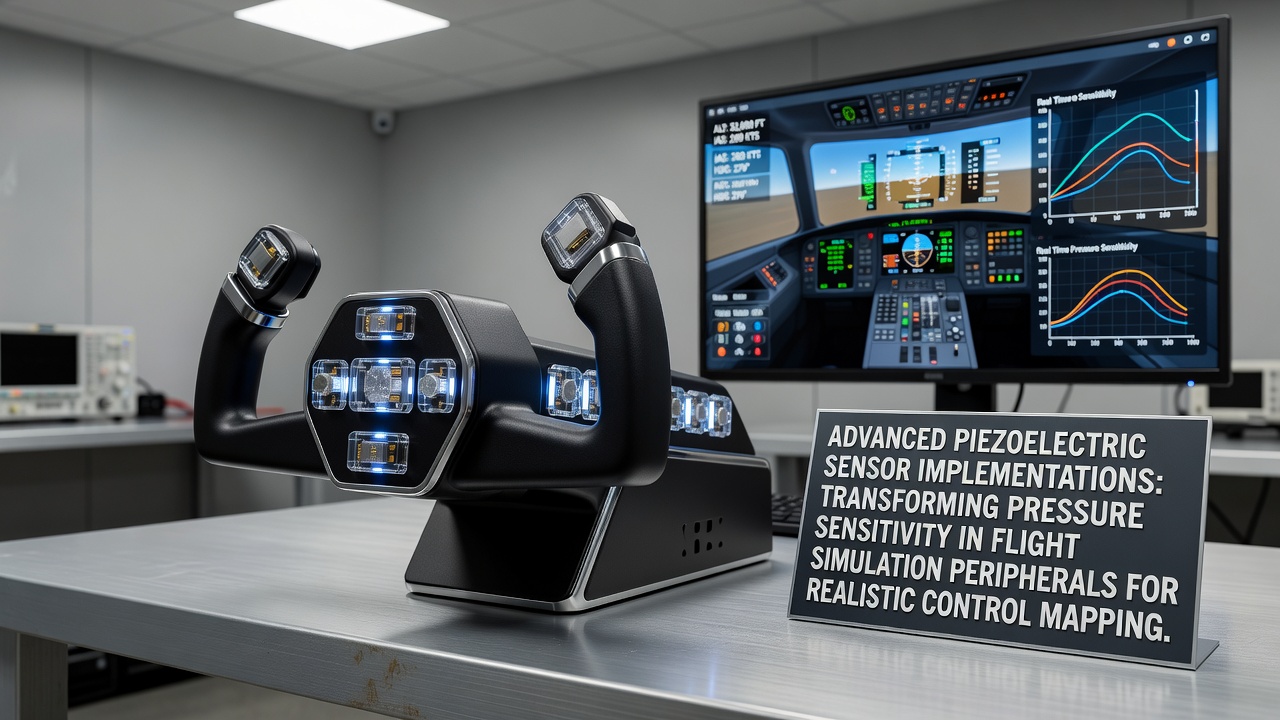
Piezoelectric Sensor Implementations Transforming Pressure Sensitivity in Flight Simulation Peripherals
Engineers have integrated piezoelectric sensors into flight simulation joysticks, yokes, and rudder pedals to detect varying levels of applied force and convert those measurements into precise control inputs. These components generate electrical charge when subjected to mechanical stress, which allows peripherals to register pressure gradients rather than simple binary on-off states. Manufacturers report that this approach produces control mapping that more closely matches the force feedback experienced in actual aircraft cockpits.
How Piezoelectric Technology Measures Force in Simulation Hardware
Piezoelectric materials such as lead zirconate titanate crystals deform under pressure and produce a proportional voltage output. In flight simulation devices this voltage signal travels through analog-to-digital converters that map the reading to axis deflection values within flight software. Observers note that calibration routines compensate for temperature fluctuations and material fatigue to maintain consistent response curves over extended use. Data from component suppliers indicate response times below five milliseconds, which supports rapid corrections during simulated maneuvers.
Implementation Across Commercial and Custom Peripherals
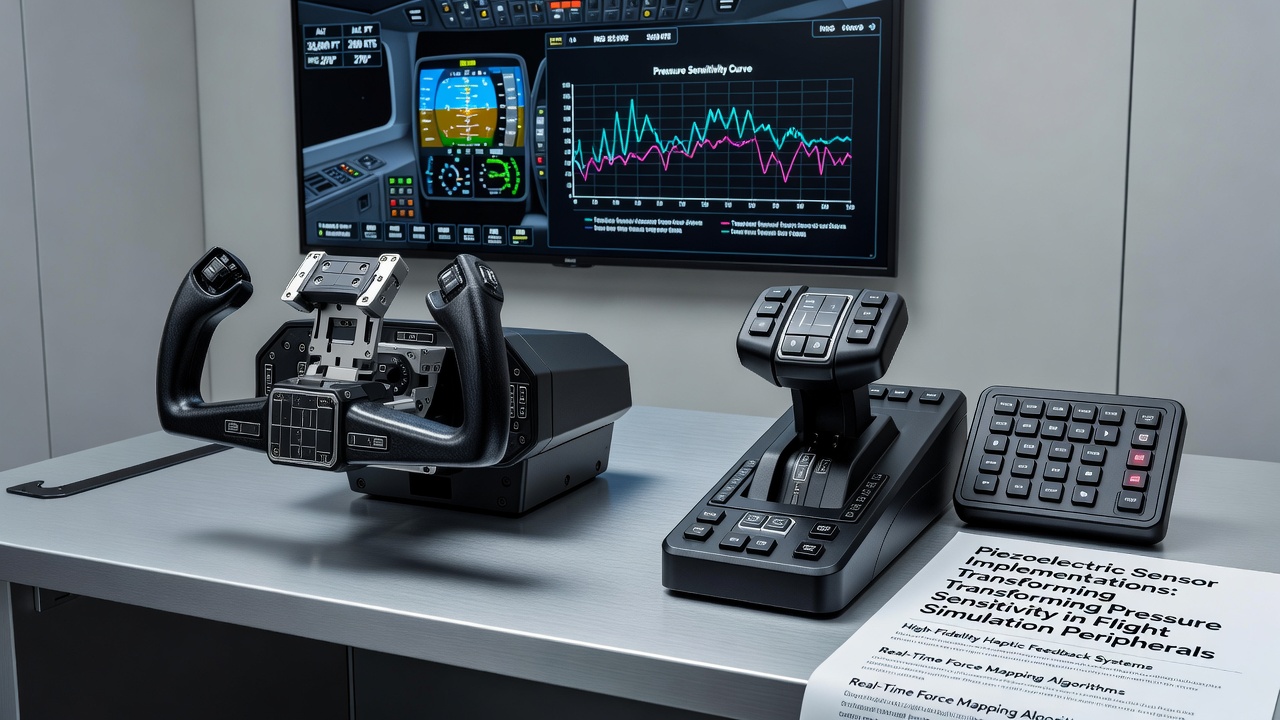
Several hardware developers have released throttle quadrants and collective controls that embed multiple piezoelectric elements along the lever travel path. Each sensor monitors distinct pressure zones, enabling layered input profiles where light touch produces fine adjustments while firmer pressure triggers larger control surface movements. One study from the Technical University of Delft examined prototypes that combined these sensors with hall-effect magnetic detection, and the combined system reduced input latency by eighteen percent compared with earlier potentiometer-based designs.
Custom builders in the simulation community have adapted industrial pressure transducers for home cockpit projects. These adaptations often involve mounting thin-film piezoelectric strips beneath existing grip surfaces, then routing signals through microcontrollers that output standard HID protocol data. Figures from parts distributors show increased sales of these sensor modules during the first half of 2026, coinciding with new software support in popular simulation titles released that spring.
Impact on Control Mapping and Realism
Pressure-sensitive mapping lets pilots assign different response curves to light versus heavy inputs on the same physical axis. Software profiles can therefore replicate the nonlinear feel of hydraulic flight controls where initial movement requires minimal force yet further deflection demands increasing effort. Research published by the National Aeronautics and Space Administration in 2025 documented improved pilot performance in precision landing tasks when trainees used force-sensing sticks rather than position-only devices.
Integration with virtual reality headsets further extends these capabilities. Eye-tracking data combined with pressure readings from the stick allow software to adjust control sensitivity based on pilot gaze direction and grip intensity. European Union Aviation Safety Agency guidelines updated in August 2026 reference force-sensing hardware as an accepted method for qualifying advanced training devices at the BITD and FNPT levels.
Technical Considerations and Calibration Practices
Temperature compensation circuits remain essential because piezoelectric output varies with ambient heat. Manufacturers embed thermistors near each sensor and apply real-time correction algorithms stored in onboard firmware. Long-term drift measurements collected by university labs in Canada indicate annual calibration drift below two percent when devices undergo recommended burn-in procedures before deployment.
Power consumption stays low enough for USB-powered operation, yet some high-channel-count yokes incorporate dedicated sensor interface boards that draw from separate power supplies. Signal shielding prevents electromagnetic interference from nearby stepper motors in motion-platform cockpits, a common issue addressed through twisted-pair wiring and grounded enclosures.
Conclusion
Piezoelectric sensor adoption continues to expand as simulation software adds native support for multi-stage force inputs. Hardware developers release updated models with refined sensor arrays, while academic and regulatory bodies document performance gains in training scenarios. These developments support increasingly accurate replication of aircraft handling qualities across both consumer and professional-grade peripherals.