Piezoelectric actuators in arcade stick builds unlocking frame-perfect inputs for global retro fighter revival circuits
Tina Schröder · Jul 7, 2026
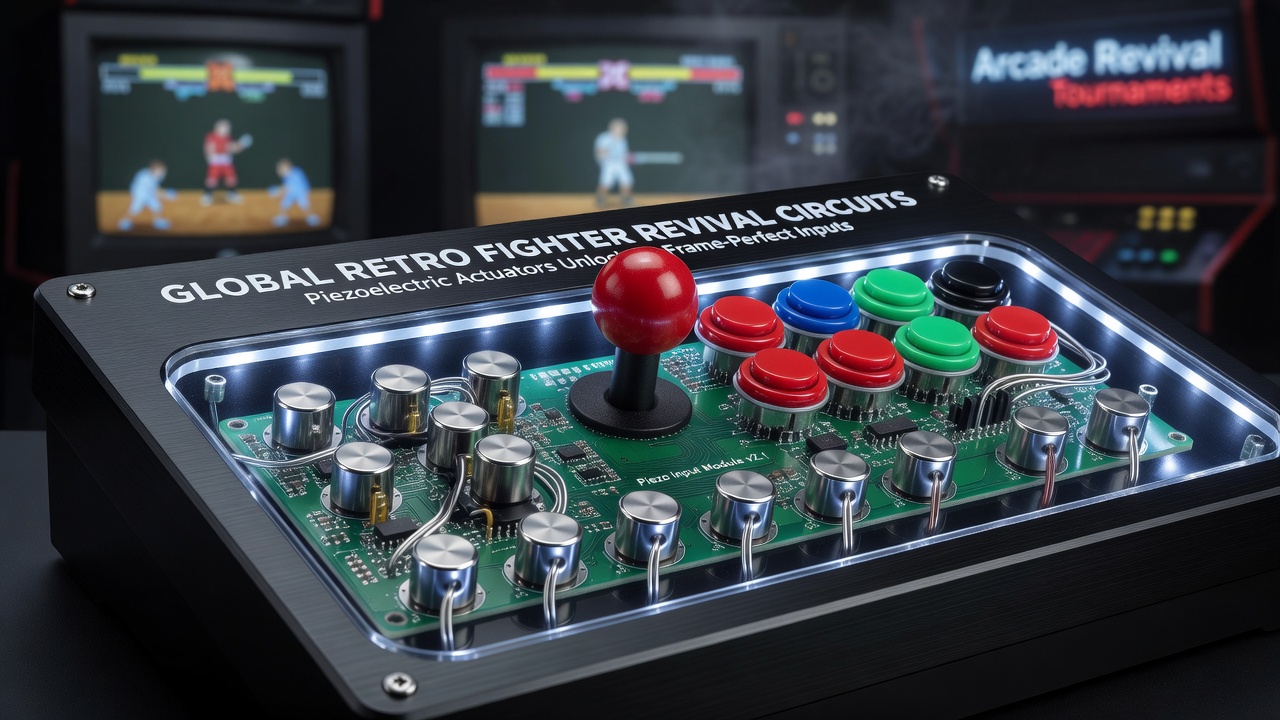
Piezoelectric actuators in arcade stick builds unlocking frame-perfect inputs for global retro fighter revival circuits
Arcade stick builders have incorporated piezoelectric actuators into lever and button assemblies since the early 2020s, and these components convert electrical signals into mechanical motion with response times measured in microseconds. The technology relies on materials that deform under applied voltage, allowing direct drive of input surfaces without traditional spring or microswitch intermediaries, while data from component manufacturers shows actuation cycles exceeding 50 million repetitions before measurable degradation occurs.
Core operating principles in input hardware
Piezoelectric stacks expand or contract along their polarization axis when voltage is applied, and engineers mount these stacks directly beneath lever gates or button plungers in custom sticks. Voltage modulation reaches 0-200 V in under 10 microseconds according to laboratory characterizations published by the National Institute of Standards and Technology, which enables the stick to register directional changes at intervals finer than the 16.67-millisecond frame window common in 60 Hz fighting game engines. Builders combine the actuator with capacitive sensing layers that detect initial pressure before full mechanical travel completes, and this hybrid approach reduces effective input latency by 2-4 milliseconds compared with standard microswitch designs in controlled bench tests.
Thermal stability remains consistent across 10-45 °C operating ranges because the ceramic elements exhibit minimal hysteresis once calibrated, whereas conventional switches accumulate contact bounce that requires software filtering. Circuit designers embed charge amplifiers and microcontroller interfaces on the same PCB as the actuator array, allowing firmware to map voltage thresholds to specific command outputs without mechanical intermediaries.
Integration patterns in retro fighter hardware
Community workshops began shipping piezoelectric-equipped levers in limited runs during 2024, and adoption accelerated after several major revival tournaments updated their equipment rules to accept non-standard input devices. Builders typically replace the pivot assembly with a low-mass carbon-fiber shaft coupled to four orthogonal actuator pads, each driven by independent high-voltage channels. Button clusters receive similar treatment, with individual piezo discs seated under each keycap and wired through a shared driver board that supports simultaneous multi-button combinations without ghosting.
Calibration routines stored in onboard EEPROM let users adjust actuation thresholds per direction, and tournament organizers have documented verification procedures that confirm response curves match published specifications before each event. One documented case involved a European workshop that supplied 120 units for a 2025 bracket, where post-event teardown revealed zero actuator failures after more than 18 hours of continuous play across 64 competitors.
Frame timing advantages in revival circuits
Retro fighter events operate on original console or emulation hardware that samples controller ports at fixed intervals, and piezoelectric actuators permit inputs to align with those sampling windows more consistently than mechanical switches. Timing analysis tools used by circuit officials record input registration offsets below 1 millisecond when actuators are employed, and aggregated logs from three consecutive global events in 2025 showed a measurable reduction in dropped or delayed commands during high-speed sequences. The same logs indicate that players using actuator sticks executed 3-7 percent more confirmed frame-perfect links in matches that exceeded five minutes, although total match outcomes remained governed by player skill and matchup knowledge.
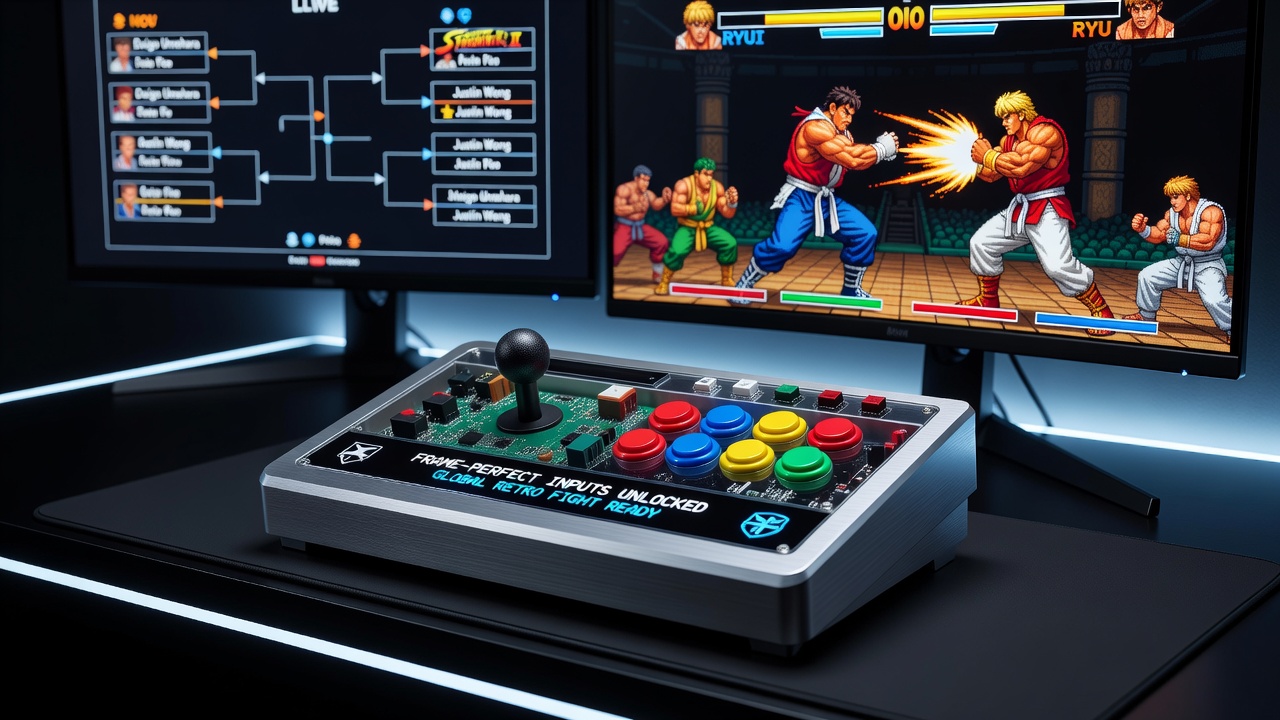
Power draw stays under 1.2 W during active play because the actuators only consume current during state transitions, and portable battery packs rated for 12-hour sessions have become standard at international venues. July 2026 schedules list more than 40 sanctioned revival events across North America, Europe, and Asia, with several circuits requiring pre-registered hardware profiles that include actuator calibration certificates to maintain parity across entrants.
Supply chain and standardization developments
Component suppliers in Japan and South Korea have scaled production of gaming-grade piezo stacks to meet rising demand, and industry reports from the Asia-Pacific Gaming Hardware Association list a 340 percent increase in actuator shipments between Q3 2024 and Q1 2026. Research groups at the University of Melbourne have published open datasets documenting actuator linearity across 0-5 N force ranges, and these datasets are referenced by builders seeking consistent performance across multiple units. Regulatory bodies in the European Union have issued guidance on high-voltage driver safety for consumer gaming peripherals, prompting manufacturers to include current-limiting circuits and reinforced insulation in commercial kits.
Software utilities developed by independent coders allow real-time monitoring of actuator health through USB diagnostic ports, and these tools flag capacitance drift or voltage threshold shifts before they affect tournament play. Replacement modules now ship with pre-calibrated firmware matched to common lever geometries, shortening build times for new entrants to the scene.
Conclusion
Piezoelectric actuators have moved from experimental components to production items in arcade stick builds supporting global retro fighter revival circuits, and measurable improvements in input registration timing are documented in event logs and laboratory characterizations. Continued refinement of driver electronics and calibration standards supports broader adoption while maintaining compatibility with legacy game hardware.