Photon Mapping Protocols Elevating Visual Depth in Hybrid Platform Racing Circuits
Sofia Schmid · Jun 9, 2026
Photon Mapping Protocols Elevating Visual Depth in Hybrid Platform Racing Circuits
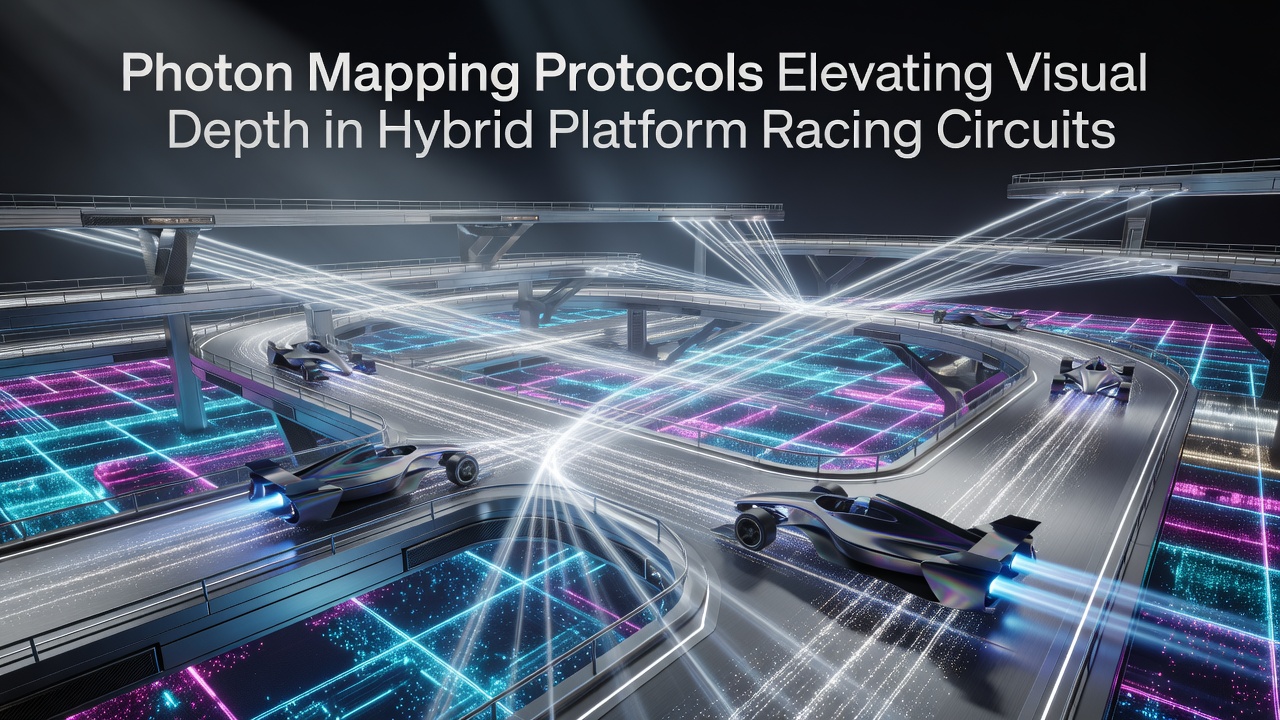
Photon mapping protocols have emerged as a key rendering technique that traces light particles through virtual environments to simulate realistic illumination, reflections, and refractions in racing game circuits, and developers integrate these methods into hybrid platforms that combine local processing with cloud-based resources to maintain consistent visual fidelity across devices. Research indicates that photon mapping builds on traditional ray tracing by storing light data in a map structure which allows subsequent calculations to reference accumulated photon interactions rather than recomputing every path from scratch.
Core Mechanisms of Photon Mapping in Racing Simulations
Engineers implement photon mapping through two primary phases where the first traces photons from light sources into the scene while the second gathers those stored photons to shade surfaces, and this dual approach handles complex lighting conditions common in outdoor racing circuits such as dynamic sunlight angles and vehicle headlight interactions with wet track surfaces. Data from graphics research shows that hybrid platforms benefit because photon maps can be precomputed on server clusters during non-play periods and then streamed to client devices for real-time adjustments, which reduces local computational loads without sacrificing depth cues like subtle shadows under car bodies or caustics on reflective barriers.
Observers note that protocols often incorporate adaptive sampling rates where areas of high geometric complexity such as tunnel entrances or foliage-lined straights receive denser photon distributions, whereas open straights use sparser maps to conserve bandwidth in cross-device sessions. Studies conducted at institutions across multiple regions demonstrate that these adjustments maintain frame stability when players switch between console, PC, and handheld hardware during the same race event.
Integration with Hybrid Platform Architectures
Hybrid systems leverage photon mapping by partitioning the workload so that global illumination calculations occur on centralized servers equipped with specialized accelerators while local clients handle view-dependent gathering steps, and this division supports seamless transitions in June 2026 tournaments where competitors move between stationary setups and mobile qualifiers without noticeable lighting inconsistencies. Industry reports from the Interactive Software Federation of Europe highlight that such partitioning protocols have been refined through iterative testing on circuits modeled after real-world tracks in Europe and Asia.
What's interesting is how compression techniques applied to photon map data allow efficient transmission over variable network conditions, with developers using hierarchical encoding that prioritizes photons contributing most to visible depth effects like volumetric fog in night races. Figures from academic collaborations involving the Australian National University reveal that transmission overhead drops by measurable margins when maps are updated only on significant lighting changes rather than every frame.
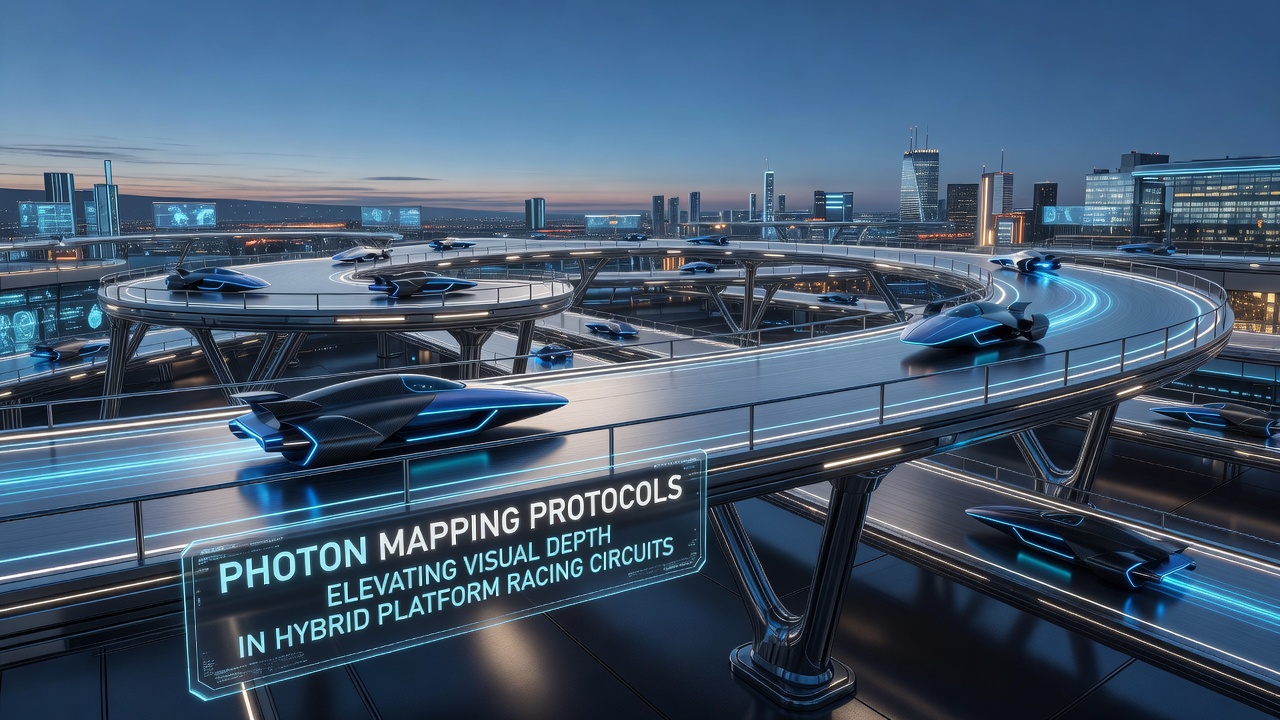
Engineers further optimize these protocols by incorporating temporal coherence where photons from previous frames inform current maps through predictive blending, which smooths transitions during high-speed camera movements typical in racing perspectives. Research indicates this reduces artifacts that might otherwise appear when devices with differing GPU capabilities join the same multiplayer session.
Performance Data and Implementation Cases
Performance benchmarks collected in 2025 and early 2026 show hybrid racing titles utilizing photon mapping achieve higher perceptual depth scores in controlled viewer tests compared with scenes relying solely on screen-space approximations, and one case involved a circuit simulation where photon-gathered reflections on vehicle paint layers contributed to clearer differentiation between metallic finishes under varying track lights. Trade group documentation from the Entertainment Software Association of Canada outlines adoption rates among studios focusing on cross-platform titles.
Developers apply these techniques in environments featuring both static circuit elements like barriers and dynamic ones such as particle effects from tire smoke, with protocols automatically scaling photon counts based on available client resources. Data indicates that players on lower-end hardware still receive core depth enhancements through fallback gathering kernels that subsample the map without introducing visible popping during gameplay.
Future Refinements Anticipated in 2026
Upcoming protocol updates scheduled for rollout around June 2026 aim to incorporate machine-assisted photon culling that identifies and discards low-impact particles earlier in the tracing phase, which promises further efficiency gains for hybrid setups handling large-scale multiplayer fields. Collaborative papers from North American and Asian research networks detail preliminary results where such culling maintained visual parity while cutting server-side processing time.
Additional work explores integration with neural upscaling methods that reconstruct finer photon details on the client side from lower-resolution maps, allowing consistent quality across diverse display resolutions common in hybrid racing ecosystems. Evidence from these projects suggests continued expansion of photon mapping use in competitive circuits where lighting accuracy influences player spatial awareness during overtaking maneuvers.
Conclusion
Photon mapping protocols continue to advance visual depth rendering within hybrid platform racing circuits by balancing computational demands across distributed systems while preserving realistic light interactions essential to immersive gameplay. As implementations evolve through ongoing research and platform optimizations, the technique supports broader accessibility without compromising core graphical elements that define competitive racing experiences.