Phase-Change Alloys Redefining Thermal Regulation in Compact Esports Arena Infrastructure
Sofia Schmid · Jun 18, 2026
Phase-Change Alloys Redefining Thermal Regulation in Compact Esports Arena Infrastructure
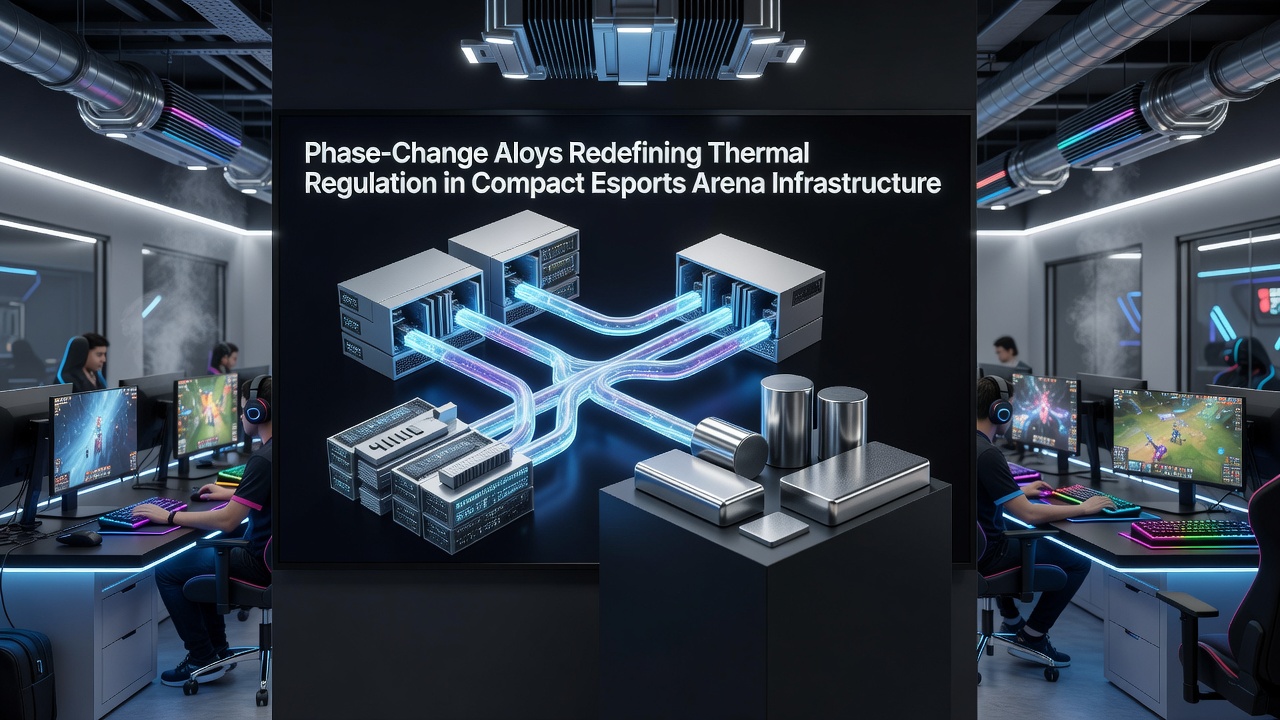
Phase-change alloys have entered esports infrastructure as materials that absorb and release heat during solid-to-liquid transitions, allowing compact venues to maintain stable temperatures without relying solely on traditional air conditioning units. Researchers at institutions studying thermal management report that these alloys operate through latent heat storage, where energy gets absorbed at specific melting points to prevent temperature spikes in densely packed equipment areas.
Material Properties and Heat Management Mechanisms
These alloys typically consist of combinations such as paraffin-based compounds mixed with metallic elements or salt hydrates engineered for electronics environments. Data from laboratory tests shows melting ranges between 40 and 60 degrees Celsius align with operating thresholds of GPUs and CPUs found in tournament hardware. When ambient temperatures rise, the material transitions phases and draws excess heat away from components, then solidifies again as conditions stabilize, releasing stored energy in a controlled manner.
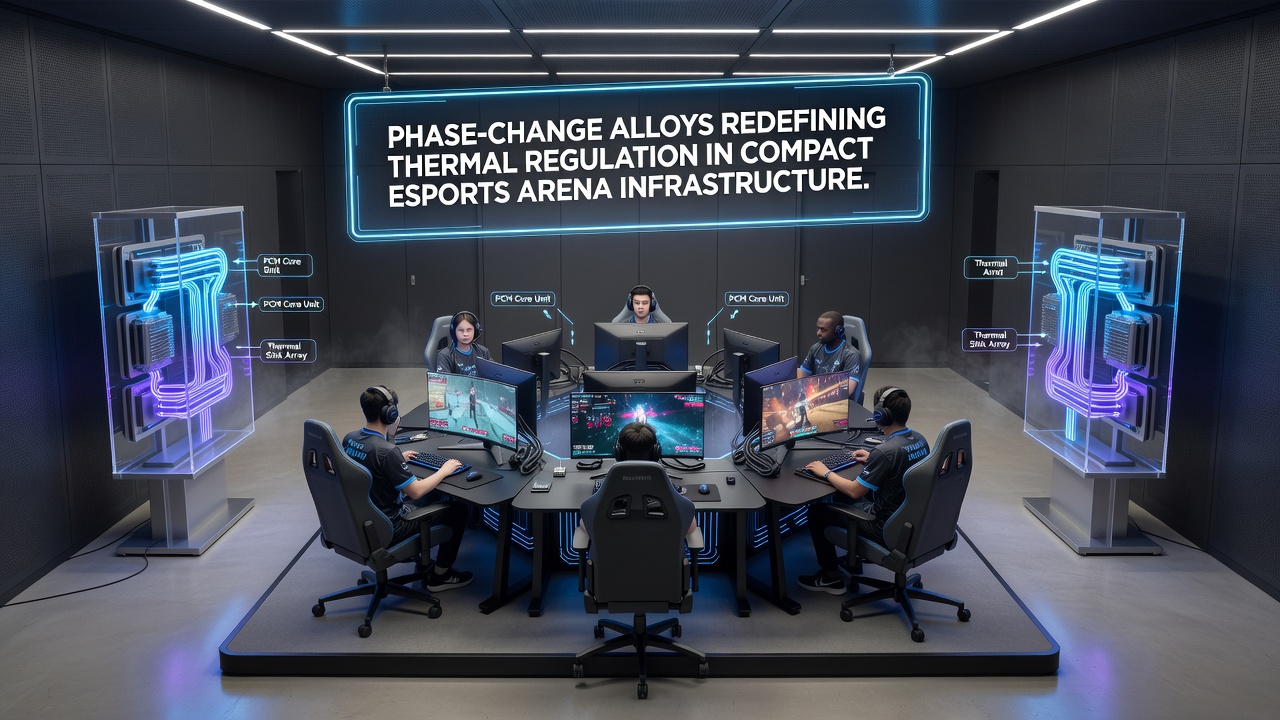
Compact esports arenas face unique constraints because floor space often measures under 200 square meters while accommodating 50 or more high-performance stations plus networking switches. Traditional cooling methods demand large ductwork and high airflow volumes that exceed structural limits in many urban venues. Phase-change alloys integrate directly into panels, heat sinks, and rack enclosures, reducing the physical footprint required for temperature control.
Implementation in Arena Designs
Facility planners have incorporated these materials into wall cladding and underfloor systems at several locations hosting regional qualifiers throughout 2025. One installation in a converted warehouse used alloy-infused tiles beneath raised flooring to buffer heat from under-desk power distribution units. Temperature logs collected over multi-day events indicated peak reductions of up to 8 degrees Celsius compared with baseline configurations lacking the alloys.
Power consumption figures from similar retrofits reveal lower overall energy draw because chillers and fans cycle less frequently. Industry reports compiled by the Global Esports Equipment Association note that venues adopting phase-change solutions recorded average daily electricity savings equivalent to 12 percent of previous cooling loads during peak tournament periods. Integration requires careful calibration of alloy quantities to match the thermal mass of each zone, preventing over-absorption that could lead to condensation issues in humid climates.
Performance Data and Testing Protocols
Standardized testing protocols developed by materials laboratories specify cycling the alloys through repeated melt-freeze sequences while monitoring heat flux across simulated server loads. Results published in peer-reviewed journals indicate cycle stability exceeding 5,000 iterations before measurable degradation occurs in optimized formulations. Arena operators apply these findings when scheduling maintenance windows, typically aligning inspections with off-season periods rather than during active competition calendars.
June 2026 marks the scheduled rollout of updated building codes in several North American municipalities that explicitly reference phase-change thermal storage for high-density electronics spaces. Compliance documentation will require verification of alloy composition and containment integrity to ensure fire safety ratings remain intact. Early adopters have begun pre-certification audits using portable calorimetry equipment to map heat distribution patterns across player pods and broadcast booths.
Case Studies from Operational Venues
Observers tracking infrastructure upgrades describe one European facility that embedded alloy modules within custom monitor arms, allowing direct heat transfer from display electronics into the surrounding structure. This configuration eliminated the need for additional spot cooling units that previously obstructed sightlines for spectators. Monitoring data collected across three consecutive LAN events showed consistent internal temperatures within manufacturer-specified ranges for all connected devices.
Another implementation in an Asian metropolitan arena combined phase-change panels with low-velocity displacement ventilation. Airflow measurements taken at player seating positions registered reduced turbulence, which competitors noted improved focus during extended matches. Acoustic profiles remained largely unchanged because the alloys function silently without moving parts, unlike compressor-based systems.
Integration Challenges and Solutions
Weight considerations arise when scaling alloy volumes for larger installations, since many formulations carry densities higher than standard insulation. Structural engineers address this through distributed placement strategies that spread loads across existing floor joists rather than concentrating mass in single locations. Containment vessels use polymer composites rated for thermal cycling to prevent leakage while maintaining flexibility during installation.
Cost analyses from project summaries indicate initial material expenses remain higher than conventional insulation, yet payback periods shorten when factoring reduced HVAC sizing and lower operational energy demands. Procurement teams source alloys from suppliers meeting ISO standards for electronics-grade purity to avoid contaminants that could affect phase transition consistency.
Future Developments in Arena Infrastructure
Ongoing research explores nano-enhanced variants that increase thermal conductivity without shifting transition temperatures outside desired bands. Pilot programs at training facilities test these next-generation materials in portable rack modules designed for pop-up tournament setups. Collaboration between materials scientists and esports organizers continues to refine deployment guidelines that balance performance metrics with venue constraints.
Conclusion
Phase-change alloys provide measurable thermal regulation benefits in space-limited esports environments through latent heat absorption and integration flexibility. Performance records from multiple venues demonstrate temperature stability improvements alongside energy reductions, supporting their adoption as infrastructure scales. Continued refinement of formulations and installation practices positions these materials as components within evolving compact arena designs.