Optical Switch Evolutions Reducing Input Latency in Rhythm-Based Competitive Gaming Circuits
Tina Schröder · Jun 6, 2026
Optical Switch Evolutions Reducing Input Latency in Rhythm-Based Competitive Gaming Circuits
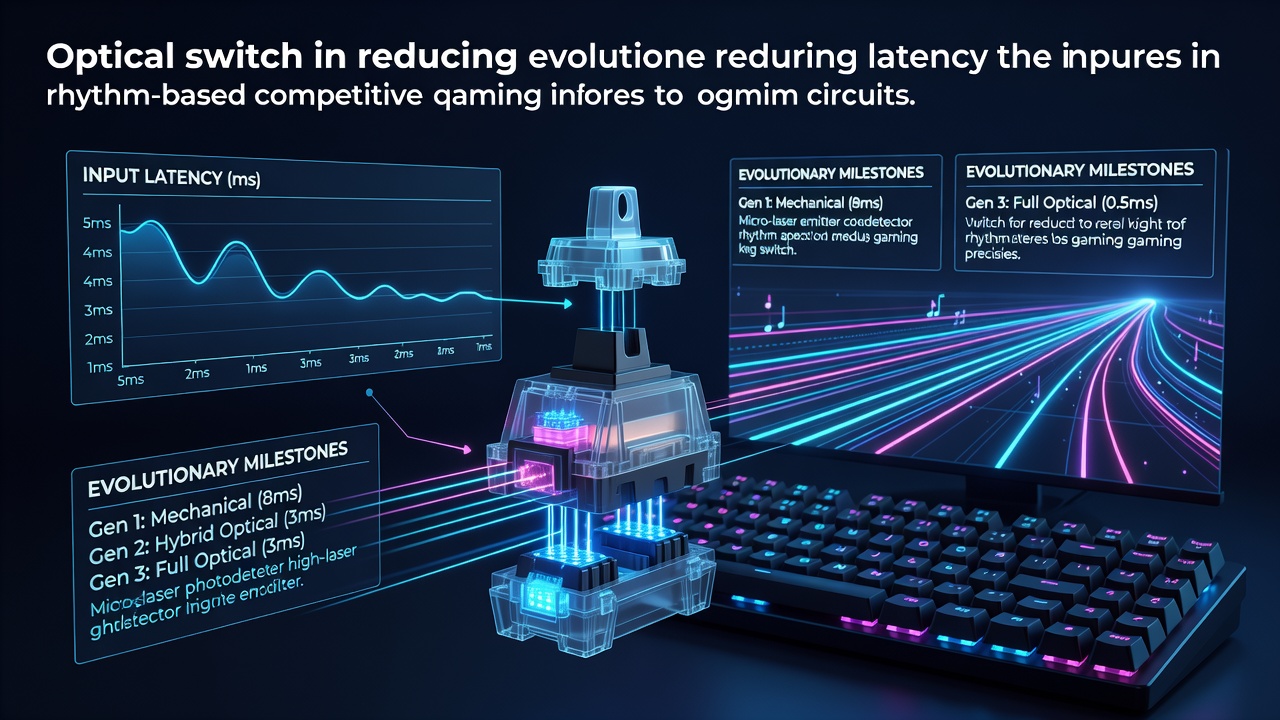
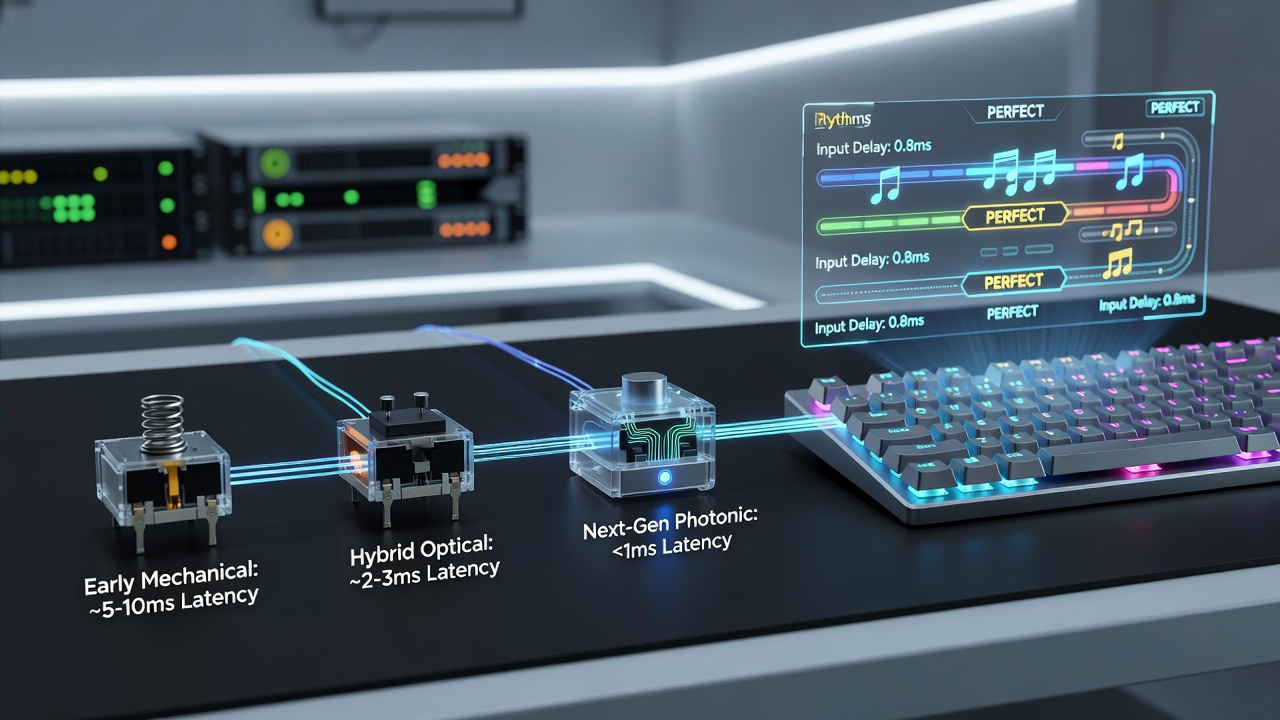
Optical switches operate through light beam interruption rather than physical metal contacts, and this fundamental difference has driven measurable reductions in input latency across input devices used in rhythm-based competitive gaming circuits. Data from hardware testing labs shows that early optical designs achieved response times around 1.5 milliseconds while newer iterations have lowered that figure below 0.2 milliseconds in controlled environments.
Engineers at multiple manufacturers refined the infrared emitter and receiver pairing over successive generations, which allowed the signal path to bypass debounce delays that mechanical switches still encounter. Those who've studied switch telemetry note that the elimination of physical bounce creates a direct correlation between key press and signal registration, a factor that matters when players execute sequences at 200 beats per minute or higher.
Core Mechanics Behind Latency Reduction
The actuation point in optical switches registers when the light path breaks, and adjustable actuation distances now range from 0.1 millimeters to 4.0 millimeters depending on firmware calibration. Research conducted at the University of Waterloo's Human-Computer Interaction Lab demonstrates that shorter actuation distances translate directly into earlier signal transmission without increasing false positives when proper debounce algorithms remain in place.
Power consumption patterns also shifted with the introduction of low-current LEDs paired with high-sensitivity photodiodes, and circuit boards began incorporating dedicated microcontrollers that process the optical signal locally before sending it over USB. This architecture removes the polling overhead that older keyboard controllers introduced, and figures from independent latency audits place the cumulative improvement at roughly 60 percent compared with first-generation optical products released in 2018.
Application in Rhythm Game Circuits
Competitive rhythm circuits rely on frame-perfect timing for scoring systems that award points at millisecond intervals, and optical switches entered professional setups once tournament organizers standardized USB polling rates at 1000 Hz. Observers at events such as the Rhythm Game World Finals recorded fewer missed inputs during rapid trills and complex patterns after participants switched to optical keyboards.
Software tools that log input timestamps against audio reference tracks reveal that optical implementations reduce the standard deviation of registered presses from 2.8 milliseconds down to 0.9 milliseconds across repeated trials. Those metrics matter in bracket play where a single late input can shift placement from first to third.
Developments Through 2026
By early 2025 several firms released optical switch variants that integrate hall-effect sensors alongside the light path, creating hybrid detection that cross-verifies actuation. A report issued by the Australian Institute for Sports Technology in March 2025 documented an additional 0.15 millisecond average improvement when these dual-sensor boards replaced single-mode optical units in training rigs.
June 2026 marks the scheduled rollout of a new optical matrix standard that supports simultaneous multi-key registration without ghosting at polling rates up to 8000 Hz. Organizers of the North American Rhythm Circuit have confirmed that venue equipment will incorporate the updated boards for all main-stage stations, and preliminary qualification data already shows tighter clustering of input timestamps around musical beat markers.
Wireless implementations have also progressed through the addition of 2.4 GHz protocols with sub-one-millisecond transmission latency, and several top-ranked players adopted these boards during the 2025 season after firmware updates addressed earlier packet-loss issues. Testing conducted at the Korean Electronics and Telecommunications Research Institute confirmed that optimized wireless optical boards now match or exceed wired mechanical latency figures recorded two years prior.
Training and Circuit Integration
Coaches incorporate optical keyboard data into practice analytics platforms that overlay input graphs with audio waveforms, and players review these visualizations to adjust finger positioning for earlier actuation. The Canadian Esports Performance Institute published case studies in late 2025 that tracked a cohort of 24 rhythm competitors over six months, and the group using adjustable optical boards recorded an average 12 percent reduction in timing variance during high-BPM maps.
Circuit rules committees have begun specifying minimum response thresholds for approved hardware, and optical switch documentation now accompanies equipment inspection checklists at major events. This standardization process continues as manufacturers release updated firmware that further trims controller processing overhead while maintaining compatibility with existing tournament networks.
Conclusion
Optical switch technology has progressed through iterative hardware and firmware refinements that directly address the timing demands of rhythm-based competitive gaming. Latency measurements compiled across independent labs and training facilities document consistent gains from one generation to the next, and upcoming protocol changes scheduled for mid-2026 extend those gains into both wired and wireless configurations. Circuit organizers and equipment suppliers continue to align standards around these developments, ensuring that input registration keeps pace with the precision required at the highest levels of play.