Nanotech Textiles Quietly Transforming Chair Durability Amid Prolonged Esports Training Regimens
Jakob Foster · Jun 11, 2026
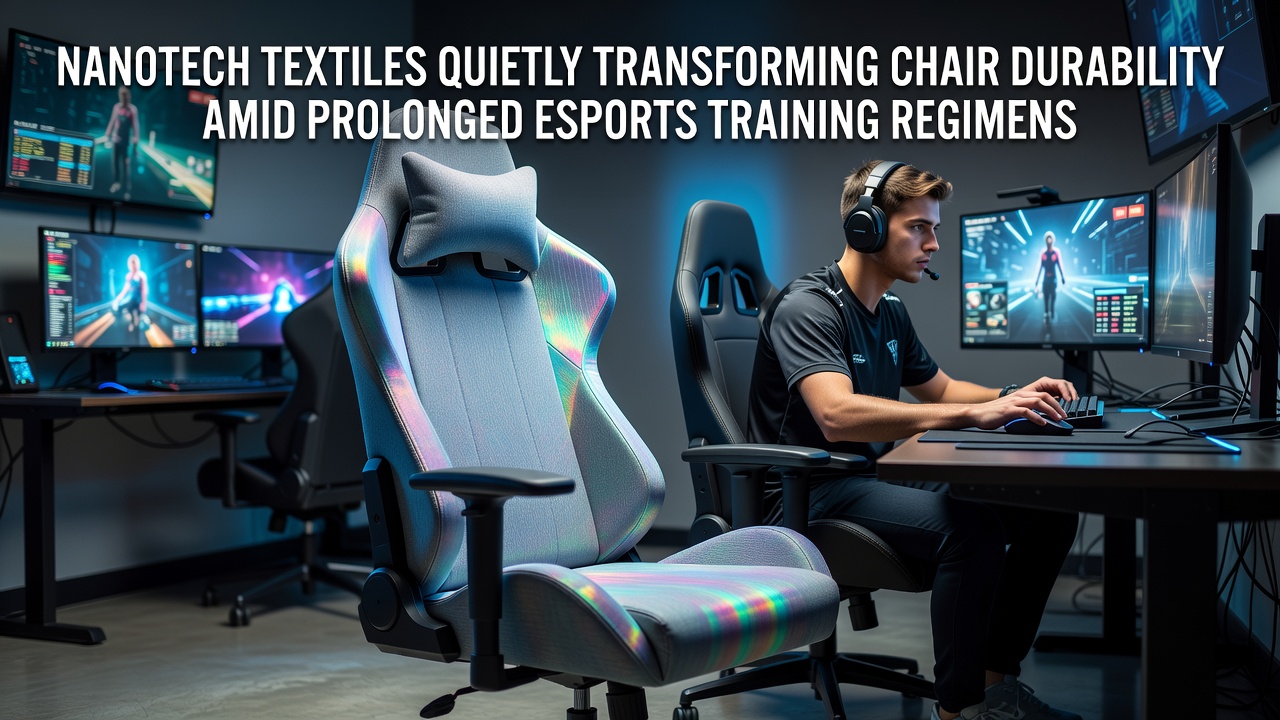
Nanotech Textiles Quietly Transforming Chair Durability Amid Prolonged Esports Training Regimens
Esports athletes often log twelve to sixteen hours daily in the same seat, and that routine places extreme stress on upholstery fibers, stitching, and foam supports. Nanotech textiles have entered this space with coatings and embedded particles that resist abrasion, moisture penetration, and microbial growth without changing the surface feel. Researchers at materials laboratories note that these fabrics incorporate silica nanoparticles or graphene layers which bond to polymer strands, creating barriers that slow mechanical breakdown during repeated pressure cycles.
Training Volume and Equipment Strain
Competitive schedules in 2025 and 2026 pushed many professional teams toward centralized training facilities where chairs remain occupied from morning drills through evening scrimmages. Data collected by facility managers shows average daily usage exceeding ten hours per station, with peak periods around major tournament qualifiers. Sweat, skin oils, and constant shifting create conditions that accelerate fabric pilling and seam separation in conventional textiles, yet chairs fitted with nanotech layers maintain structural integrity longer because the nanoparticle matrix distributes force across a wider area and repels liquid absorption.
Material Science Behind the Textiles
Manufacturers embed particles measuring between ten and fifty nanometers into polyester or nylon bases during the finishing stage. These additions form covalent bonds that increase tensile strength while preserving breathability. Laboratory tests conducted by the National Research Council Canada demonstrate that treated samples withstand 50,000 cycles on Martindale abrasion machines before visible wear appears, compared with 25,000 cycles for untreated controls. The same coatings reduce moisture uptake by roughly 70 percent, limiting the swelling and contraction that loosens stitches over months of use.
Because the particles sit within the fiber rather than forming a surface film, the fabric retains its original hand feel and does not crack or peel under flexing. This integration matters during long sessions when players lean, twist, and readjust posture multiple times per hour.
Adoption Across Esports Facilities
Teams in North America and Europe began specifying nanotech-treated chairs in late 2024 after internal replacement logs revealed that standard models required reupholstering every nine months. By June 2026 several regional leagues had updated equipment guidelines to include minimum durability thresholds measured in abrasion cycles and moisture resistance ratings. Procurement records indicate that facilities adopting the new textiles extended average chair service life to twenty-two months, reducing both downtime and annual equipment budgets.
Performance Metrics and Independent Verification
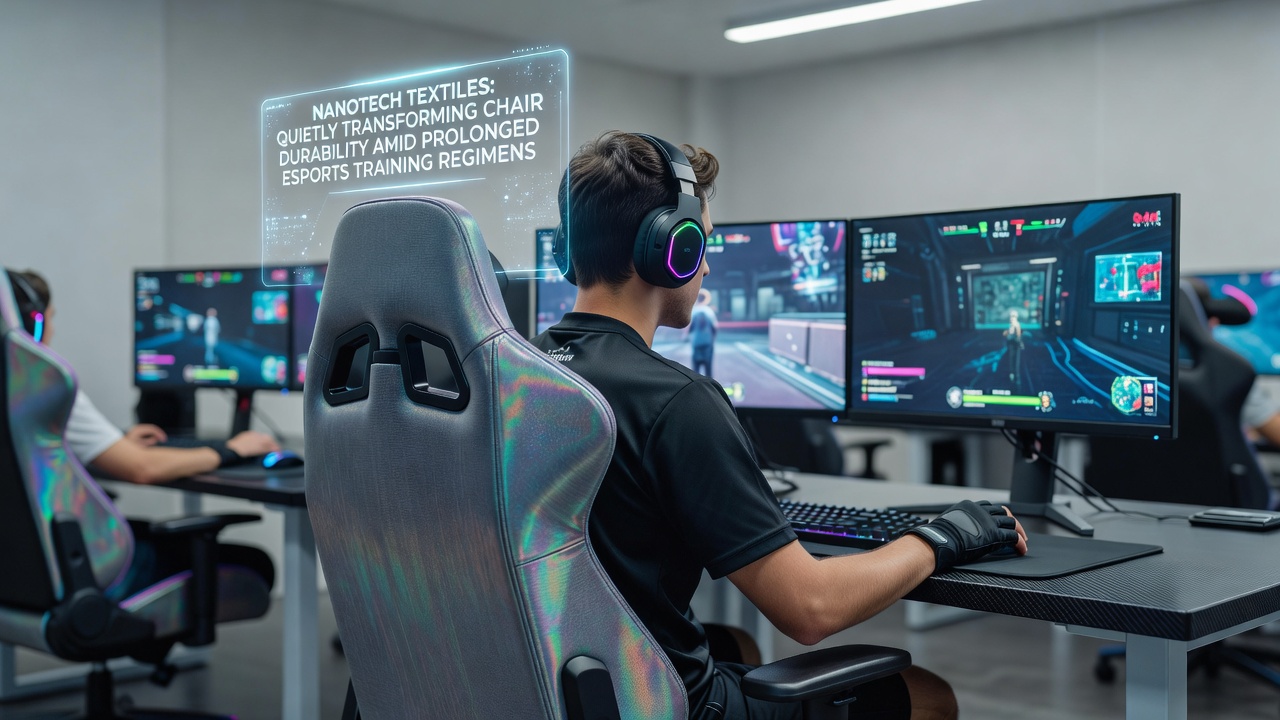
Independent testing houses report that chairs covered in nanotech textiles retain more than 90 percent of original cushion firmness after eighteen months of simulated heavy use. In contrast, standard chairs in the same protocol drop below 75 percent firmness within the same timeframe. Observers note that this consistency helps maintain consistent posture support, which matters when athletes repeat precise mouse and keyboard movements for extended periods. teh Australian Institute of Sport has referenced similar findings in its equipment evaluation reports, linking stable seating surfaces to reduced reports of lower-back discomfort among monitored players.
Additional Functional Properties
Many nanotech formulations also incorporate antimicrobial silver ions that inhibit bacterial colonization on the fabric surface. This property addresses odor buildup common in shared training rooms where chairs rotate among multiple users. Flame-retardant additives appear in some versions as well, satisfying venue safety codes without requiring separate chemical treatments. Because these functions integrate during the textile finishing process, production costs have declined steadily since 2023, making the materials accessible to mid-tier organizations rather than remaining exclusive to top franchises.
Supply Chain and Availability Trends
Textile suppliers now offer roll goods pre-treated with nanoparticle suspensions, allowing smaller upholstery shops to produce compliant chairs without investing in specialized coating equipment. This shift has broadened the range of available colorways and textures while maintaining the durability specifications required by esports teams. Inventory data from major distributors shows that nanotech-treated chair models accounted for 35 percent of gaming furniture shipments in the first half of 2026, up from 12 percent two years earlier.
Conclusion
Facilities that track equipment longevity continue to document measurable gains from nanotech textiles in high-use environments. As training hours remain elevated across professional circuits, the same fabrics that resist abrasion and moisture also support consistent seating performance over longer replacement cycles. Continued refinement of particle dispersion techniques and bonding methods points toward further incremental improvements in both durability metrics and cost efficiency for the sector.