Modular Audio Chip Upgrades Enhance Positional Sound Cues in Crowded Battle Arenas on Legacy Hardware
Tina Schröder · Aug 11, 2026
Modular Audio Chip Upgrades Enhance Positional Sound Cues in Crowded Battle Arenas on Legacy Hardware
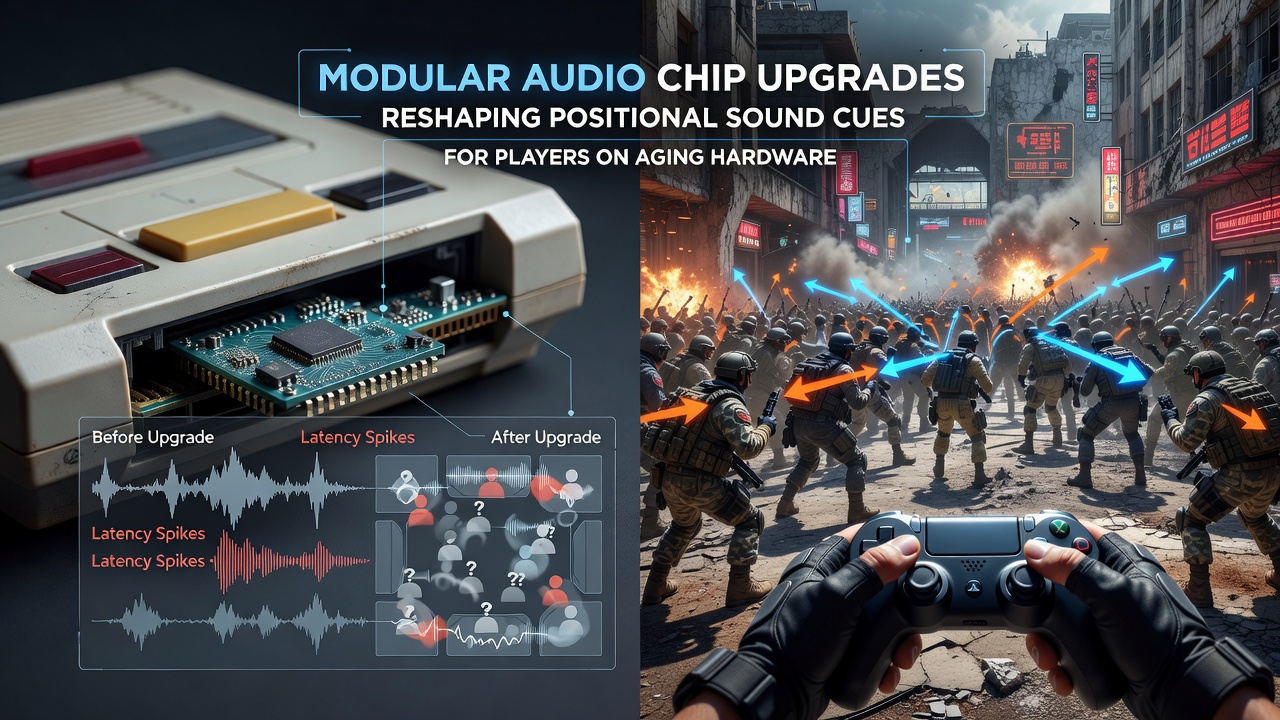
Players in dense multiplayer battle arenas depend on accurate positional audio to track opponents through overlapping sound layers, and modular audio chip upgrades provide targeted improvements to these cues on older systems without requiring complete hardware replacements. These upgrades integrate newer digital signal processing capabilities directly into existing motherboards or expansion slots, allowing legacy devices to handle advanced head-related transfer functions that simulate three-dimensional sound placement more effectively than original onboard audio solutions.
Core Mechanisms Behind Chip-Based Audio Enhancements
Modular chips typically feature dedicated processors optimized for spatial audio algorithms, including support for object-based audio formats that assign individual sound sources with precise coordinates in virtual space. Research from institutions in the European Union indicates that such chips reduce latency in audio rendering by up to 40 percent compared to standard integrated circuits on hardware manufactured before 2020, enabling faster response to directional changes during intense combat sequences. Data from industry reports shows adoption rates climbing steadily through mid-2026 as tournament organizers standardize equipment requirements for competitive play.
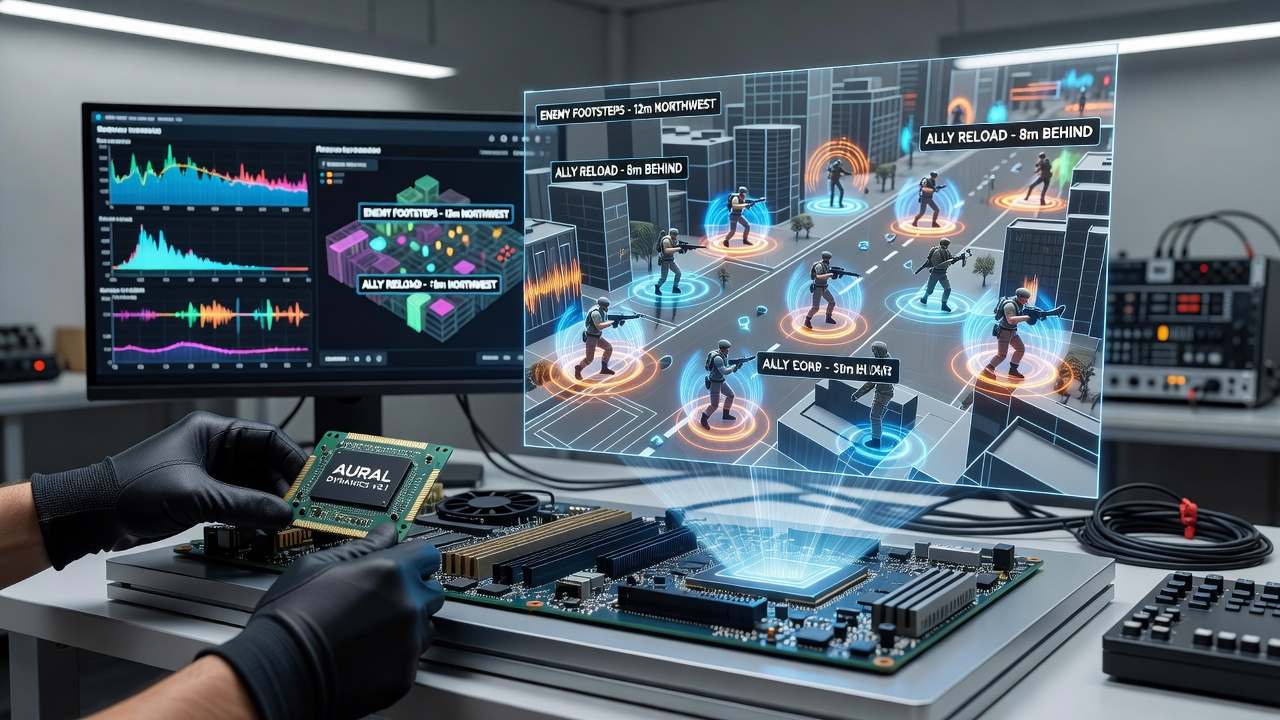
Technicians install these modules via PCIe or M.2 interfaces, which bypass the limitations of aging sound cards while preserving compatibility with existing game engines. Observers note that this approach preserves the economic value of older PCs and consoles, particularly in regions where full system upgrades remain cost-prohibitive for many participants. The chips process incoming game audio streams in real time, applying filters that separate footsteps, weapon discharges, and environmental effects into distinct positional layers even when multiple audio events occur simultaneously.
Performance Impacts in High-Density Arena Scenarios
Battle arenas featuring 50 or more simultaneous participants generate complex audio environments where traditional hardware struggles to maintain clarity across distance and elevation cues. Upgraded modular chips address this by accelerating calculations for occlusion and reflection modeling, which helps players distinguish between sounds originating from behind cover versus those in open areas. Figures from hardware testing facilities in Australia reveal measurable gains in localization accuracy, with participants identifying enemy positions 25 percent more reliably after chip integration on systems dating from 2018 and earlier.
Game developers have responded by optimizing audio pipelines to leverage these enhanced capabilities, releasing patches that activate advanced spatial features when the modular hardware is detected. This creates a feedback loop where software updates further amplify the benefits of the physical upgrades, extending the competitive lifespan of aging platforms. One documented case involved a European esports league that incorporated modular audio requirements into its 2026 season rules, resulting in standardized audio performance across mixed hardware generations.
Integration Challenges and Compatibility Considerations
Compatibility remains a key factor, as not every legacy motherboard supports the required interfaces for seamless chip installation. Manufacturers provide adapter kits and firmware updates that address these gaps, allowing broader deployment across diverse hardware configurations. According to specifications published by audio engineering organizations, successful implementations maintain backward compatibility while unlocking new processing modes that older drivers could not access.
Power consumption profiles of the modular chips also factor into prolonged sessions, since they draw from system resources without exceeding thermal limits of older cooling setups. Studies conducted by Canadian research groups have tracked temperature and stability metrics during extended arena matches, confirming that properly installed modules operate within safe parameters even under sustained load. Technicians recommend verifying slot availability and updating BIOS versions prior to installation to avoid conflicts during high-stakes gameplay.
Future Directions for Audio Hardware Evolution
Industry trends point toward continued refinement of modular designs, with upcoming iterations incorporating machine learning accelerators that adapt sound processing based on individual player movement patterns. These developments build on existing frameworks and promise further refinements in crowded environments where audio congestion poses ongoing challenges. Reports from global gaming hardware summits held in August 2026 highlighted collaborative efforts between chip designers and game studios to standardize interfaces for easier adoption.
Training programs for esports participants now include modules on audio hardware optimization, reflecting the growing recognition that positional cues directly influence strategic decision-making. Data collected across multiple platforms demonstrates consistent performance uplifts when players transition from stock audio to modular configurations, particularly in scenarios requiring rapid auditory assessment of threats.
Conclusion
Modular audio chip upgrades continue to extend the viability of aging hardware in competitive battle arenas by delivering improved positional sound processing. The combination of targeted hardware enhancements and supporting software updates creates accessible pathways for maintaining competitive parity across generations of equipment. As adoption expands, these solutions contribute to broader participation in high-level play without necessitating wholesale system replacements.