Liquid Metal Alloys Advance Thermal Management Techniques in High-Density Multi-GPU Gaming Rigs for Extended Tournament Play
Tina Schröder · Aug 8, 2026
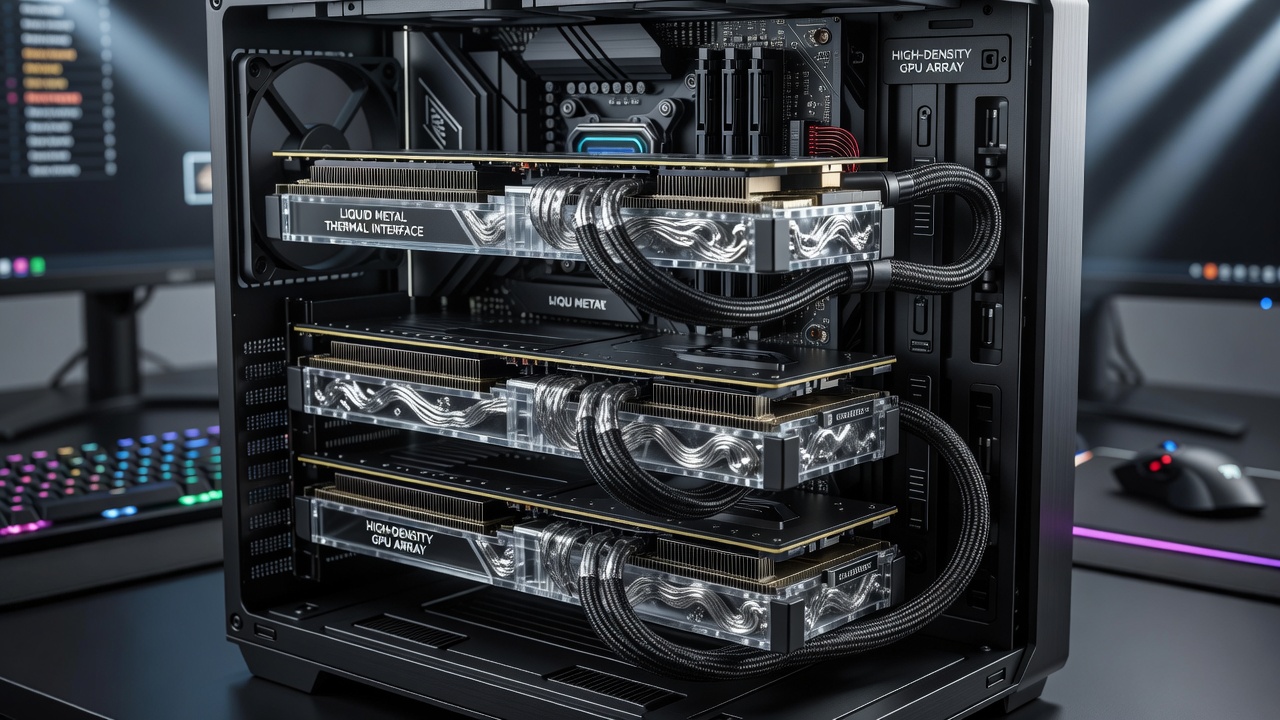
Liquid Metal Alloys Advance Thermal Management Techniques in High-Density Multi-GPU Gaming Rigs for Extended Tournament Play
High-density multi-GPU configurations in competitive gaming environments generate substantial thermal loads during prolonged sessions, and liquid metal alloys have emerged as effective thermal interface materials that address these demands through superior conductivity properties. Researchers at institutions across Europe and North America have documented how gallium-based compounds outperform traditional thermal pastes in rigs supporting extended tournament schedules.
Thermal Challenges in Multi-GPU Tournament Setups
Competitive players often operate systems with four or more GPUs in parallel to handle simultaneous rendering tasks, and this arrangement creates concentrated heat zones that standard air or water cooling solutions struggle to dissipate evenly. Data from hardware monitoring studies indicate temperature spikes exceeding 85 degrees Celsius in sustained loads, which can trigger throttling mechanisms and reduce frame consistency over multi-hour events. Observers note that facilities hosting events in August 2026 have reported similar patterns, prompting adoption of advanced interface materials to maintain stable operation.
Properties of Liquid Metal Alloys in Cooling Applications
Liquid metal alloys composed primarily of gallium, indium, and tin exhibit thermal conductivity values around 16 to 30 watts per meter-kelvin, far exceeding the 1 to 5 watts per meter-kelvin range typical of ceramic-filled pastes. These alloys remain fluid at room temperature, allowing them to fill microscopic surface irregularities between GPU dies and heat spreaders without curing or pumping out under thermal cycling. Engineers have applied them in direct-die contact configurations where conventional pads fail to provide uniform coverage across large multi-chip modules.
Implementation Techniques in High-Density Rigs
Technicians integrate liquid metal layers through precision dispensing systems that apply controlled volumes to avoid electrical shorts, since the conductive nature of these materials requires careful insulation around exposed circuitry. In rigs designed for tournament play, teams combine these interfaces with custom cold plates that route coolant across multiple GPUs in series, and testing data shows temperature reductions of 10 to 15 degrees Celsius compared with graphite-based alternatives. One installation at a European esports training center demonstrated consistent performance across 12-hour sessions when paired with variable-speed pumps calibrated to load demands.
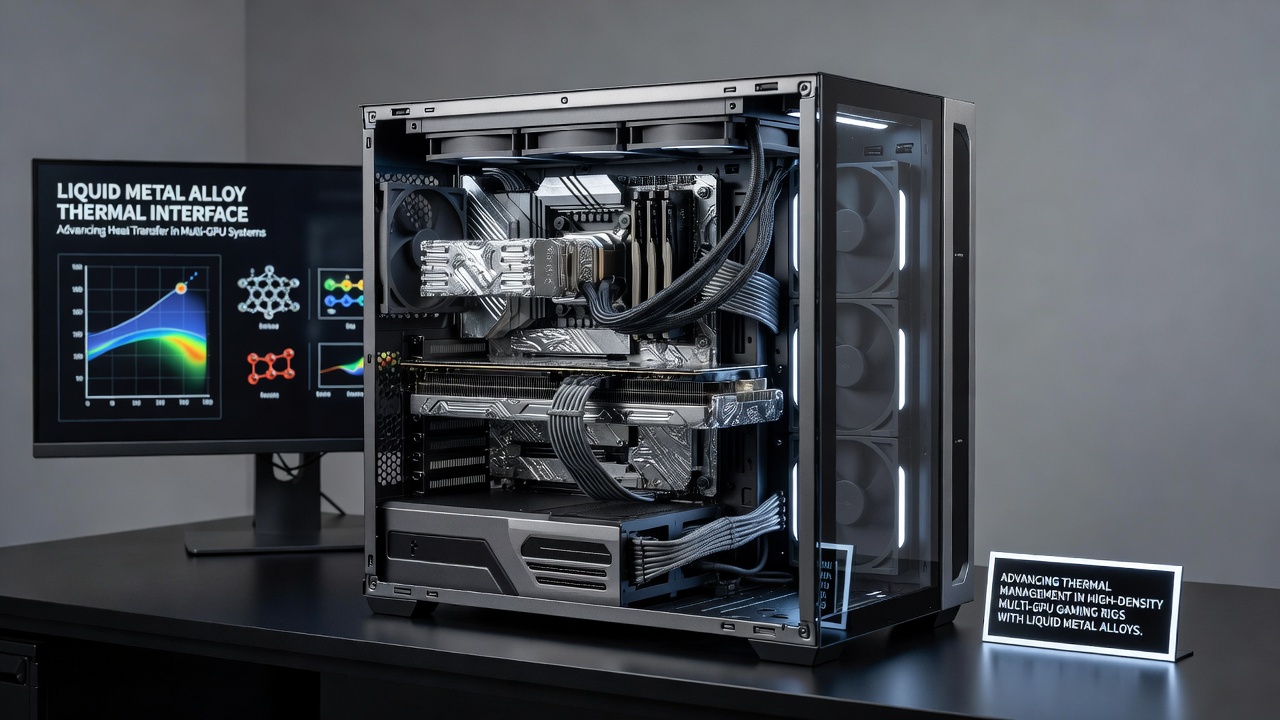
Performance Data from Extended Play Scenarios
Measurements collected during simulated marathon events reveal that systems using liquid metal interfaces maintain GPU junction temperatures below critical thresholds for longer durations, supporting uninterrupted operation where earlier setups experienced automatic frequency reductions. Figures from industry reports compiled by the IEEE Components, Packaging and Manufacturing Technology Society highlight conductivity stability after repeated heat cycles, with minimal degradation observed over thousands of hours. Facilities in Australia have adopted similar approaches following local studies that tracked power draw and heat output in dense rack environments.
Integration with Existing Cooling Infrastructure
Many tournament organizers retrofit existing water-cooling loops to accommodate liquid metal layers by adding secondary barriers that isolate the alloy from other system components. This approach allows retention of standard reservoir and radiator designs while upgrading only the interface zone, and field reports indicate reduced maintenance intervals because the material resists drying or cracking. Data collected in Canadian training hubs shows that combined systems achieve lower acoustic profiles since fans operate at reduced speeds without sacrificing thermal headroom during peak tournament loads.
Material Safety and Handling Protocols
Handlers follow established procedures when working with gallium alloys because the metals can react with aluminum components over time, leading facilities to specify nickel-plated or copper-only cold plates. Training programs at research centers emphasize containment methods that prevent migration into motherboard traces, and documented case studies from Asian hardware labs detail successful long-term deployments when these guidelines are observed. Regulatory guidance from bodies such as those in the European Union emphasizes proper labeling and disposal to address environmental considerations associated with metal alloys.
Developments Reported Through Mid-2026
Updates shared at technical conferences around August 2026 described refined alloy formulations that incorporate additives to lower reactivity while preserving conductivity advantages. These iterations have appeared in commercial kits targeted at high-end gaming integrators, and adoption metrics from trade associations indicate growing use in setups prepared for international competition circuits. Research teams continue to evaluate hybrid applications that combine liquid metals with phase-change materials for further optimization in space-constrained tournament venues.
Conclusion
Liquid metal alloys provide measurable improvements in thermal transfer efficiency for multi-GPU configurations used in extended competitive sessions, supported by conductivity data and real-world monitoring from multiple regions. Continued refinements and documented implementations through 2026 demonstrate their role in supporting consistent hardware performance under sustained tournament conditions.