Lidar Sensor Applications in Mobile Devices Enhancing Augmented Reality Experiences Within Gaming Software
Sofia Schmid · Jul 30, 2026
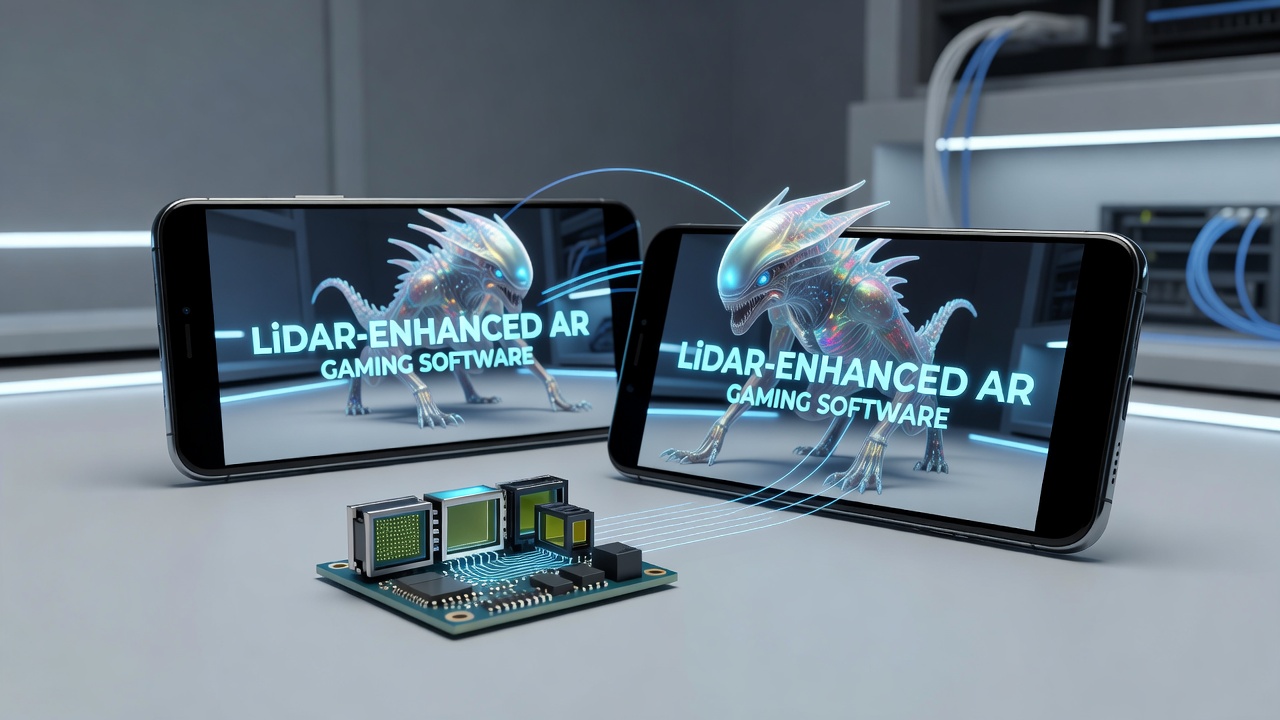
Lidar Sensor Applications in Mobile Devices Enhancing Augmented Reality Experiences Within Gaming Software
LiDAR sensors measure distances by emitting laser pulses and calculating the time it takes for reflections to return, which allows mobile devices to generate precise three-dimensional maps of surrounding spaces, and this capability has become central to augmented reality features in gaming applications where virtual elements must align accurately with real-world surfaces. Manufacturers including Apple incorporated LiDAR scanners into select iPhone and iPad models starting in 2020, while other brands have followed with similar depth-sensing hardware in flagship devices released through 2025.
Core Technical Mechanisms
Direct time-of-flight calculations enable LiDAR modules to capture depth data at rates exceeding 100,000 points per second, and developers integrate this information with camera feeds through software frameworks such as ARKit and ARCore to improve object placement stability. Gaming engines then use the resulting spatial meshes to handle occlusion correctly, meaning virtual characters can appear partially hidden behind real furniture or walls without visual glitches that plagued earlier camera-only systems.
Studies conducted by research teams at institutions across North America and Europe show that LiDAR-assisted tracking reduces positional drift by up to 70 percent during extended play sessions compared with inertial measurement unit data alone. The same depth maps support real-time surface classification, allowing game software to distinguish between flat floors suitable for character movement and irregular obstacles that require adjusted pathfinding logic.
Practical Implementations in Current Titles
Several popular mobile games released between 2023 and 2025 already leverage these sensors to place interactive objects that respond to room geometry, and players report smoother interactions when virtual projectiles bounce off detected walls or when characters navigate around scanned furniture. One title developed in collaboration with hardware vendors uses LiDAR scans to generate dynamic cover points in multiplayer modes, updating the environment layout as users move through physical spaces.
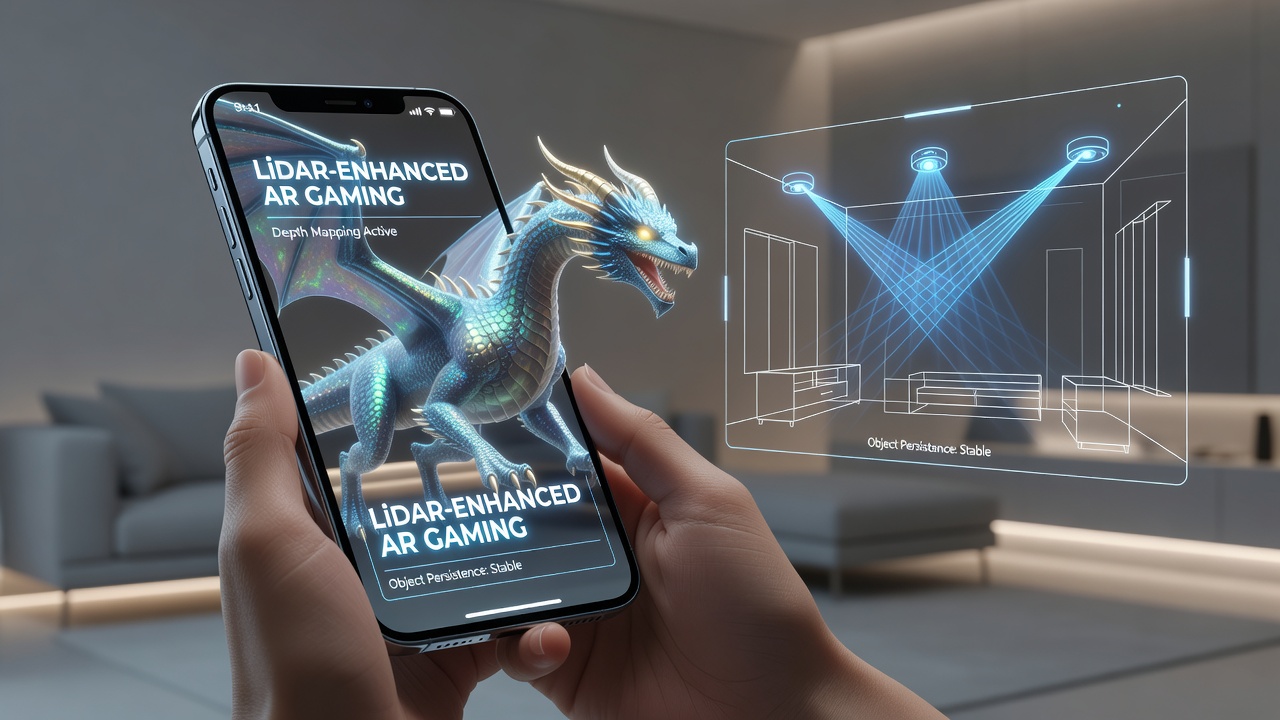
Additional case examples include racing games that project track extensions onto tabletops after a quick room scan, while puzzle adventures detect vertical surfaces for climbing mechanics that match actual wall heights. Data compiled by industry analysts at the Entertainment Software Association indicates that titles incorporating LiDAR depth sensing saw average session lengths increase by 25 percent in markets where compatible devices exceeded 30 percent household penetration by mid-2025.
Developments Projected Through Mid-2026
Industry roadmaps published by component suppliers forecast wider adoption of solid-state LiDAR variants that reduce power draw by 40 percent while maintaining scan resolution, and these improvements are expected to reach consumer devices in July 2026 updates. Software updates planned for the same period will extend API access to third-party developers, enabling smaller studios to implement advanced occlusion and physics interactions without custom hardware calibration routines.
Academic papers from Australian and Canadian research consortia document ongoing work on multi-device synchronization, where several phones share LiDAR point clouds to create shared AR arenas in larger environments. This approach addresses current limitations in single-device field of view and supports cooperative gameplay across bigger physical areas without external beacons.
Integration Challenges and Mitigation Strategies
Ambient light interference can reduce LiDAR accuracy outdoors, yet developers compensate by fusing sensor data with visual inertial odometry algorithms that maintain tracking continuity. Battery consumption remains a consideration during prolonged scanning, although newer chipsets incorporate dedicated neural engines that offload processing and extend runtime by 15 to 20 percent according to laboratory benchmarks released in 2025.
Privacy frameworks established by regulatory bodies in the European Union and Canada require explicit user consent before depth data leaves the device, and game publishers have responded by processing scans locally whenever possible. These measures align with broader data protection standards while still permitting the rich spatial understanding that drives compelling AR gameplay.
Conclusion
LiDAR integration continues to expand the practical scope of augmented reality within mobile gaming software by supplying reliable spatial data that supports consistent object placement and interaction design. As hardware becomes more efficient and developer tools broaden access, the range of experiences that blend physical environments with digital gameplay elements will likely grow further through successive device generations.