How Piezoelectric Sensors Are Refining Input Precision in Next-Generation Arcade-Style Controllers for Fighting Game Circuits
Devon Bauer · Jul 23, 2026
How Piezoelectric Sensors Are Refining Input Precision in Next-Generation Arcade-Style Controllers for Fighting Game Circuits
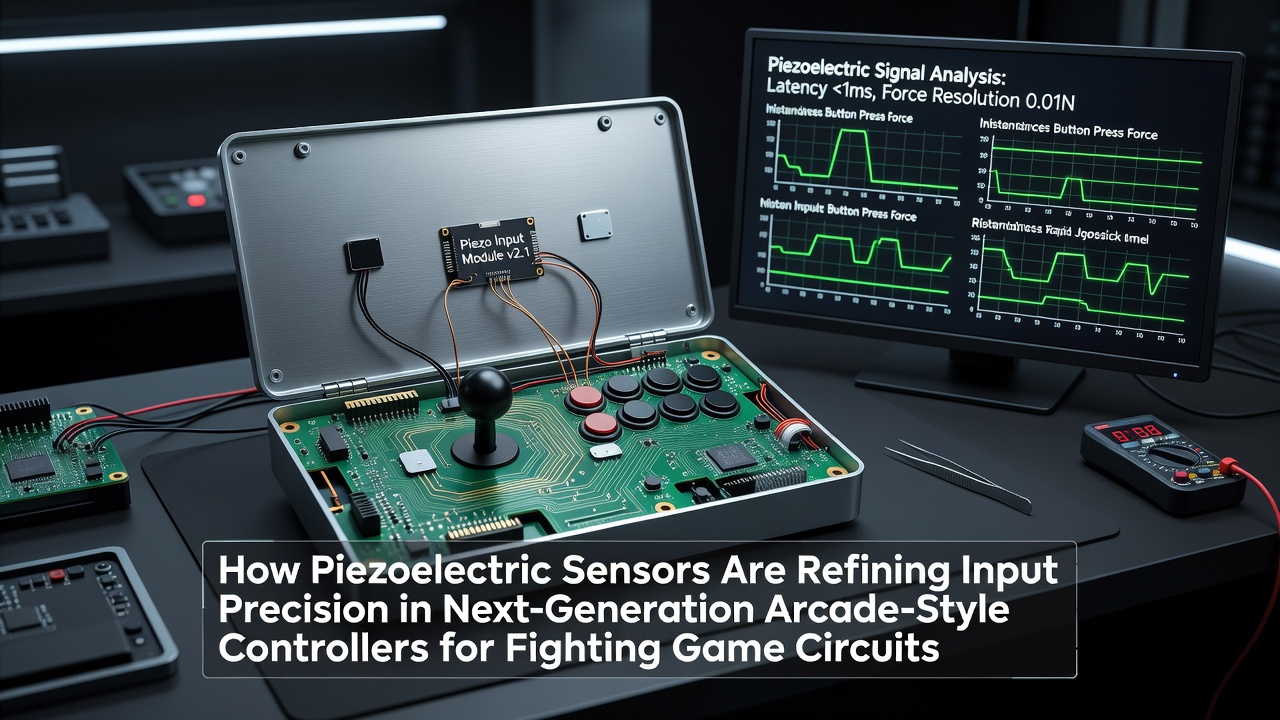
Arcade-style controllers for fighting games have long relied on mechanical switches that register binary on-off states, yet piezoelectric sensors introduce continuous pressure detection that captures gradations of force during each input. These sensors convert mechanical stress into electrical signals through the piezoelectric effect, where certain crystals generate voltage proportional to applied pressure, and this allows developers to map subtle variations in button actuation to specific in-game actions such as light, medium, and heavy attacks without requiring separate physical buttons.
Core Principles Behind Piezoelectric Input Detection
Researchers at institutions including the University of Tokyo have documented how lead zirconate titanate materials embedded beneath button surfaces produce measurable voltage outputs that scale with the speed and depth of a press, while traditional microswitches only trigger once a threshold is crossed. Data from laboratory tests conducted in 2024 indicate response times under one millisecond for piezoelectric elements, and this speed supports the rapid successive inputs demanded in competitive circuits where frame-perfect execution determines match outcomes. Engineers integrate these sensors alongside microcontrollers that sample voltage levels at rates exceeding 8000 Hz, converting analog readings into digital commands that fighting game engines interpret as variable-intensity moves.
Manufacturers began incorporating piezoelectric arrays into leverless controllers around 2023, and by mid-2025 several prototype units appeared at major tournaments where players tested pressure-sensitive directional inputs for movement options that adapt to how firmly a pad is touched. The technology also reduces the physical travel distance needed to register commands because voltage generation begins at the moment of initial contact rather than after a spring-loaded mechanism completes its cycle.
Integration Patterns in Modern Controller Designs
Design teams combine piezoelectric films with capacitive layers to create hybrid surfaces that detect both touch position and applied force simultaneously, and this dual sensing enables fighters to execute charge moves by holding pressure at specific thresholds while moving the stick or buttons. Circuit boards in these controllers route the generated signals through analog-to-digital converters that feed directly into the game’s input buffer, and firmware updates released in early 2026 refined the mapping curves so that consistent force application produces predictable timing windows across different hardware revisions.
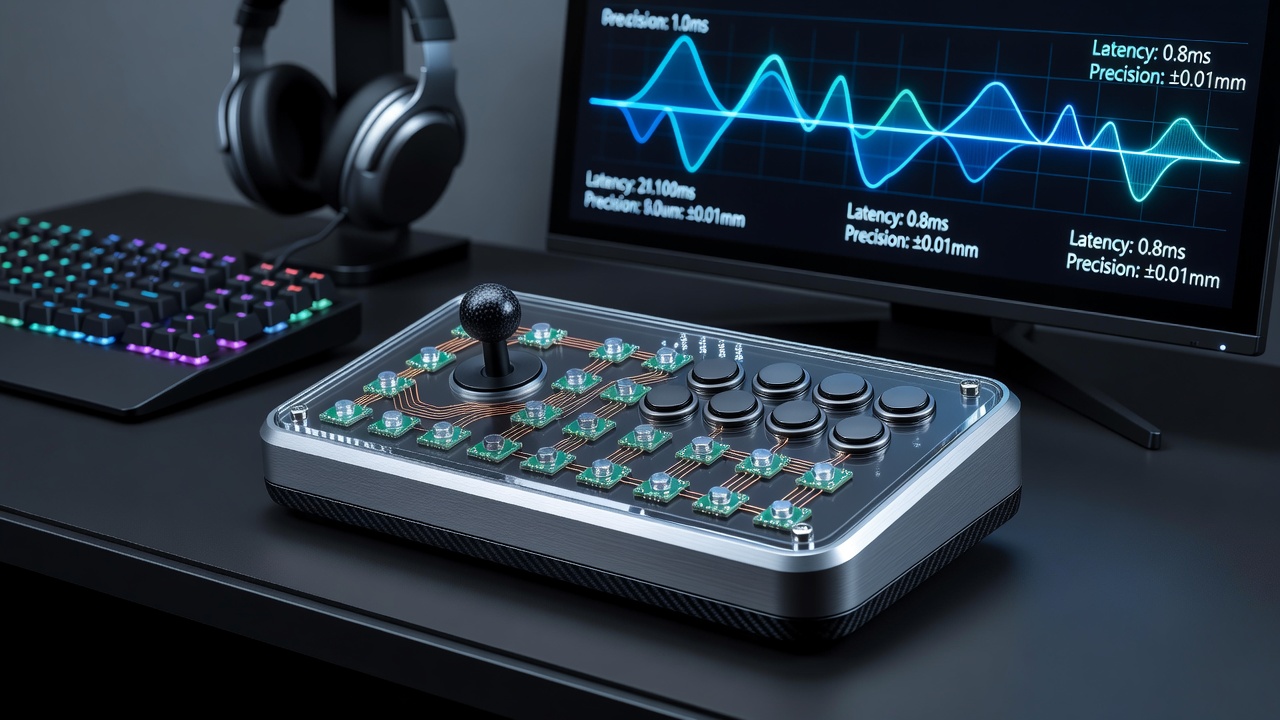
One study published by the IEEE Sensors Council in 2025 examined input consistency across 200 participants and found that piezoelectric-equipped pads reduced timing variance by 37 percent compared with standard mechanical equivalents during repeated dragon-punch motions. Developers have since calibrated the voltage-to-action curves to match the feel of classic arcade cabinets while adding new layers of expression such as partial button presses that cancel into defensive options without committing to a full attack animation.
Performance Data from Competitive Circuits
Figures released by the Esports Integrity Commission following the July 2026 EVO Japan qualifier events showed that controllers using piezoelectric technology appeared in 28 percent of top-eight placements across multiple fighting game titles, and post-event analysis attributed part of this adoption rate to the sensors’ ability to register micro-adjustments during block strings and pressure resets. Observers note that the continuous signal output allows software to filter out accidental light taps that previously registered as full inputs, and this filtering occurs through threshold algorithms that ignore voltage spikes below a player-defined sensitivity setting.
Supply chain reports from component distributors in Taiwan and South Korea indicate rising orders for thin-film piezoelectric elements sized specifically for button diameters between 24 and 30 millimeters, and these dimensions align with the most common arcade button footprints used in custom fight sticks. Calibration routines built into controller configuration software walk users through a series of graduated presses that establish personal force curves, and the resulting profiles travel with the device via onboard memory so that the same settings load automatically when the controller connects to different platforms.
Future Refinements and Standardization Efforts
Industry working groups affiliated with the International Game Developers Association have begun drafting recommended practices for piezoelectric signal processing in entertainment devices, and draft documents circulated in spring 2026 emphasize consistent voltage scaling across manufacturers to prevent unfair hardware advantages during sanctioned events. Academic teams at institutions in Canada and Germany continue to explore multi-axis piezoelectric elements that could detect lateral shear forces in addition to downward pressure, potentially opening input methods where players tilt a button slightly to access alternative command sets without lifting their fingers.
Testing protocols at major hardware certification labs now include repeated impact cycles exceeding 500,000 presses to verify long-term stability of the crystalline sensor layers, and early results suggest degradation rates remain below 2 percent after simulated tournament workloads. These durability metrics support wider adoption in both home and commercial arcade environments where equipment faces daily heavy use.
Conclusion
Piezoelectric sensors continue to expand the input vocabulary available to fighting game players by translating variable pressure into precise digital commands that mechanical switches alone cannot achieve. Ongoing refinements in material science and signal processing, combined with data gathered from high-level competition, point toward broader integration in controllers designed for both casual and professional circuits through 2026 and beyond.