How custom cooling solutions in compact PC builds support prolonged strategy sessions for global online strategy game leagues
Petra Carter · Jul 25, 2026
How custom cooling solutions in compact PC builds support prolonged strategy sessions for global online strategy game leagues
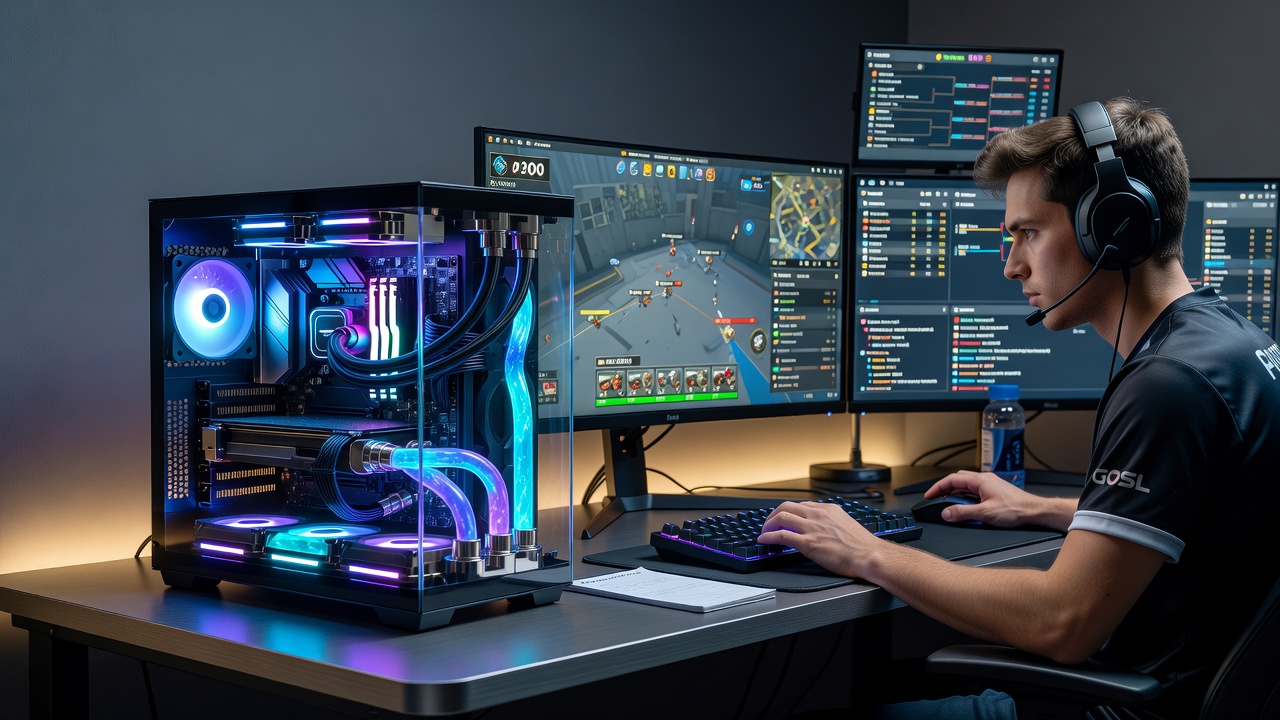
Compact PC builds have become standard equipment in global online strategy game leagues because they combine portability with high performance, yet heat management remains a central engineering challenge during extended matches. Custom cooling solutions address thermal limits that would otherwise force processors and graphics cards to reduce clock speeds, which directly affects the ability of competitors to maintain focus across multi-hour sessions that define events in July 2026.
Thermal constraints in small form factor systems
Small chassis restrict airflow compared with traditional towers, so stock air coolers often prove insufficient when central processing units run at sustained loads required by real-time strategy titles. Data from league hardware surveys shows that temperatures above 85 degrees Celsius trigger throttling in many compact configurations, shortening effective session lengths before performance drops occur. Custom loops using radiators, pumps, and precision-machined water blocks keep component temperatures between 55 and 70 degrees Celsius even after four or five consecutive games, allowing players to complete bracket stages without hardware intervention.
Design approaches used by league teams
Builders integrate low-profile radiators mounted externally or in side panels, paired with variable-speed pumps that adjust flow rates based on load sensors. Some setups employ phase-change materials alongside traditional coolants to absorb brief spikes during critical late-game decisions, while others rely on multiple thin fans arranged in push-pull configurations that maintain positive pressure inside the case. These arrangements reduce acoustic output as well, which matters in shared training facilities where background noise can interfere with voice communication.
Research conducted at the University of Toronto indicates that stable thermal conditions correlate with fewer input errors during the final 30 minutes of marathon matches, a period when decision fatigue already compounds mechanical strain. Global Esports Federation hardware studies further document that teams adopting custom cooling report average session extensions of 45 minutes before any measurable decline in frame consistency.
Impact on strategy league formats
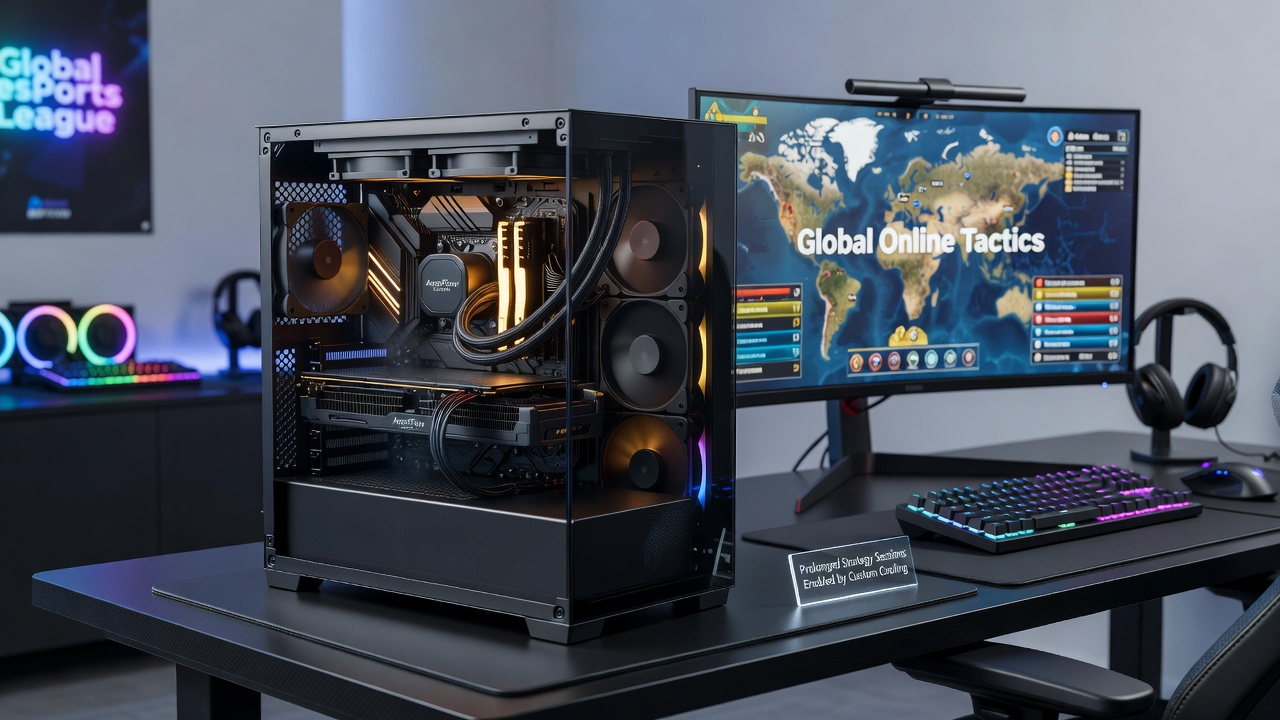
League organizers schedule best-of-five and best-of-seven series that routinely exceed three hours, and compact systems must remain within operational parameters throughout. When cooling capacity is adequate, graphics processing units sustain boost clocks that deliver consistent frame times above 120 per second, preserving the visual clarity needed for unit micro-management and map awareness. Without such stability, frame-time variance increases and players report delayed visual feedback that alters timing of build orders and engagements.
European circuit data collected during the 2025-2026 season shows that squads using advanced cooling solutions reached the later stages of tournaments at higher rates than those relying on air cooling alone. The difference appears most pronounced in open-bracket events where matches can stretch into early morning hours across multiple time zones.
Maintenance and reliability considerations
Custom cooling requires periodic coolant replacement and leak checks, yet teams integrate these tasks into standard pre-event checklists. Quick-disconnect fittings allow rapid radiator swaps between tournament days, while monitoring software logs temperature histories that technicians review to predict maintenance windows. In July 2026, several major online leagues introduced hardware verification protocols that include thermal imaging of competitor rigs, confirming that custom solutions operate within specified ranges before matches begin.
Those who maintain these systems note that proactive fluid changes every six months prevent the gradual buildup of particulates that would otherwise reduce flow efficiency over a full competitive year. Such routines keep failure rates below 2 percent across documented league hardware fleets.
Future developments in compact cooling
Manufacturers continue to refine pump designs and radiator fin density to fit within even smaller envelopes demanded by traveling competitors. Emerging dielectric fluids with higher specific heat capacities are undergoing testing in select training centers, and early figures reveal potential reductions in peak temperatures of an additional 8 to 10 degrees Celsius compared with current mixtures. These incremental gains could further extend viable session durations as league formats evolve toward longer endurance formats.
Conclusion
Custom cooling solutions enable compact PC builds to sustain the continuous high-performance operation required by global strategy game leagues. By controlling temperatures within narrow bands, these systems prevent throttling that would otherwise interrupt long matches, support consistent visual and input responsiveness, and allow teams to complete scheduled brackets without hardware-related pauses. Ongoing refinements in component miniaturization and fluid technology continue to align hardware capabilities with the demands of extended competitive play.