How Advanced Materials Science is Quietly Enhancing Reliability in High-Stakes Esports Hardware Configurations
Petra Carter · Jun 23, 2026
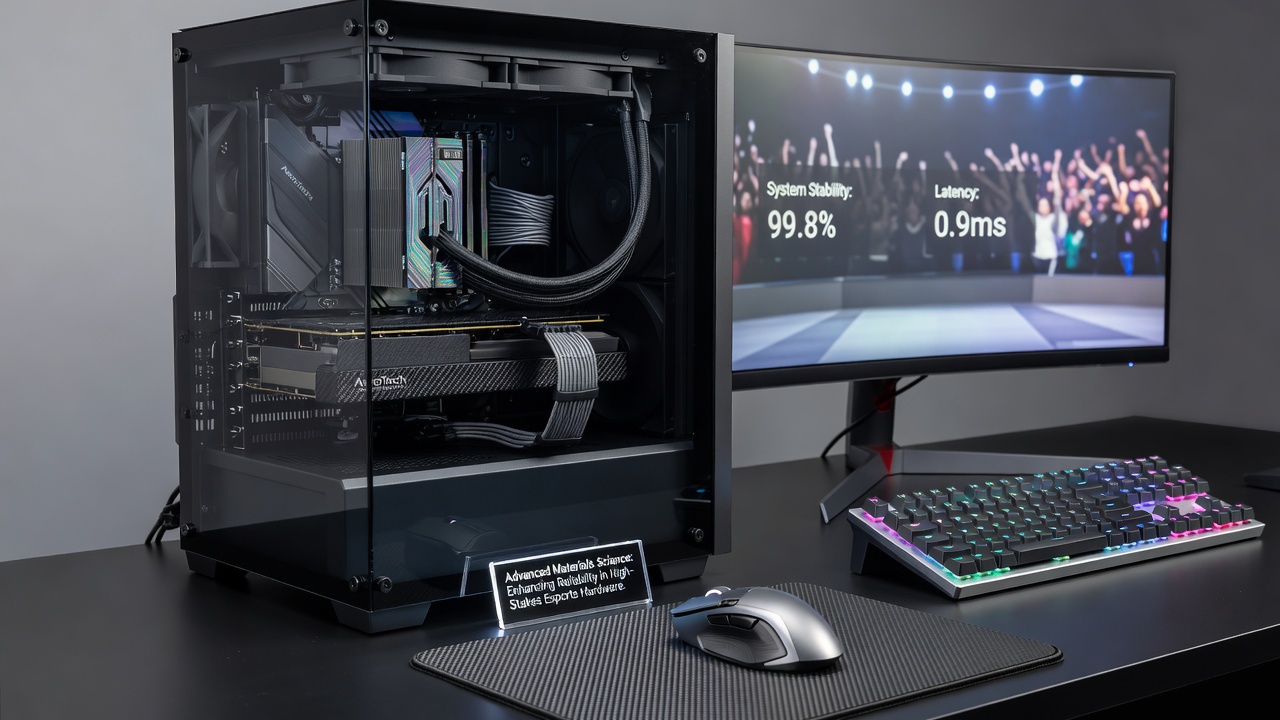
How Advanced Materials Science is Quietly Enhancing Reliability in High-Stakes Esports Hardware Configurations
Competitive esports environments place extraordinary demands on hardware that must perform consistently across extended sessions and frequent travel between venues; advanced materials now play a central role in meeting those demands. Researchers at institutions across multiple regions have documented measurable gains in component lifespan and failure resistance when specialized polymers, carbon-based composites, and engineered alloys replace conventional options in mice, keyboards, and tournament-grade PCs.
Input Device Longevity Through Engineered Polymers
Mechanical switches in gaming mice and keyboards experience millions of actuations during professional careers, and studies from the Fraunhofer Institute for Mechanics of Materials in Germany show that polyoxymethylene blends with added reinforcing fibers reduce wear rates by measurable margins compared with standard acetal. These materials maintain consistent force curves even after repeated high-frequency use, which matters during bracket stages where milliseconds separate outcomes. Observers note that several hardware manufacturers began integrating these blends into flagship models ahead of major circuits in 2025, with further refinements scheduled for release windows around June 2026.
Thermal Interface Materials in Tournament PCs
High-performance CPUs and GPUs generate substantial heat during extended matches, and phase-change thermal interface materials containing boron nitride particles have replaced traditional greases in many sponsored rigs. Data compiled by the National Research Council Canada indicates lower thermal resistance and reduced pump-out over time, allowing systems to sustain boost clocks without throttling during multi-day events. Teams transport these machines between arenas where ambient conditions vary, and the stability of the new interfaces limits performance drift that previously required on-site recalibration.
Structural Composites in Peripherals and Chassis
Keyboard frames and mouse shells increasingly incorporate carbon-fiber-reinforced thermoplastics that resist flex under aggressive key presses or rapid movements. A 2025 technical paper from the University of Sydney documented that these composites maintain dimensional stability across temperature swings encountered during air travel to international events. The same study tracked vibration damping characteristics that protect internal electronics when cases are loaded and unloaded repeatedly at tournament sites.

Monitor stands and riser platforms also benefit from magnesium-aluminum alloys treated with ceramic conversion coatings. These surfaces resist abrasion from repeated setup and teardown cycles common in league play. Figures released by the European Committee for Standardization in early 2026 recorded fewer reported mounting failures among teams using the updated hardware specifications.
Coatings and Surface Treatments for Environmental Protection
Conformal coatings based on parylene derivatives now shield printed circuit boards inside controllers and capture cards from humidity fluctuations at large venues. Research conducted at the Korea Institute of Materials Science demonstrates that these thin films preserve electrical performance after exposure to condensation cycles that occur when equipment moves between air-conditioned player areas and warmer backstage zones. The coatings add negligible mass yet extend mean time between maintenance interventions.
Integration Trends Observed in 2026 Circuits
League operators have begun specifying material certifications for hardware used in official matches, and several circuit organizers referenced updated durability benchmarks in their 2026 equipment guidelines. Manufacturers respond by publishing third-party test results that quantify click endurance, thermal cycling performance, and impact resistance under simulated transport conditions. These disclosures allow teams to compare configurations using objective metrics rather than anecdotal reports from prior seasons.
Conclusion
Materials innovations continue to reduce unplanned downtime across esports hardware categories, with measurable improvements tracked through standardized testing protocols. As data from June 2026 events becomes available, patterns in failure reduction are expected to inform further material selections for the following competitive year. The quiet integration of these advancements supports consistent hardware behavior under the precise conditions that define high-stakes play.