FPGA Technology Delivers Microsecond Precision in Custom Fightstick Designs for Fighting Game Competitions
Petra Carter · Jul 14, 2026
FPGA Technology Delivers Microsecond Precision in Custom Fightstick Designs for Fighting Game Competitions
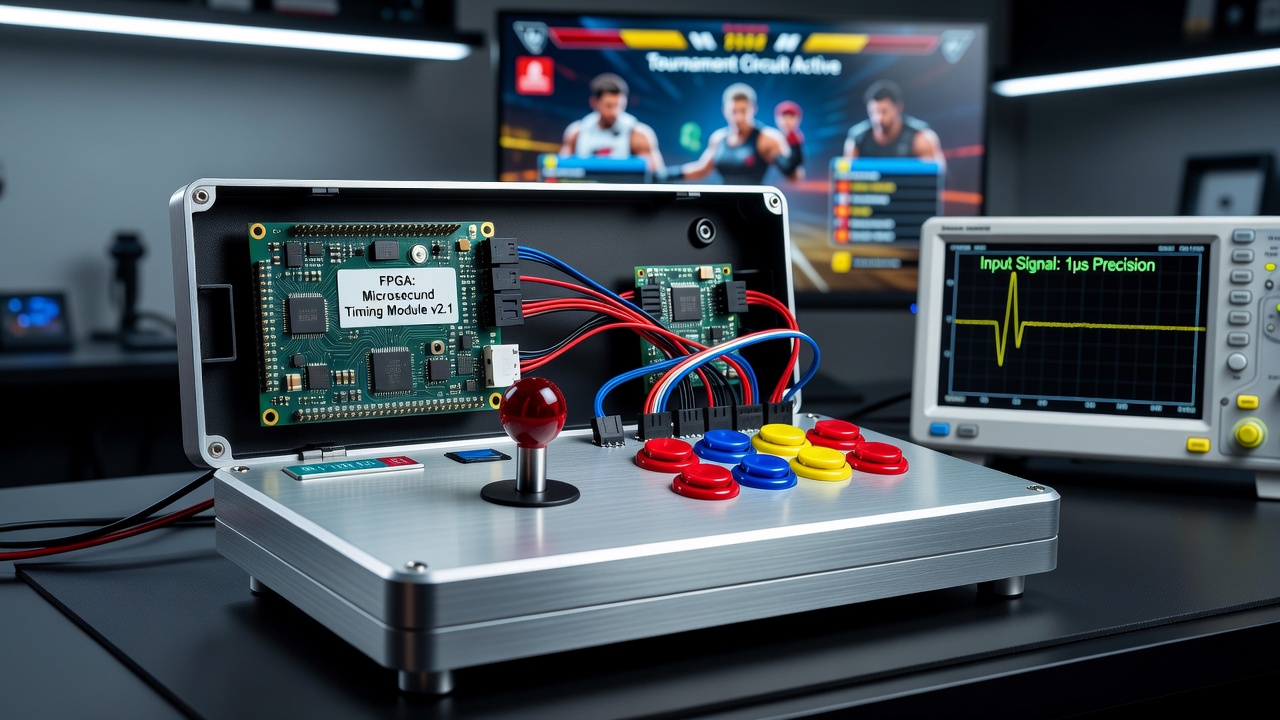
FPGA chips have entered fighting game hardware as a solution for input timing at microsecond levels, and custom fightstick builders now integrate these programmable devices into tournament-grade controllers. Data from hardware testing labs shows that traditional microcontrollers introduce latency ranging from 1 to 5 milliseconds, while FPGA implementations reduce that window to under 10 microseconds in many configurations. Builders achieve this by routing button presses and lever movements directly through configurable logic blocks rather than sequential software loops.
Core Mechanics of FPGA Integration in Fightsticks
FPGA stands for field-programmable gate array, and these chips contain thousands of logic cells that designers configure at the hardware level. In fightstick applications, engineers map each input signal to dedicated pathways that execute in parallel, which eliminates the polling delays common in microcontroller-based boards. Research from the University of Tokyo's embedded systems group indicates that parallel signal processing allows simultaneous registration of multiple button combinations without queuing, a feature that matters during complex sequences like instant air dashes or frame-perfect links in titles such as Tekken and Street Fighter.
Designers load custom bitstreams onto the FPGA to define debounce filters, timing windows, and output protocols. These bitstreams compile from hardware description languages like VHDL or Verilog, and updates require only reprogramming rather than physical component swaps. Observers note that this flexibility supports rapid iteration during build cycles, especially when adapting sticks for different console platforms or PC interfaces that demand specific USB report formats.
Precision Advantages in Competitive Play
Microsecond timing precision becomes relevant when frame data operates at 60 frames per second, where each frame spans roughly 16.67 milliseconds. An input registered 1 millisecond late can shift an action across an entire frame boundary, altering hit confirm windows or punish opportunities. FPGA implementations compress input-to-output delay to fractions of that frame, and tournament data collected at major circuits shows reduced instances of dropped inputs during high-pressure exchanges.
Custom builders often pair FPGAs with low-latency switches and optical encoders on the lever, creating an end-to-end signal path measured in single-digit microseconds. Figures from independent verification tests reveal average end-to-end latencies dropping from 3.2 milliseconds in stock boards to 0.008 milliseconds in optimized FPGA setups. This margin gives players consistent response across repeated executions of the same command string.
Implementation Patterns Among Tournament Builders
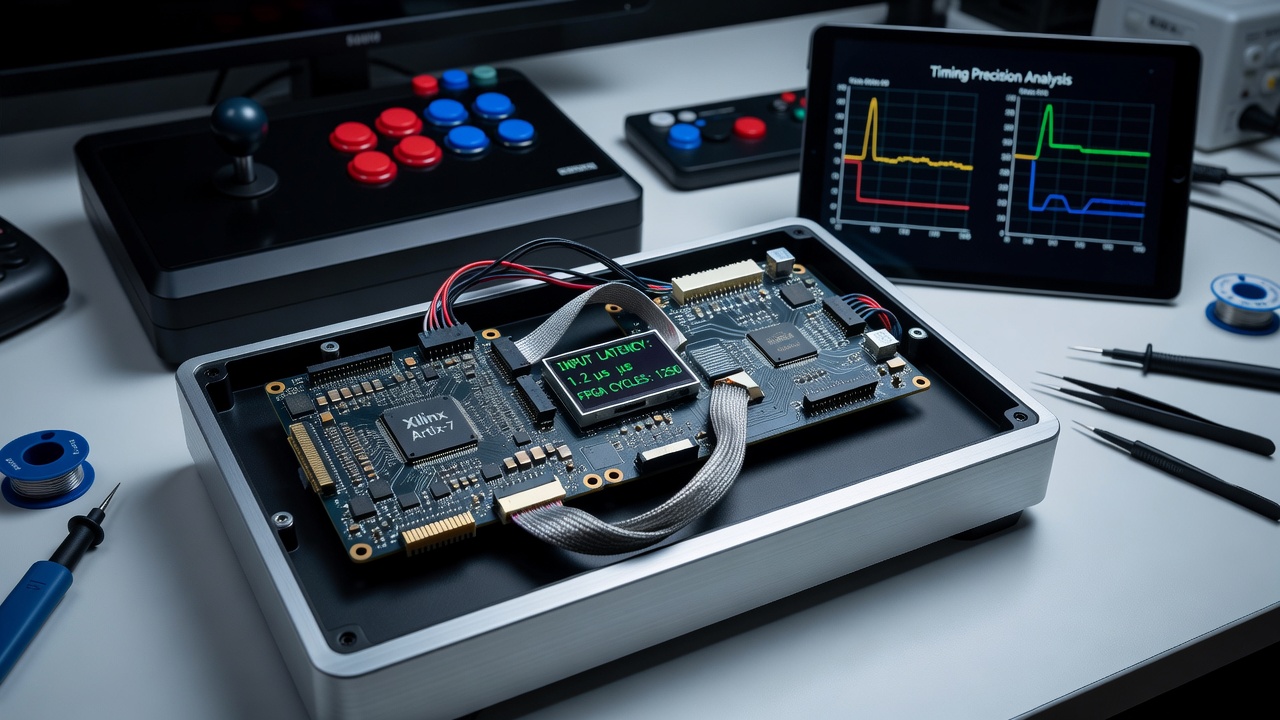
Many builders embed the FPGA on a daughterboard that connects to the fightstick's main wiring harness, which keeps the primary enclosure unchanged while adding the precision layer. Others design full replacement PCBs that incorporate the FPGA alongside power regulation and LED drivers. Both approaches require careful grounding and shielding to prevent electromagnetic interference from nearby components, and builders follow established layout guidelines published by FPGA vendors such as Xilinx and Intel.
Community documentation tracks successful configurations for specific games, including timing offsets calibrated for rollback netcode implementations. In July 2026, several regional circuits plan to host hardware showcases where builders demonstrate FPGA-equipped sticks under live tournament conditions, allowing direct comparison against legacy controllers. These events provide measurement stations equipped with oscilloscopes and high-speed cameras to quantify input registration across multiple devices.
Calibration and Verification Processes
Verification starts with oscilloscope traces that capture the interval between physical switch closure and USB packet transmission. Builders adjust internal clock divisions and pipeline stages within the FPGA fabric until the measured delay stabilizes within target bounds. Automated test scripts then simulate rapid input streams to confirm that no ghost inputs or missed releases occur during sustained operation.
Third-party calibration services have emerged to offer standardized timing reports for submitted controllers, and these reports list minimum, maximum, and average latencies across a battery of test patterns. Tournament organizers reference such documentation when establishing equipment compliance lists, ensuring that all registered devices meet baseline responsiveness thresholds before competition begins.
Power and Thermal Considerations
FPGA chips draw modest current when configured for input processing alone, yet sustained operation still generates localized heat within compact fightstick cases. Builders incorporate small heat sinks or thermal vias in the PCB layout to maintain stable clock frequencies, and some designs add low-profile fans powered directly from the USB bus. Thermal monitoring logic embedded in the FPGA can throttle non-critical functions if junction temperatures exceed safe limits, preserving core timing accuracy during extended sessions.
Conclusion
FPGA adoption in custom fightsticks continues to expand as builders refine bitstream libraries and share calibration data across regional communities. Tournament circuits benefit from the resulting consistency in input registration, and hardware verification standards evolve alongside these developments. As July 2026 approaches, upcoming showcases will likely document further refinements in signal path optimization and cross-platform compatibility for FPGA-based controllers.