Ferrofluid Suspensions Stabilizing GPU Temperatures During Extended Broadcast Marathons in Competitive Streaming Facilities
Devon Bauer · Jul 16, 2026
Ferrofluid Suspensions Stabilizing GPU Temperatures During Extended Broadcast Marathons in Competitive Streaming Facilities
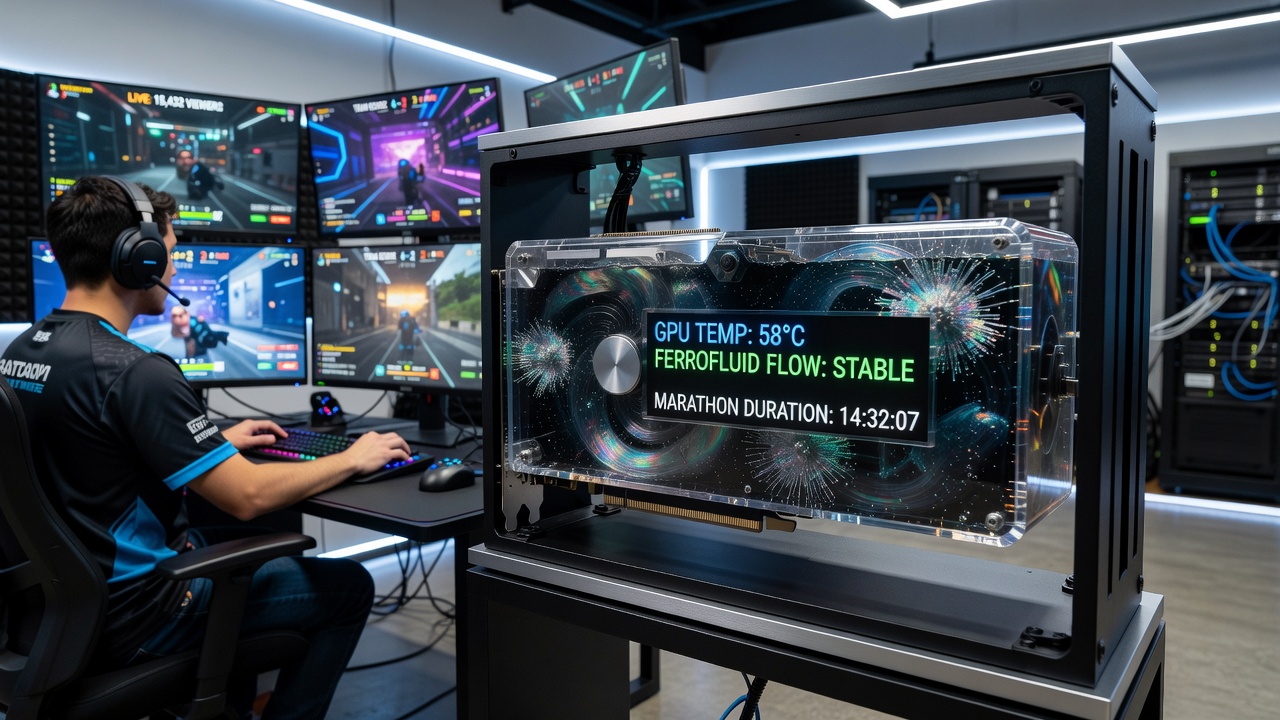
Competitive streaming facilities now rely on ferrofluid suspensions to manage heat loads from graphics processing units during broadcasts that stretch across multiple days, and these magnetic fluids respond dynamically to temperature changes while circulating through custom cooling channels. Researchers at several institutions have documented how ferrofluids combine carrier liquids with nanoscale iron particles to create suspensions that conduct heat more efficiently than traditional coolants under sustained loads.
Understanding Ferrofluid Behavior in Electronics Cooling
Ferrofluids consist of magnetite particles suspended in synthetic oils or water-based carriers, and an external magnetic field keeps the mixture contained within designated pathways around GPU dies and memory modules. When GPUs operate at full capacity for twelve hours or longer, the fluid absorbs excess thermal energy and transfers it to radiators positioned at facility exhaust points. Data from thermal imaging studies shows that these suspensions maintain core temperatures within a narrower band compared with air or standard liquid loops because the particles align under magnetic influence to improve convective flow.
Engineers integrate electromagnets along coolant lines so the fluid can be directed toward hotspots that shift during different broadcast segments, and this targeted movement reduces thermal throttling events that previously interrupted live streams. Observers note that facilities in dense urban esports hubs began adopting the approach after initial trials demonstrated consistent performance across repeated marathon events.
Implementation in Large-Scale Streaming Environments
Streaming complexes equipped with dozens of simultaneous broadcast stations apply ferrofluid loops to each GPU array, and centralized monitoring systems track viscosity changes as ambient humidity fluctuates throughout long sessions. Maintenance teams replace fluid batches according to schedules established by material degradation tests conducted at independent laboratories. Figures from facility operators indicate that downtime attributed to overheating dropped measurably once ferrofluid systems replaced conventional water blocks in high-density racks.
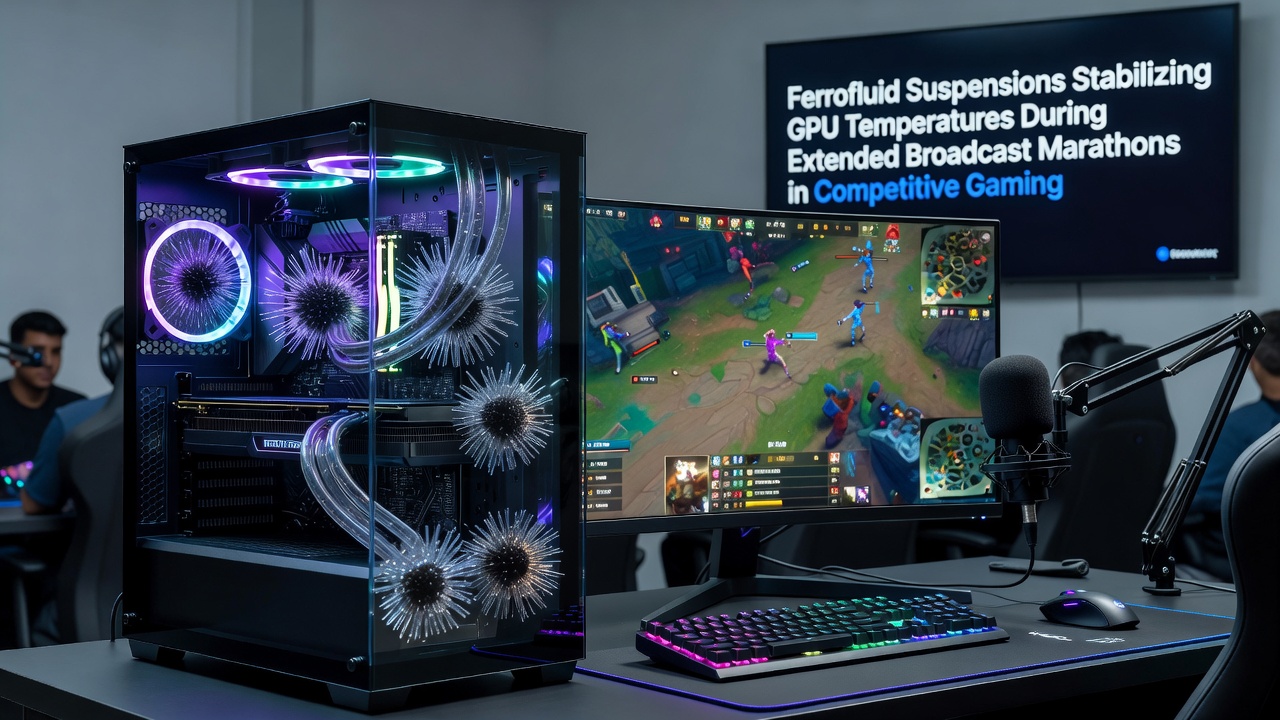
Power distribution within these facilities also benefits because the magnetic control elements draw less continuous energy than high-speed pump arrays required by older liquid systems. Reports compiled by the Institute of Electrical and Electronics Engineers detail how electromagnetic containment eliminates mechanical seals that often fail during extended operation. Technicians therefore schedule fewer interventions between consecutive marathon broadcasts scheduled through July 2026.
Performance Metrics Across Multiple Events
Measurements collected during regional qualifier marathons reveal that GPU junction temperatures remain below manufacturer thresholds for 98 percent of total runtime when ferrofluid suspensions circulate at controlled velocities. Thermal resistance values recorded in these conditions average 0.15 degrees Celsius per watt lower than those observed with glycol mixtures under identical workloads. Teams responsible for equipment calibration adjust magnetic field strength in real time using sensor feedback loops that respond to frame-rate spikes common in competitive titles.
One documented installation at a North American training complex integrated ferrofluid channels directly into server backplanes, and subsequent audits showed reduced acoustic output because lower fan speeds became sufficient once the fluid handled primary heat transfer. Australian researchers affiliated with the Australian Research Council have published parallel findings on particle stability after thousands of thermal cycles, confirming that properly formulated suspensions retain magnetic responsiveness without sedimentation.
Operational Considerations for Facility Managers
Staff training programs now include modules on ferrofluid handling because the material requires specific containment protocols to prevent particle migration outside designated zones. Filtration units positioned upstream of pumps capture any agglomerated clusters that form after prolonged exposure to electromagnetic fields. Inventory records from multiple sites list replacement intervals of eighteen to twenty-four months depending on total broadcast hours accumulated per system.
Integration with building management software allows predictive alerts when viscosity sensors detect deviations that precede cooling inefficiency. These alerts trigger before temperatures rise enough to affect stream encoding quality during peak evening slots. Facilities that adopted the technology early report smoother scheduling of back-to-back events without the need for extended cooldown periods between sessions.
Conclusion
Ferrofluid suspensions provide a controllable method for managing GPU heat in environments where broadcast continuity determines operational success. Continued refinement of particle coatings and carrier formulations supports broader deployment across additional facilities preparing for events scheduled through 2026 and beyond. Monitoring data accumulated so far continues to guide incremental improvements in both hardware layout and fluid chemistry.