Eye-Tracking Integrations Enhancing Target Prioritization Drills Among Tactical Shooter Training Circles Worldwide
Petra Carter · May 30, 2026
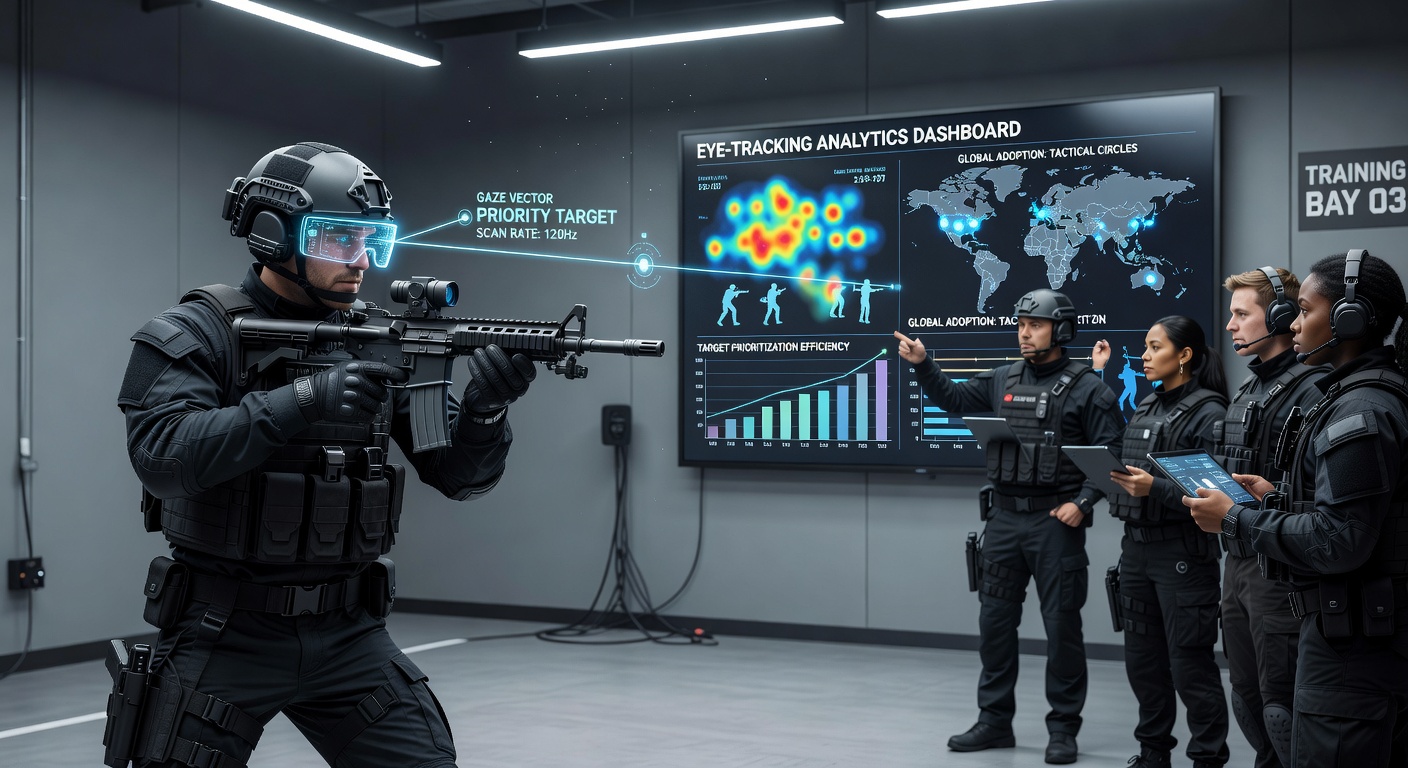
Eye-Tracking Integrations Enhancing Target Prioritization Drills Among Tactical Shooter Training Circles Worldwide
Eye-tracking technology has found its way into tactical shooter training programs across multiple continents, where instructors integrate sensors and software to refine how participants identify and engage threats in sequence. Military units, law enforcement academies, and private simulation centers collect gaze data during drills, then map fixation points against optimal target ordering to adjust instruction methods. Researchers at institutions such as the University of Toronto documented performance shifts when trainees receive immediate visual feedback on where their attention lingers before each shot sequence.
Core Mechanics Behind Gaze-Based Prioritization Systems
Hardware mounts lightweight cameras on headsets or weapon optics while algorithms translate pupil movement into coordinates within virtual environments. Software overlays heat maps onto recorded sessions, revealing clusters of attention that either align with or deviate from threat hierarchies established by scenario designers. When a trainee lingers on a low-priority decoy instead of scanning for the primary armed figure, the system flags the pattern and replays the segment with annotated gaze paths for review.
Integration occurs most often inside mixed-reality setups that combine physical props with projected targets, allowing seamless transitions between live-fire ranges and digital overlays. Data streams feed into after-action reports that quantify dwell times, saccade speeds, and re-acquisition rates, giving coaches measurable benchmarks rather than subjective impressions alone.
Regional Programs and Adoption Patterns
North American defense contractors began rolling out eye-tracking modules in 2024 for urban combat simulators used by special operations groups, and European agencies followed with trials coordinated through NATO-affiliated training centers by early 2025. Australian defense science organizations reported similar deployments in joint exercises with regional partners during the same period, focusing on close-quarters battle scenarios where split-second prioritization determines outcomes.
Asian training facilities, particularly those operated by South Korean and Singaporean forces, incorporated the same sensor arrays into existing marksmanship curricula by mid-2025. Instructors noted that gaze analytics helped standardize instruction across large cohorts, because quantitative metrics replaced reliance on individual observer notes during group evaluations.
Evidence From Controlled Studies
A 2025 report issued by the European Defence Agency presented aggregated results from six member nations, showing that participants who reviewed their own eye-tracking replays improved target sequencing accuracy by measurable margins compared with control groups receiving only verbal feedback. The study tracked over 400 trainees across twelve weeks and recorded reductions in erroneous engagements when gaze data informed subsequent practice iterations.
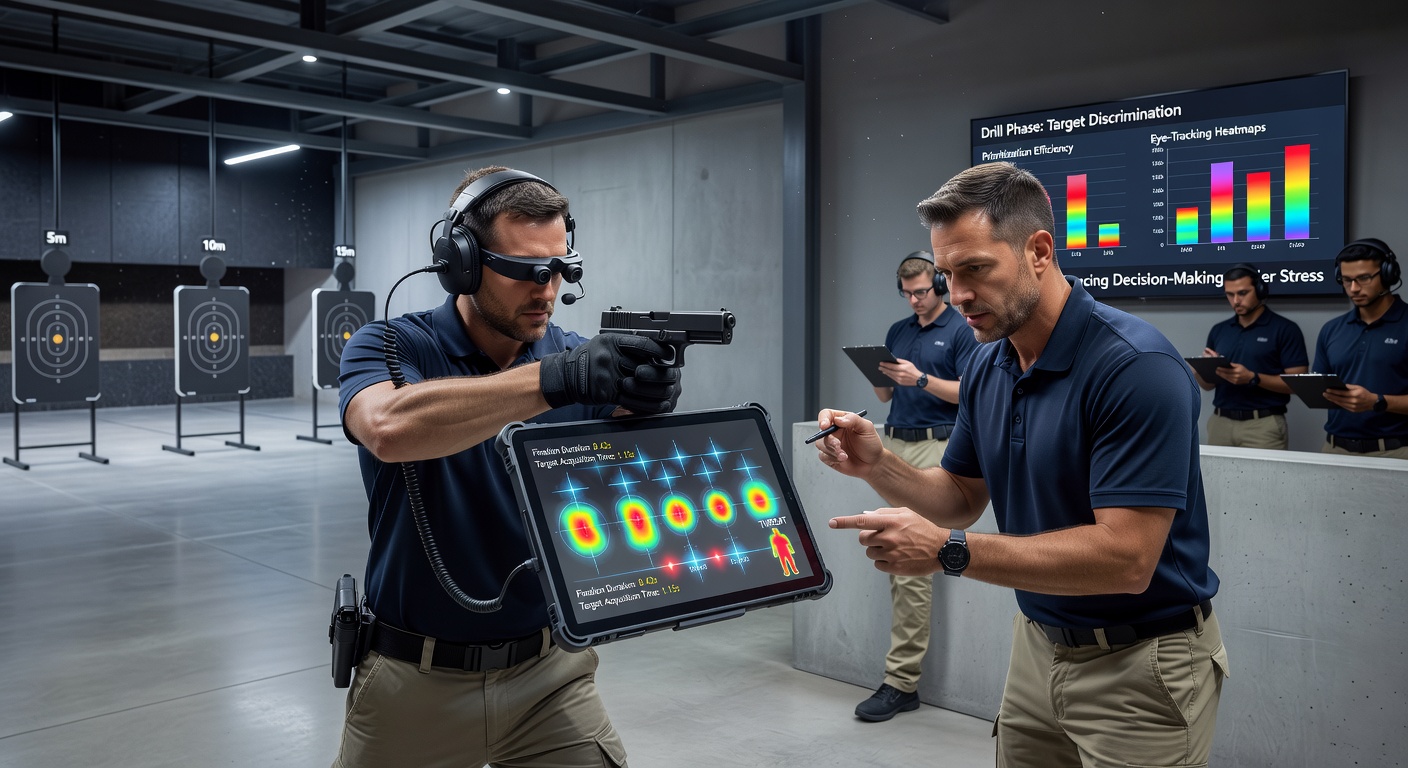
Separate work conducted at the Australian Defence Science and Technology Group examined how gaze patterns shift under varying stress loads, linking elevated heart-rate intervals with narrowed visual search fields. Their findings indicated that trainees who practiced with real-time gaze cues maintained broader scan patterns even when physiological stress markers rose, suggesting the technology supports both cognitive and physiological training objectives simultaneously.
Hardware and Software Ecosystem Developments
Commercial suppliers have released modular eye-tracking attachments compatible with multiple virtual-reality headsets already common in training inventories, reducing the need for entirely new capital purchases. Software platforms now export standardized data formats that allow comparison across different facilities, enabling cross-border benchmarking between programs that adopt the same protocols.
Updates scheduled for release in May 2026 include refined predictive models that anticipate likely next fixation points based on prior trial history, allowing instructors to intervene before a trainee commits to an inefficient scan path. These models draw from anonymized datasets contributed by participating organizations under data-sharing agreements that preserve operational security.
Challenges in Scaling and Standardization
Calibration routines still require several minutes per user before each session, and variations in lighting or headgear fit can introduce noise into raw gaze coordinates. Facilities address these issues through standardized pre-drill checklists and periodic sensor recalibration, yet the added steps extend overall session duration compared with traditional drills.
Privacy considerations around biometric storage have prompted several agencies to implement on-premise processing rather than cloud uploads, ensuring that gaze recordings remain within controlled networks. Industry working groups continue to develop encryption standards tailored to the sensitivity of physiological data collected during high-stakes training.
Conclusion
Eye-tracking integrations continue to supply tactical training circles with granular visibility into attention allocation during target prioritization exercises, supported by data from defense research bodies and academic collaborations spanning multiple regions. As hardware costs decline and software interoperability improves, more programs are expected to embed these tools into routine curricula through 2026 and beyond, expanding the range of measurable performance indicators available to instructors worldwide.