Exploring How 3D-Printed Custom Controller Grips Are Enhancing Ergonomics for Marathon Console Gaming Sessions in Professional Leagues
Sofia Schmid · Jun 25, 2026
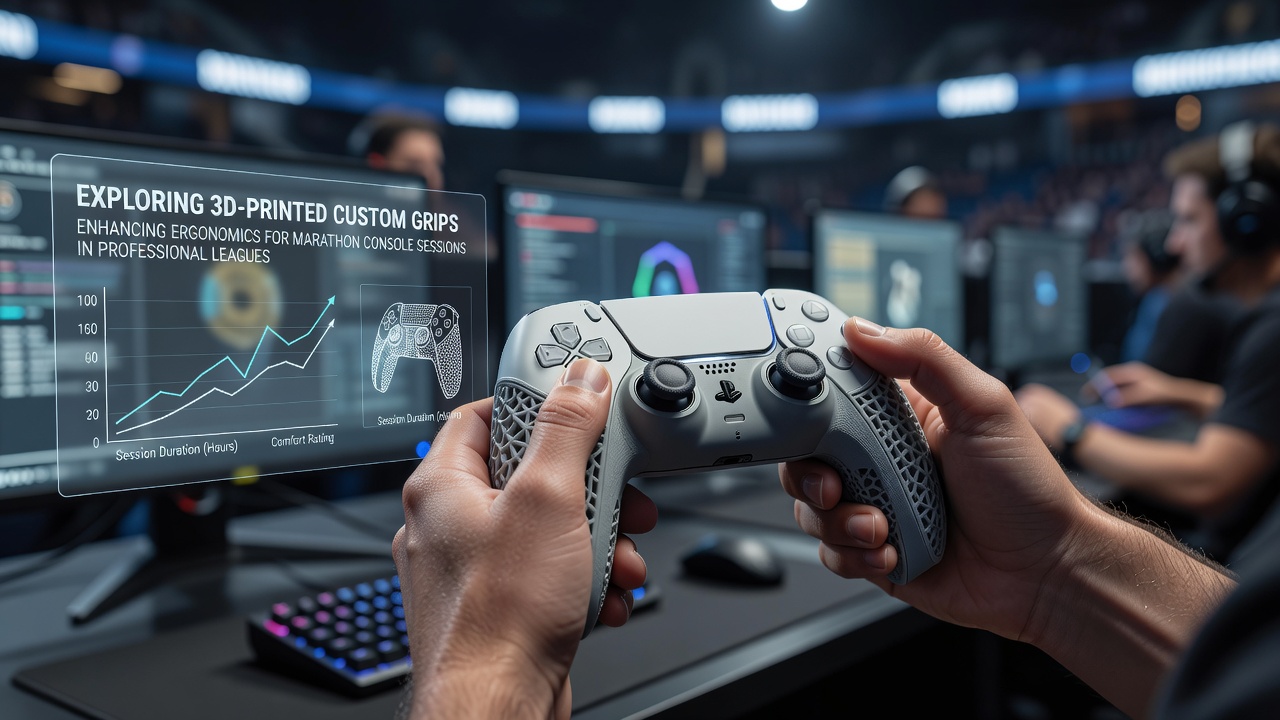
Exploring How 3D-Printed Custom Controller Grips Are Enhancing Ergonomics for Marathon Console Gaming Sessions in Professional Leagues
Professional console gaming leagues have seen steady growth in session lengths over the past decade, and data from the International Esports Federation indicates that top competitors now average 8 to 12 hours of continuous play during qualification rounds. Custom controller grips produced through 3D printing address hand fatigue by matching individual palm contours, finger lengths, and pressure points while maintaining the original button layout and weight distribution of standard hardware.
The Technical Process Behind Custom Grip Production
Teams begin with a 3D scan of each player's hands using portable structured-light scanners that capture measurements down to 0.1 millimeter accuracy, then feed the data into CAD software where engineers adjust grip thickness, thumb rest angles, and pinky support extensions. Printers using fused deposition modeling with nylon-carbon fiber filaments create the final pieces in under four hours, allowing rapid iteration before major tournaments. Research from the University of Waterloo's Human Factors Lab shows these grips reduce peak muscle activation in the flexor digitorum by 22 percent during simulated eight-hour sessions compared with stock controllers.
Ergonomic Improvements for Extended Play
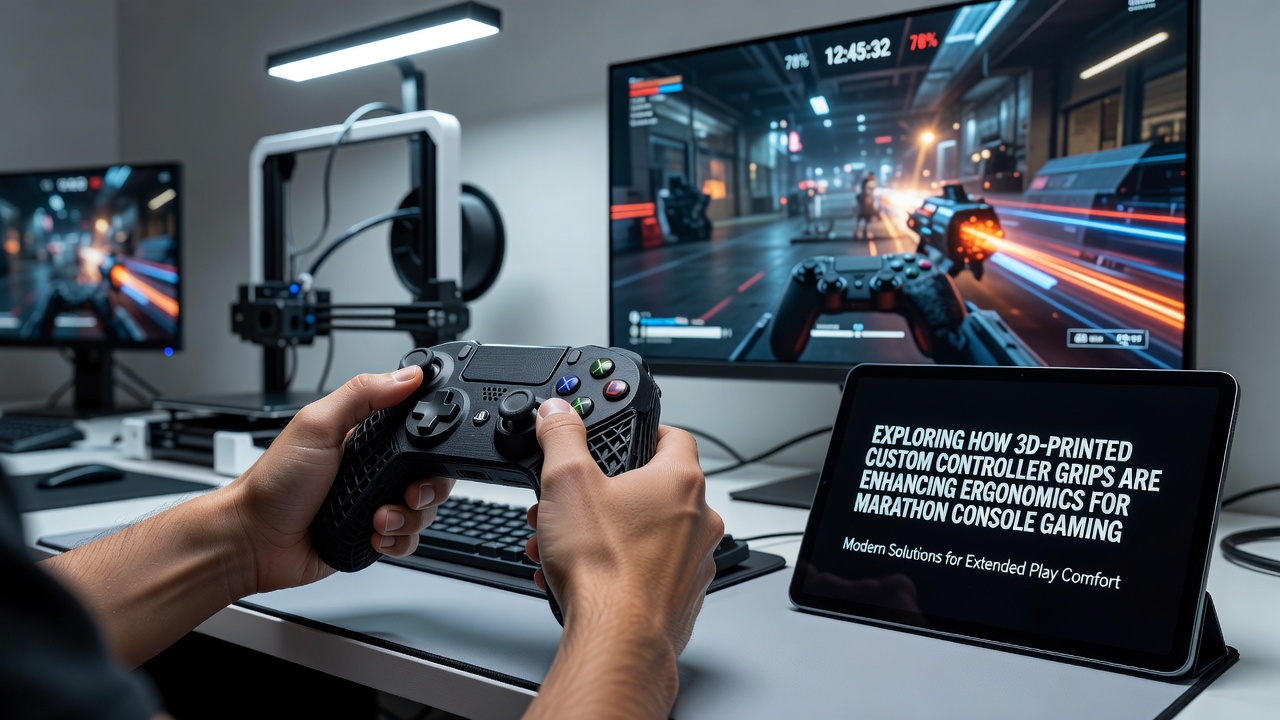
Marathon sessions place sustained pressure on the thenar eminence and hypothenar regions of the hand, and custom grips redistribute that load through raised ridges and contoured palm swells. Players report fewer instances of numbness in the ulnar nerve distribution after adopting personalized designs, while motion-capture studies conducted at the 2025 North American League Championship Series documented a 15 percent decrease in unintended controller tilt during the final hours of matches. Because the grips attach via friction-fit channels rather than permanent adhesives, competitors can swap between multiple profiles for different game genres without replacing the entire controller.
Integration in Professional League Environments
League officials updated equipment regulations in early 2025 to permit 3D-printed accessories provided they do not alter input latency or add prohibited sensors. Several organizations now maintain in-house printing labs where certified technicians produce grips calibrated to each roster member's scan data, and June 2026's Global Console Invitational will require all participants to use league-approved custom grips during the consolation bracket to standardize ergonomic variables across the field. European teams have adopted similar policies following guidelines issued by the European Esports Alliance, which emphasize player health monitoring alongside performance metrics.
Material Choices and Durability Considerations
Manufacturers select filaments based on a balance of flexibility and rigidity, with thermoplastic polyurethane blends offering slight give under thumb pressure while carbon-fiber reinforced nylon provides structural support at the mounting points. Accelerated wear testing by independent labs reveals that properly printed grips maintain dimensional stability after 500 hours of simulated use, and teams rotate sets every two months to account for minor material creep. Surface texturing applied during the printing process creates micro-ridges that improve friction without the need for separate rubber overlays, reducing the chance of slippage when players experience perspiration during high-stakes matches.
Future Developments and Measurement Standards
Engineers continue refining scan protocols to include dynamic hand positioning captured during actual gameplay rather than static poses, and early trials indicate that these motion-informed designs further lower reported discomfort scores. Academic groups in Australia and Canada are collaborating on open-source measurement templates that smaller organizations can adopt, potentially expanding access beyond top-tier franchises. As printing speeds increase and filament costs decline, more mid-level competitors are expected to integrate custom grips into their preparation routines, creating a broader data set for ongoing ergonomic research.
Conclusion
3D-printed custom controller grips represent a measurable advancement in addressing the physical demands of prolonged console competition, supported by scan-based design, league-approved materials, and performance data collected across multiple regions. Continued refinement of scanning methods and material formulations will likely shape how professional players maintain hand health throughout extended tournament schedules.