Ambient Lighting Synchronization Enhancing Spectator Immersion During Live Esports Broadcasts
Sofia Schmid · Jul 21, 2026
Ambient Lighting Synchronization Enhancing Spectator Immersion During Live Esports Broadcasts
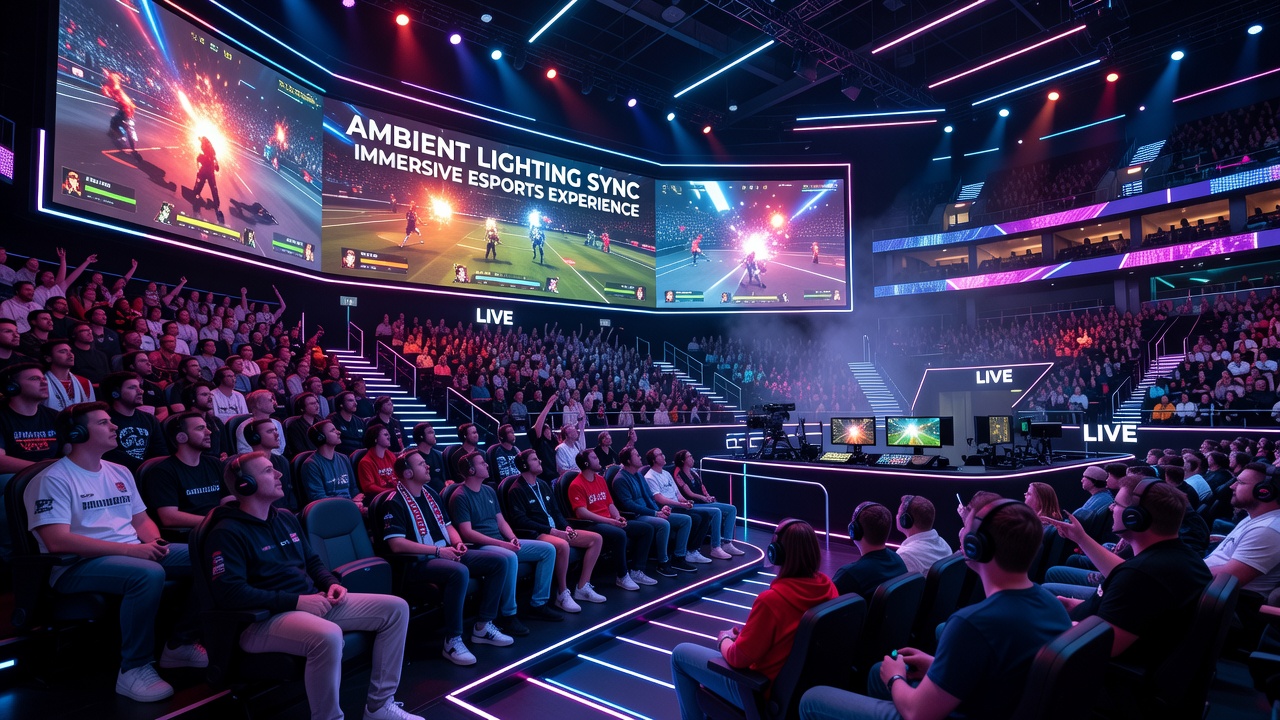
Ambient lighting synchronization has become a standard feature in many professional esports productions where operators align LED arrays with in-game events to extend visual information beyond the screen itself. Broadcasters integrate these systems through protocols such as DMX512 and proprietary software bridges that read color data directly from game engines or broadcast feeds, then translate those values into real-time commands for venue and home-lighting setups. The process allows wall-mounted strips, overhead panels, and even audience wristbands to shift hues in lockstep with explosions, health-bar changes, or environmental transitions that appear on stream.
Technical Integration Across Production Pipelines
Production teams embed lighting control software into existing OBS or vMix workflows so that pixel samples from the main program feed trigger corresponding RGB values without requiring separate manual cues. Engineers calibrate latency thresholds to stay below 50 milliseconds, which prevents noticeable lag between on-screen action and physical light changes. Multiple global events have adopted this approach because teh hardware cost per venue has dropped while open-source libraries now handle color-space conversion for both HDR and SDR streams.
Data from tournament organizers shows that synchronized setups appear most frequently in titles with dynamic color palettes such as first-person shooters and MOBA matches where ability effects create rapid, high-contrast shifts. Technicians route the same control signal to both arena fixtures and optional home kits that viewers can purchase and connect through local Wi-Fi hubs, extending the synchronized experience to remote audiences who enable the feature in their broadcast apps.
Viewer Engagement Metrics and Physiological Tracking
Research from the University of Melbourne indicates that synchronized ambient lighting increases average session dwell time by measurable margins when compared with standard screen-only viewing conditions. Observers note that heart-rate variability readings collected during controlled tests tend to align more closely with in-game tension peaks once peripheral lighting joins the visual feed. These findings come from wearable sensor arrays placed on volunteer spectators who watched identical matches under two different lighting conditions.
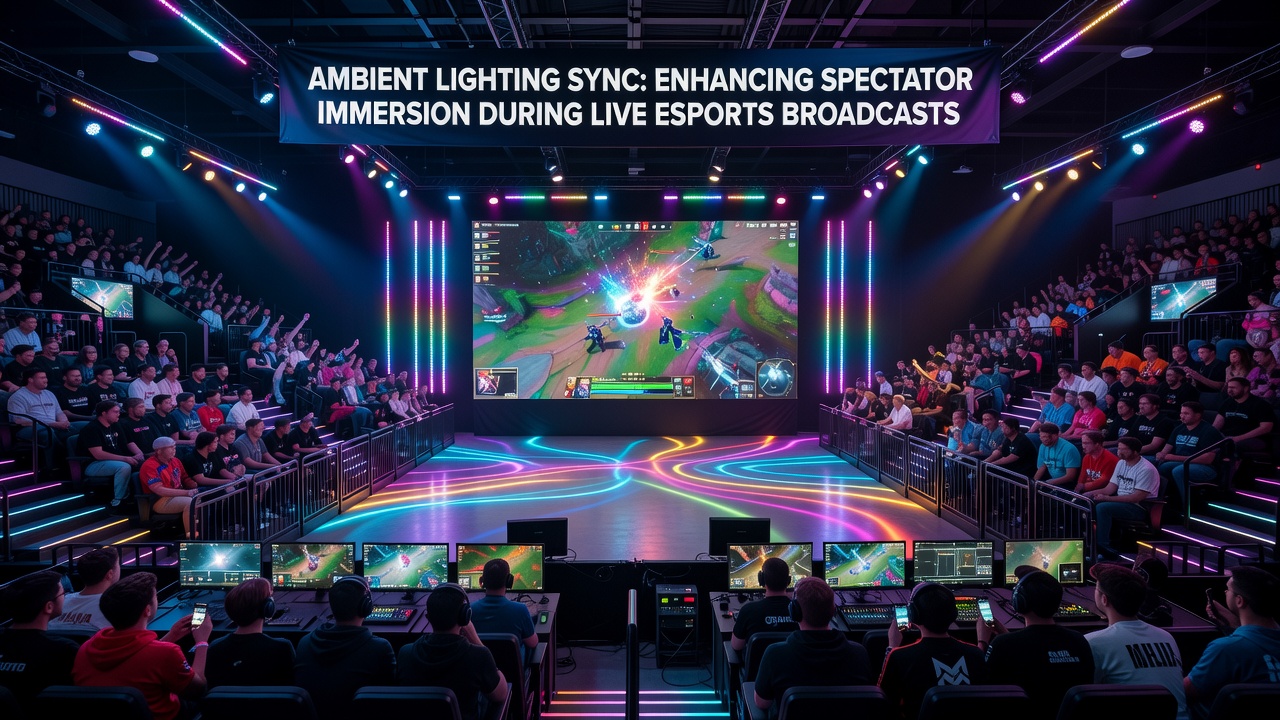
European Union-funded projects under the Horizon Europe framework have examined similar setups across multiple venues and reported consistent patterns in self-reported immersion scores collected via post-match surveys. The studies emphasize that lighting cues help reduce eye strain during extended viewing sessions by distributing brightness away from the central display, although results vary depending on room size and fixture placement density.
Implementation Examples Leading Into 2026
Several circuits began testing unified lighting protocols in 2024, and by July 2026 multiple international leagues plan to standardize the same control schema across all regional finals. One prominent example involves a partnership between a North American production company and an Asian hardware supplier that supplies both arena rigs and consumer starter kits. The shared protocol lets a single software instance manage thousands of endpoints while automatically compensating for regional power-frequency differences.
Engineers working on these deployments often cite the need for fallback modes that revert to static colors if network packets drop, a safeguard that has become standard after early tests revealed occasional desync during high-bandwidth moments. Training sessions for lighting operators now include modules on color-theory mapping and real-time troubleshooting so that crews can adjust palettes between matches without interrupting the broadcast timeline.
Challenges in Scaling and Standardization
Bandwidth allocation remains a recurring constraint when venues attempt to synchronize thousands of individual LED nodes across large halls. Solutions include segmenting the lighting network onto dedicated VLANs and compressing command streams so that only delta changes travel over the wire rather than full-frame updates. Regulatory bodies in Australia have begun reviewing spectrum usage for wireless lighting controllers to ensure they do not interfere with existing venue communication systems.
Compatibility across different game engines requires ongoing updates to middleware that extracts color information, and developers maintain public repositories where community contributors add support for newer titles. These collaborative efforts have shortened the time between game release and full lighting integration from several months to a matter of weeks in many cases.
Conclusion
Ambient lighting synchronization continues to expand through improved software tools, lower hardware costs, and coordinated standards that connect arena installations with home-viewer devices. As tournaments prepare for July 2026 events, production teams focus on refining latency controls and expanding protocol compatibility while researchers collect additional engagement data across varied audience demographics. The combination of technical refinements and measured viewer responses supports continued adoption across professional esports broadcasts.