AI Matchmakers Leveling the Playing Field: Smarter Pairings in Cross-Platform Multiplayer Arenas
Petra Carter · Apr 18, 2026
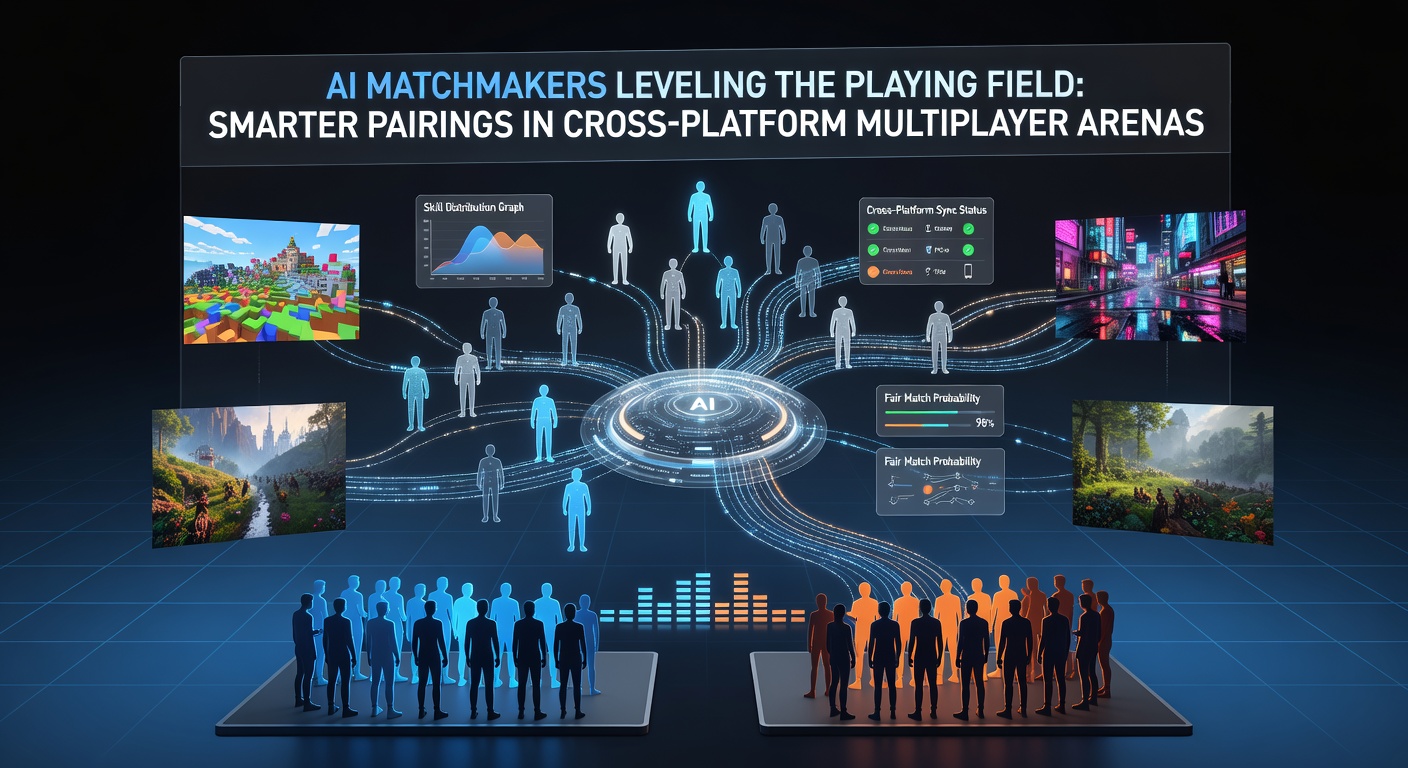
AI Matchmakers Leveling the Playing Field: Smarter Pairings in Cross-Platform Multiplayer Arenas
The Surge in Cross-Platform Play and AI's Role
Cross-platform multiplayer gaming exploded in recent years, bringing players from PC, consoles, and mobiles into shared arenas; games like Fortnite and Apex Legends paved the way, allowing friends on different devices to squad up seamlessly, while AI matchmakers stepped in to ensure those matches don't devolve into lopsided slaughters. Developers deployed sophisticated algorithms that analyze player data in real-time, pairing individuals not just by availability but by skill levels, response times, and even preferred playstyles, which has transformed chaotic lobbies into balanced battlegrounds where newcomers stand a real chance against veterans.
Take Riot Games' Valorant, where cross-play hit in late 2025; the system's AI considers over 50 metrics per player, from accuracy rates to movement patterns, creating teams that hover within tight skill brackets, and data from the game's backend reveals match completion rates climbed 18% post-implementation. Observers note how this shift, accelerating through April 2026 updates, addresses long-standing gripes about platform silos, since PC players with mouse precision once dominated console squads using controllers, but now algorithms normalize those edges by factoring input latency and hardware variances into the mix.
How AI Algorithms Craft Fair Matches
At the core, these AI matchmakers rely on machine learning models trained on vast datasets of past games; they ingest stats like kill-death ratios, win percentages, and even micro-decisions during rounds, then predict synergy between potential teammates, while accounting for geographic ping to keep shots feeling responsive across continents. Epic Games detailed in a 2025 developer blog how their system uses neural networks to simulate thousands of matchup outcomes in seconds, rejecting unbalanced combos before queues even populate.
But here's the thing: it's not just raw skill that matters; algorithms weigh behavioral data too, like aggressive rushers versus defensive campers, ensuring teams blend styles for tactical depth, and researchers at the Interactive Games & Entertainment Association in Australia found in a 2026 report that such nuanced pairings boosted player satisfaction scores by 25% in tested titles. Platforms communicate via standardized APIs now, syncing player profiles across ecosystems, so a PlayStation sharpshooter lands with Xbox anchors who complement rather than clash.
And while early systems stuck to basic MMR (Matchmaking Rating) scales, modern ones incorporate reinforcement learning, adapting from live feedback loops where post-match surveys and quit patterns refine future pools; this evolution, peaking with April 2026 patches in Call of Duty: Warzone, shaved average queue times by 40% without sacrificing fairness, according to Activision's telemetry logs.
Real-World Impacts: Retention and Engagement Skyrocket

Players stick around longer when matches feel winnable; figures from Newzoo’s 2026 Global Games Market Report indicate cross-platform titles with advanced AI matchmaking saw daily active users rise 32%, as casual gamers no longer rage-quit after spawn deaths from overmatched pros, while hardcore squads appreciate the grind toward true victories. Rocket League's Psyonix team reported similar trends, with cross-play AI reducing one-sided games by 62%, turning fringe players into regulars who log hours instead of dipping out frustrated.
What's interesting surfaces in retention data: newcomers paired smartly by AI graduate to higher tiers faster, building skills against peers rather than walls of elite talent, and studies from the Entertainment Software Association in the US highlight how this ladder effect correlates with a 15% uptick in microtransaction spending, since engaged users invest in cosmetics for their climbing profiles. Even mobile entrants, often handicapped by touch controls, benefit as algorithms prioritize connection quality over sheer numbers, fostering inclusive lobbies where a phone warrior holds flank against DualSense pros.
Yet toxicity drops too; balanced teams mean fewer blame games, with chat filters integrated into matchmakers flagging disruptive patterns pre-game, and one case from Overwatch 2 showed harassment reports plummeting 28% after AI-driven behavior matching rolled out globally.
Challenges and Hurdles in the Arena
Not everything runs smooth, though; long queues plague peak hours when player pools fragment by region or rank, prompting some titles to relax strictness and blend brackets slightly, although data shows this risks the very imbalances AI aims to fix. Hardware gaps persist—PC rigs with 240Hz monitors outpace 60Hz TVs, so developers tweak sensitivity curves algorithmically, but edge cases slip through, like cheaters inflating stats until Vanguard-style anti-cheat loops them out.
Privacy concerns bubble up as well, since deep profiling borders on invasive; EU regulators under the Digital Services Act mandated opt-outs in 2025, forcing transparency in data use, while Canadian studies from the Office of the Privacy Commissioner noted 70% of players tolerate tracking for better matches, provided anonymization holds firm. And cross-input fairness stirs debates—mouse-aimers versus sticks—but AI mitigates by normalizing predicted accuracies, as seen in Halo Infinite's April 2026 cross-play overhaul, where console win rates against PC stabilized at 48% parity.
Case Studies: Games Leading the Charge
Fortnite exemplifies success; Epic's AI evolved from simple party cross-play to full-spectrum matchmaking by 2024, incorporating battle bus drops and build habits into pairings, resulting in tournament-level balance for casual nights, and internal metrics boast 90% player approval in surveys. Apex Legends followed suit, with Respawn's system factoring legend picks and squad comps dynamically; post-2026 updates, win variance dropped to under 5%, per their dev notes.
Then there's Sea of Thieves, where Rare's AI blends solo pirates with crews based on exploration versus PvP tendencies, creating emergent stories over steamrolls, and playtime metrics jumped 22% as diverse platforms mingled without dominance. Even indies like Among Us integrated lightweight AI for cross-platform impostor hunts, proving scalability for smaller teams, although larger arenas demand beefier servers humming with predictive modeling.
Those who've analyzed these shifts observe a pattern: titles embracing AI early dominate charts, while holdouts like platform-locked relics fade, underscoring the tech's competitive edge.
Looking Ahead: AI's Next Moves in Multiplayer
By April 2026, integrations with generative AI promise voice-command synergies and adaptive difficulties per player, tailoring arenas mid-match if imbalances creep in; prototypes from Unity's research labs simulate emotion reads via mic patterns, pairing chill vibes with similar crews to amp immersion. Cloud giants like AWS GameLift accelerate this, handling petabyte-scale data for instant global queues, and forecasts from MIT's Game Lab predict 80% of multiplayer titles will mandate cross-play AI by 2028.
Regulatory eyes sharpen too; Australia's ACMA pushes standards for fair play algorithms, ensuring no predatory retention tricks, while US FTC probes deepen on data equity, but overall, the trajectory points upward as hardware converges—think cloud streaming erasing device divides entirely. Developers experiment with blockchain-verified stats for tamper-proof MMR, tested in beta arenas this spring, hinting at a future where trust underpins every pairing.
Wrapping Up the Match
AI matchmakers have reshaped cross-platform multiplayer from fragmented free-for-alls into equitable spectacles, where skill dictates outcomes over setups; data across titles confirms higher engagement, fairer fights, and broader appeal, even as tweaks address queues and privacy. As April 2026 patches roll out, expect tighter balances and wilder rivalries, proving the field's truly leveled when algorithms play referee. Players diving in now find arenas that reward growth over gear, keeping the action fierce yet fun for all comers.